
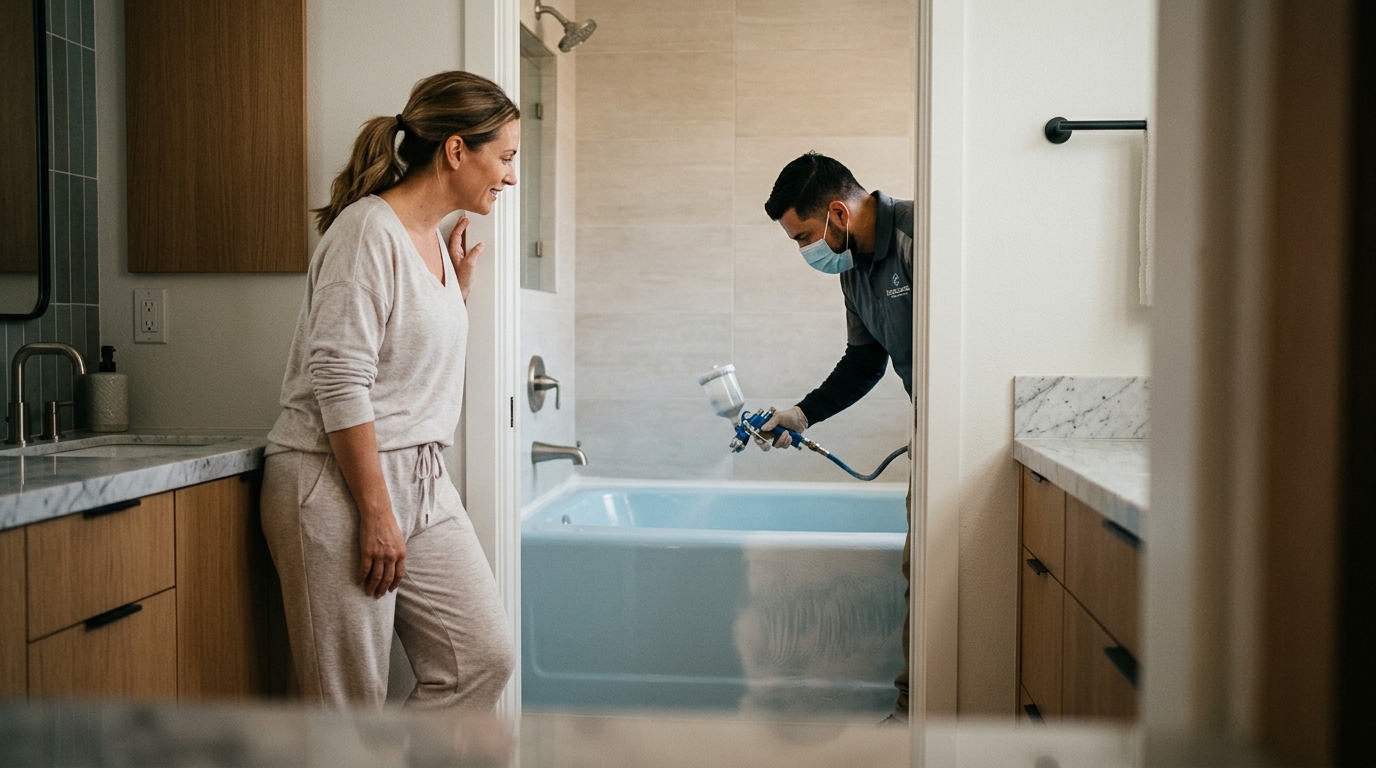
Fiberglass Tub Refinishing Process: How It Differs From Other Tub Types
Fiberglass bathtubs are among the most common tubs in American homes, prized for their lightweight build and affordability. But when they start showing cracks, fading, or dullness, refinishing them requires a different approach than porcelain or cast iron tubs. Understanding those differences helps you avoid costly mistakes and get results that last. At Excellence Reglazing, we specialize in fiberglass tub refinishing in Corona, CA, saving homeowners over 70% compared to full replacement. Here is everything you need to know about how the process works and why fiberglass demands special attention.
What Is Fiberglass Tub Refinishing?
Fiberglass tub refinishing is a surface restoration process that repairs cosmetic damage and applies a new protective coating to an existing fiberglass bathtub. Rather than tearing out the old tub, a technician restores the surface in place, delivering a smooth, glossy finish that can extend the tub's useful life by 10 to 15 years.
Fiberglass is a reinforced composite material made from woven glass fibers bonded with resin. This makes it lightweight and easy to mold, but also more prone to scratching, cracking, and fading over time compared to heavier materials like porcelain or cast iron.
Fiberglass vs. Porcelain: Key Refinishing Differences
The refinishing process is not identical for every tub material. The biggest distinction is in surface preparation. Porcelain tubs require acid etching to open the enamel surface for primer adhesion. Fiberglass tubs, however, are sanded mechanically instead of acid-etched, because their composite surface responds differently to chemical treatments.
Surface Prep Comparison
| Process Step | Fiberglass Tub | Porcelain Tub |
|---|---|---|
| Primary Etching Method | Mechanical sanding | Acid etching |
| Crack/Chip Repair | Epoxy filler for fiberglass | Porcelain filler compound |
| Primer Type | Epoxy or urethane bonding primer | Epoxy bonding primer |
| Topcoat | Acrylic polyurethane or urethane glaze | Urethane glaze |
| Ventilation Needs | Higher (fiberglass dust hazard) | Standard |
| Typical Cure Time | 24 to 48 hours | 24 to 48 hours |
This difference in preparation is critical. Skipping proper sanding on fiberglass, or using acid etching where it is not appropriate, leads to premature peeling and coating failure.
Structural Considerations
Fiberglass tubs can develop structural weakness over time, leading to flexing under weight. This flexing can cause stress cracks that must be repaired with fiberglass cloth and resin before any coating is applied. Porcelain over cast iron does not flex, so this step is rarely needed.
Step-by-Step Fiberglass Refinishing Process
1. Cleaning and Degreasing
The tub is cleaned with industrial cleaners to remove soap scum, body oils, and mineral deposits. Contaminants left on the surface prevent proper coating adhesion and are one of the biggest causes of peeling and bubbling.
2. Sanding and Repair
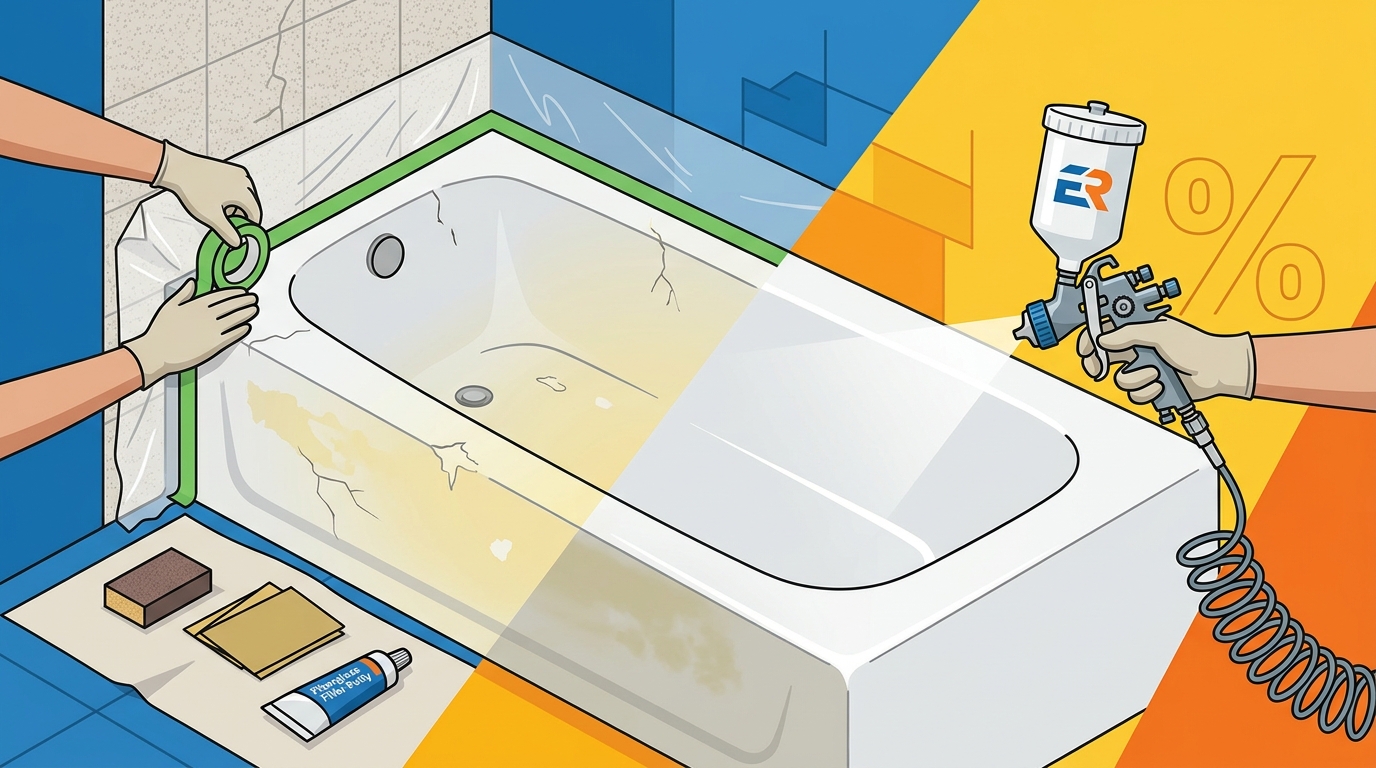
The entire surface is mechanically sanded to remove the old finish and create a rough profile for bonding. Any cracks, chips, or scratches are filled with a two-part epoxy filler designed specifically for fiberglass. This step also exposes hidden damage like hairline cracks.
3. Priming, Coating, and Curing
A high-adhesion epoxy or urethane primer is sprayed evenly across the surface. Then multiple layers of specialized topcoat glaze are applied using an HVLP precision sprayer for uniform coverage. The tub must cure fully before use, typically allowing light use within 24 hours while full curing continues over several days. Learn more about our process on our fiberglass tub repair page.
Common Challenges With Fiberglass Tubs
Fiberglass is more porous than porcelain, meaning it can absorb water through small cracks if damage is not addressed early. This porosity also makes the surface more susceptible to discoloration and staining over time. Additionally, fiberglass tubs have a gel coat finish that wears thinner with harsh cleaners, especially bleach-based products.
Stress cracks are another common issue unique to fiberglass. Over time, flexing of the tub bottom causes the surface to crack. Professional refinishers can rebuild these areas with fiberglass cloth and resin, often making the repaired section stronger than the original, according to Miracle Method.
Why Professional Refinishing Matters
DIY refinishing kits often skip essential steps like proper sanding, priming, and acid etching. Professional refinishing uses commercial-grade coatings designed specifically for fiberglass, not general paint products. The difference in durability is significant: professional coatings cure harder and last years longer than consumer kits.
Safety is another factor. Working with fiberglass generates hazardous dust particles, and the chemical coatings produce toxic fumes. Professional refinishers use respirators, exhaust systems, and proper ventilation setups. This is especially important with fiberglass surfaces, as noted by Lowe's refinishing guide. For expert results in the Corona, CA area, contact Excellence Reglazing for a free consultation.
Cost Savings and Lifespan Expectations
Replacing a fiberglass bathtub typically costs $1,500 to $4,000 or more when you factor in demolition, plumbing, and installation. Professional refinishing, by contrast, saves over 70% and can be completed in a single day. A properly refinished fiberglass tub can last an additional 10 to 15 years with appropriate care.
Fiberglass tub refinishing is a cost-effective solution for extending the life of your bathroom without the mess and disruption of full replacement. Check out the Excellence Reglazing blog for more bathroom renovation tips and advice.
Key Takeaways
- Fiberglass tubs are sanded rather than acid-etched during refinishing, which is the primary difference from porcelain tub refinishing.
- Proper surface preparation is the single most important factor in a long-lasting fiberglass refinish.
- Stress cracks and structural flexing are unique fiberglass challenges that must be repaired before coating.
- Professional refinishing uses commercial-grade primers and topcoats that far outlast DIY kits.
- Refinishing a fiberglass tub saves over 70% compared to full replacement and extends the tub's life by 10 to 15 years.
- Ventilation and safety precautions are especially critical when working with fiberglass materials.
Frequently Asked Questions
Can a fiberglass tub really be refinished?
Yes. Fiberglass tubs are excellent candidates for refinishing. The process repairs surface damage and applies a durable new coating, restoring the tub's appearance without removal.
How is fiberglass refinishing different from porcelain refinishing?
The main difference is surface preparation. Fiberglass tubs are mechanically sanded to create adhesion, while porcelain tubs require acid etching. Different filler compounds are also used for crack repair.
How long does a fiberglass refinish last?
A professionally refinished fiberglass tub can last 10 to 15 years with proper care. Avoid abrasive cleaners and bleach to maximize the lifespan of the new finish.
Is it better to refinish or replace a fiberglass tub?
Refinishing is almost always more cost-effective, saving over 70% compared to replacement. It is also faster, typically completed in one day versus several days or weeks for a full replacement.
What causes refinishing to peel on fiberglass tubs?
Peeling usually results from inadequate surface preparation. Skipping thorough cleaning, sanding, or primer application allows the topcoat to lose adhesion over time.
Can I change the color of my fiberglass tub during refinishing?
Yes. Professional refinishers can apply topcoats in a wide range of colors, allowing you to update the look of your tub to match your bathroom decor. Visit our countertops and vanities page to see how we refinish other surfaces too.
How long before I can use my tub after refinishing?
Most professional refinishing jobs allow light use within 24 hours. Full curing continues over the following days, so avoid heavy scrubbing or placing heavy objects in the tub during that period.
Does Excellence Reglazing refinish fiberglass shower surrounds?
Yes. Excellence Reglazing refinishes fiberglass tubs, shower surrounds, sinks, and countertops throughout the Corona, CA area. Visit our FAQ page for more details.
Ready to Restore Your Fiberglass Tub?
Stop living with a faded, cracked, or stained fiberglass tub. Excellence Reglazing delivers professional-grade fiberglass tub refinishing in Corona, CA, saving you over 70% versus replacement. Request your free quote today and get a tub that looks brand new.