

A cracked fiberglass tub does not have to mean an expensive replacement. Whether you are dealing with a tiny hairline fracture or a longer structural crack, the right repair approach can restore your tub's appearance and prevent water damage. In this guide, we walk you through how to assess the damage, gather the correct materials, and complete the repair yourself. We also explain when it makes more sense to call a professional refinishing team like Excellence Reglazing in Corona, CA, which can save you over 70% compared to a full tub replacement.
Assess the Crack Before You Start
Not every crack requires the same treatment. A cosmetic spider crack is a thin, shallow line in the gelcoat layer that does not flex when weight is applied. A structural crack, on the other hand, is a fracture that extends through the gelcoat into the underlying fiberglass laminate, often accompanied by visible flex or creaking underfoot.
Signs of a Cosmetic Crack
Cosmetic cracks are typically shorter than a few inches and do not open when you press on them. They appear near high-wear spots such as the tub floor center or drain area. These are surface-level issues worth fixing, but they pose no immediate water-damage risk.
Signs of a Structural Crack
If the tub floor flexes when you step on it, if you notice brown stains on the ceiling below, or if the crack is longer than six inches with a noticeable ridge, you are looking at structural damage. In this scenario, a DIY patch will likely fail because the underlying support problem remains. Professional fiberglass shower and tub refinishing is the smarter path.
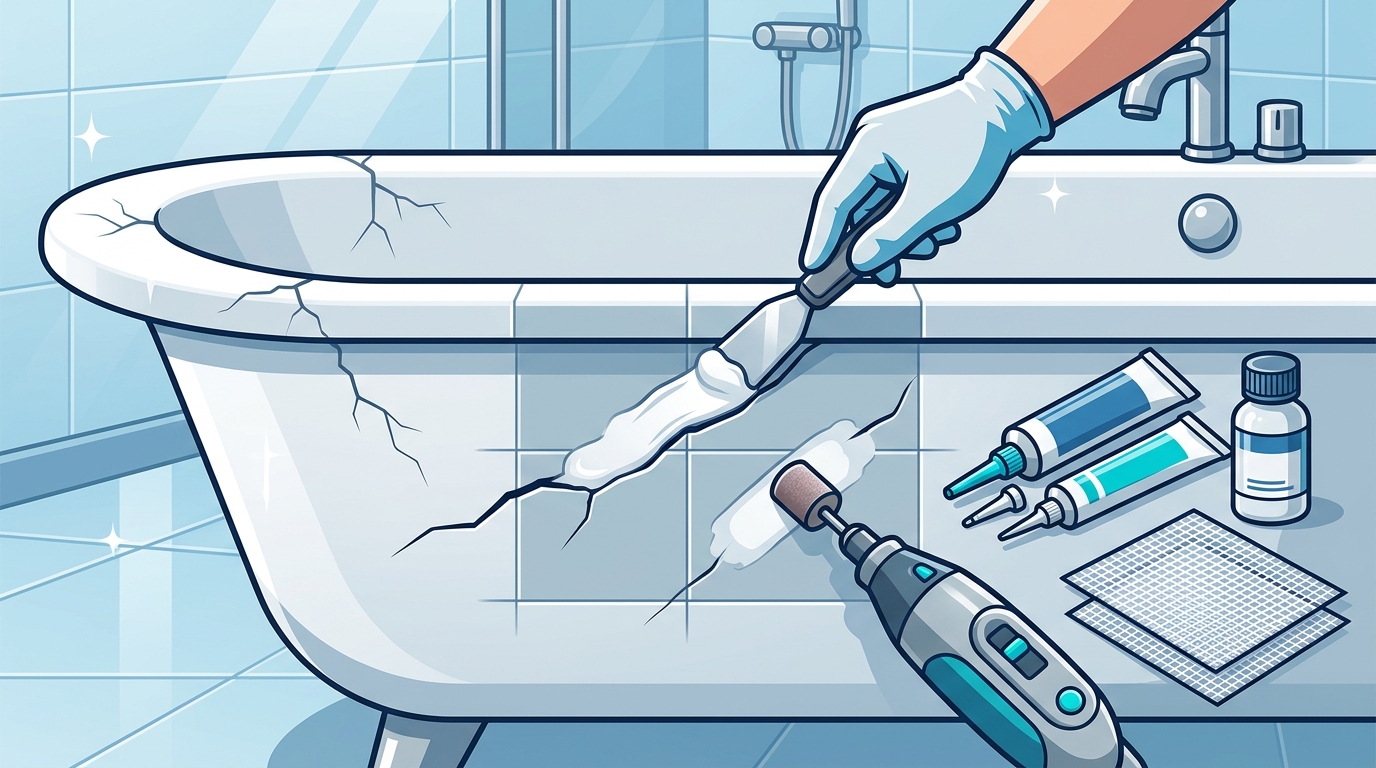
Common Causes of Fiberglass Tub Cracks
Understanding why cracks form helps you prevent them in the future. Fiberglass is a lightweight, flexible material, and that flexibility is both its advantage and its weakness.
- Lack of support: Improper installation without a mortar bed or foam base causes the tub floor to flex under body weight, eventually cracking the gelcoat.
- Heavy impact: Dropping items like shampoo bottles, shower caddies, or tools can chip and crack the surface.
- Harsh cleaners: Abrasive chemicals and steel wool break down the protective gelcoat layer, making the fiberglass more prone to fracture.
- Age and wear: After 20 to 30 years, the foam or support blocks beneath a fiberglass tub can degrade, leading to recurring cracks.
If your tub suffers from multiple causes at once, a simple patch will not last. Consider a full tub refinishing service instead.
DIY Repair vs. Professional Refinishing
A fiberglass repair kit is a pre-packaged set of epoxy resin, filler paste, sandpaper, and gelcoat designed for small surface fixes. It works well for hairline cracks under half an inch wide with no flex. For anything larger, professional refinishing delivers a longer-lasting, factory-smooth result.
| Factor | DIY Repair Kit | Professional Refinishing |
|---|---|---|
| Best for | Small cosmetic cracks (< 6 in.) | Large, structural, or recurring cracks |
| Average cost | $20 - $75 | $300 - $600 |
| Time to complete | 2 - 3 hours + 24 - 48 hr cure | 3 - 5 hours, ready in 24 - 48 hrs |
| Durability | 1 - 3 years for minor patches | 10 - 15 years with proper care |
| Finish quality | Visible patch possible | Smooth, uniform, like-new surface |
Professional refinishing from Excellence Reglazing costs a fraction of full tub replacement, which can run $1,500 to $5,000 or more including labor and plumbing.
Materials and Tools You Need
If you are tackling a small crack yourself, gather these supplies before you begin so you can complete the job in one session:
- Fiberglass bathtub repair kit (two-part epoxy resin with fiberglass cloth)
- 80 to 220 grit sandpaper (coarse for initial prep, fine for finishing)
- Denatured alcohol or alcohol wipes for degreasing
- Putty knife
- Lint-free cloths
- Safety gear: respirator mask, goggles, and gloves
Tub refinishing uses epoxy-type fillers that emit harmful fumes, so proper ventilation and a certified respirator mask are essential, not optional.
Step-by-Step Fiberglass Tub Crack Repair
1. Clean and Dry the Area
Remove all dirt, soap scum, and moisture from the cracked area using a household cleaner and sponge. Follow up with alcohol wipes to degrease the surface. The tub must be completely dry before you proceed.
2. Sand the Crack and Surrounding Surface
Use 80 to 120 grit sandpaper to rough up the area around the crack, extending about one inch beyond the damage. This creates a surface that adhesives and fillers bond to effectively. Wipe away all dust with a lint-free cloth.
3. Mix and Apply Resin Adhesive
Follow the manufacturer's mixing ratios exactly. Incorrectly mixed epoxy creates soft spots that will not withstand water or daily use. Brush the adhesive over the crack, covering at least one inch beyond each edge. Allow it to cure per the kit's instructions.
4. Apply Filler, Sand, and Seal
Once the adhesive is dry, use a putty knife to press fiberglass filler into the crack. Overfill slightly, then let it harden. Sand progressively with 220 then 600 grit paper until the patch is flush and smooth. Finish by applying the gelcoat sealer included in your kit. Allow 24 to 48 hours of full cure time before using the tub.
For a professional-grade finish and long-term durability, explore what to expect when reglazing your bathtub with a trained specialist.
Cost Comparison: Repair, Refinish, or Replace
| Option | Estimated Cost | Lifespan | Downtime |
|---|---|---|---|
| DIY repair kit | $20 - $75 | 1 - 3 years | 24 - 48 hours |
| Professional refinishing | $300 - $600 | 10 - 15 years | 24 - 48 hours |
| Full tub replacement | $1,500 - $5,000+ | 20+ years | 3 - 5 days |
Refinishing is the sweet spot for homeowners who want a like-new tub without the demolition, plumbing changes, and multi-day disruption of a full replacement. Contact Excellence Reglazing for a free estimate in the Corona, CA area.
Key Takeaways
- Always assess whether a crack is cosmetic or structural before choosing a repair method.
- Small hairline cracks under half an inch wide can be fixed with a fiberglass repair kit for $20 to $75.
- Structural cracks with flex underneath require professional refinishing, not a DIY patch.
- Harsh cleaners, heavy impacts, and poor installation support are the top causes of fiberglass tub cracks.
- Professional tub refinishing costs $300 to $600 and saves over 70% compared to full replacement.
- Proper cure time of 24 to 48 hours is critical for any repair to hold.
- Prevention through gentle cleaners and proper tub support extends your fiberglass tub's life by years.
Frequently Asked Questions
Can I use a fiberglass repair kit on a large crack?
Fiberglass repair kits are designed for small cosmetic cracks, generally under half an inch wide and a few inches long. Larger cracks or those with flex underneath will likely crack again after a DIY patch because the underlying structural issue has not been addressed. Professional refinishing is recommended for anything beyond minor surface damage.
How long does a DIY fiberglass tub repair last?
A properly applied DIY repair on a small, stable crack can last one to three years. The longevity depends on the quality of the kit, how well you followed the mixing ratios, and whether the tub has adequate support underneath.
What causes fiberglass tubs to crack?
The most common causes include lack of structural support during installation, heavy impacts from dropped objects, harsh chemical cleaners that degrade the gelcoat, and general aging of the tub and its support materials over 20 to 30 years.
Is it cheaper to repair or replace a cracked fiberglass tub?
Repairing is significantly cheaper. A DIY kit costs $20 to $75, professional refinishing runs $300 to $600, while full replacement typically costs $1,500 to $5,000 or more. Refinishing with a company like Excellence Reglazing saves over 70% versus replacement.
How long do I have to wait before using my tub after a repair?
Most fiberglass repair kits and professional refinishing coatings require 24 to 48 hours of cure time. The tub must stay completely dry during this period for the repair to bond properly.
Can a refinished fiberglass tub look like new?
Yes. Professional refinishing applies a new coating over the entire tub surface, producing a smooth, glossy, uniform finish. The result looks and feels like a brand-new tub at a fraction of the replacement cost.
Should I refinish or reglaze my cracked fiberglass tub?
Refinishing and reglazing refer to the same process: applying a new surface coating over the existing tub. Both terms describe a procedure that repairs damage, covers imperfections, and restores the tub to a like-new appearance. Learn more about the benefits of tub refinishing.
Ready to Fix Your Cracked Fiberglass Tub?
If your crack is small and stable, grab a repair kit and follow the steps above. But if the damage is structural, recurring, or you simply want a flawless, long-lasting finish, professional refinishing is the best investment. Excellence Reglazing serves Corona, CA and surrounding areas with top-quality fiberglass tub repair and refinishing that saves you over 70% compared to replacement. Request your free quote today and give your bathroom the refresh it deserves.