
Most reglazing warranties protect against manufacturing defects and workmanship failures, but they do not cover damage caused by improper maintenance, harsh chemicals, or physical impact. Understanding these exclusions helps homeowners protect their investment and avoid unexpected repair costs after the job is complete.
Why do reglazing warranties have specific exclusions?
Warranties are designed to guarantee the quality of the professional application process, not to insure the fixture against all possible forms of wear and tear. A professional coating is a durable finish, but it can still be damaged by improper care. The warranty covers the bond between the new finish and the substrate, ensuring that the product adheres correctly and does not fail due to a defect in the materials or the technician's technique.
Exclusions exist because the longevity of a refinished surface depends heavily on how the homeowner uses and cleans the tub. If a surface is subjected to forces or chemicals that a professional coating is not designed to withstand, the resulting damage is considered user error rather than a product failure. This distinction is standard across the refinishing industry to ensure that the warranty remains a guarantee of professional quality rather than a comprehensive insurance policy for the fixture itself.
What types of physical damage are typically excluded?
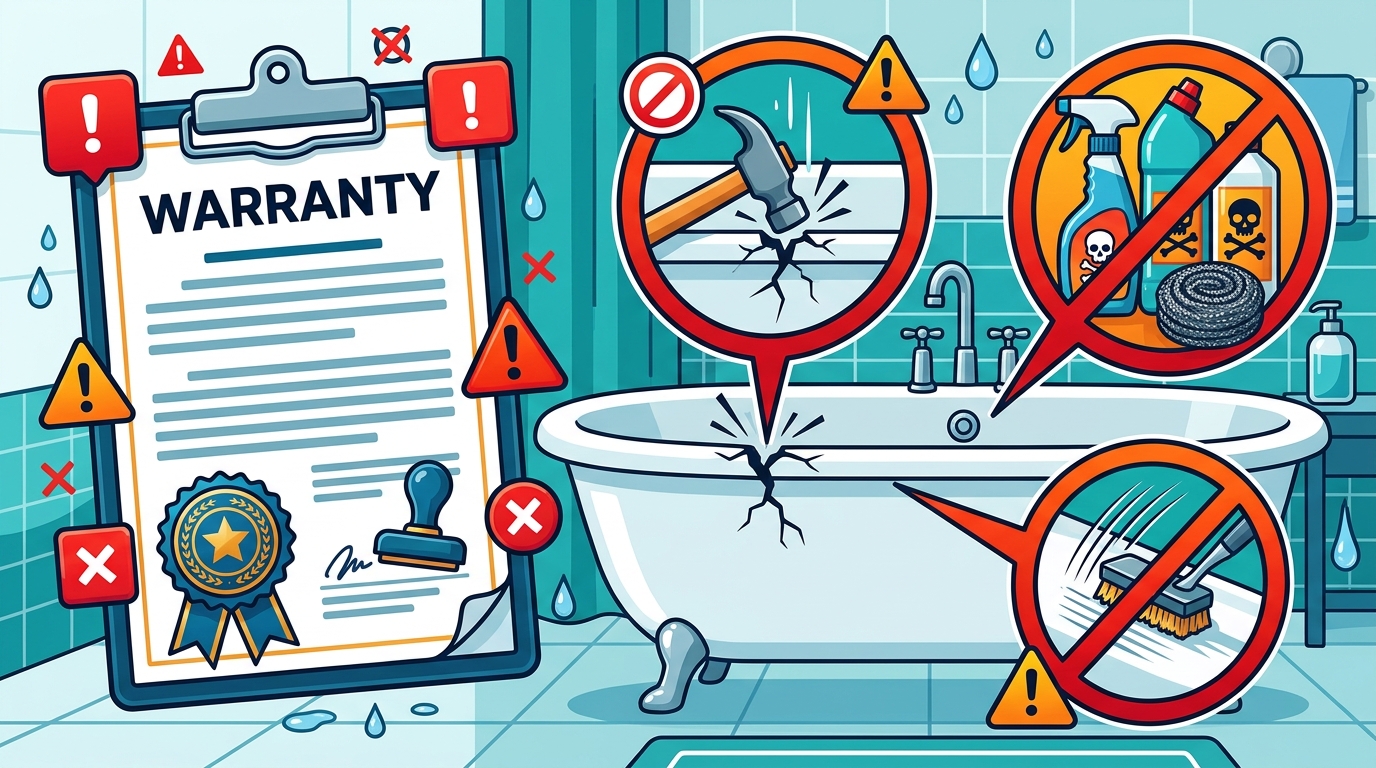
Physical impact is one of the most common reasons a warranty claim is denied. Dropping heavy objects, such as a metal soap dish, a glass bottle, or a ceramic toy, can chip or crack the finish. These types of impacts are excluded because they are unpredictable and outside the control of the refinishing technician. Similarly, using bath mats with suction cups is often a specific exclusion. Suction cups can pull minerals from the water and etch into the surface, causing the coating to lift or peel over time.
Scratches and abrasions from using scouring pads or abrasive cleaners are also excluded. A refinished surface requires gentle cleaning to maintain its integrity. If a homeowner uses a harsh abrasive to remove a stain, the resulting scratches are not covered. Additionally, damage caused by leaky plumbing is a frequent exclusion. Constant water exposure from a leaking faucet or pipe can erode the finish and cause adhesion failure, which is considered a maintenance issue rather than a defect in the reglazing work.
Which cleaning products and chemicals void the warranty?
Chemical damage is a major category of warranty exclusions. Most professional coatings are sensitive to strong acids, bases, and solvents. Using bleach, ammonia, or harsh drain cleaners that come into contact with the refinished surface can cause discoloration, blistering, or peeling. The warranty typically requires homeowners to use mild, non-abrasive cleaners and to rinse them thoroughly. If a homeowner uses a product that is not recommended for refinished surfaces and the finish is damaged, the claim will likely be denied.
It is important to read the care sheet provided with the job. This document lists specific products that are safe to use and those that should be avoided. For example, liquid drain cleaners are generally safer than powders or crystals, but they must be applied carefully to avoid splashing onto the tub walls. Failure to follow these specific care instructions is a direct cause of warranty voiding. Homeowners should treat the refinished surface with the same care they would give to a high-end painted car or a delicate countertop.
Are pre-existing structural issues covered by the warranty?
Warranties cover the new finish, not the underlying structure of the tub or shower. If a fiberglass tub has a crack or a soft spot that was not repaired before the reglazing process, the warranty will not cover the resulting failure. Professional refinishing companies inspect the surface before applying the new coat. If a structural repair is needed, it must be completed and approved before the finish is applied. If a crack appears later due to the underlying structure flexing or moving, it is not a defect in the finish but a failure of the substrate.
This is why it is crucial to have a professional evaluate the condition of the tub before refinishing. A surface patch on a flexing floor will not last, and the warranty will not cover the failure. The warranty assumes that the base material is sound and stable. If the tub is moved, or if the support structure underneath shifts, the finish may crack or peel. These structural changes are excluded from coverage because they are not related to the quality of the reglazing application.
How can homeowners protect their reglazing investment?
The best way to ensure your warranty remains valid is to follow the care and maintenance guidelines provided by the professional. This includes using only recommended cleaners, avoiding abrasive tools, and repairing any leaks in the plumbing immediately. Regular maintenance helps the finish last longer and keeps it looking fresh. If you notice a small chip or scratch, contact the refinishing company promptly. Small issues can often be repaired quickly, but if left unattended, they can lead to larger problems that are not covered by the warranty.
Excellence Reglazing provides a care and maintenance sheet with every job to help homeowners understand these requirements. By following these simple steps, you can protect your investment and enjoy a refreshed bathroom for years. If you have questions about what is covered or how to care for your new finish, it is always best to ask the professional who performed the work.
Key Takeaways
- Warranties cover defects in materials and workmanship, not user error or physical impact.
- Dropping heavy objects or using suction-cup bath mats can void the warranty.
- Harsh chemicals like bleach, ammonia, and abrasive cleaners are excluded from coverage.
- Pre-existing structural cracks or flexing in the tub are not covered by the finish warranty.
- Leaky plumbing that erodes the finish is considered a maintenance issue, not a defect.
- Always follow the specific care sheet provided with your reglazing job.
Frequently Asked Questions
Does the warranty cover color fading?
Yes, if the fading is caused by a defect in the product or workmanship, it is typically covered. However, if the fading is due to exposure to harsh chemicals or improper cleaning, it may be excluded. The technician will inspect the surface to determine the cause of the fading.
Can I use a bath mat with suction cups?
No, most warranties exclude the use of bath mats with suction cups. Suction cups can etch into the surface and cause the coating to lift. It is best to use a non-slip mat that does not have suction cups or to avoid mats altogether.
What if I drop a heavy object on the tub?
Damage caused by dropping heavy objects is not covered by the warranty. This is considered physical impact and user error. You may need to pay for a repair to fix the chip or crack.
Conclusion
Understanding what a reglazing warranty does not cover is just as important as knowing what it does. By avoiding harsh chemicals, physical impacts, and neglecting plumbing leaks, you can protect your investment and keep your warranty valid. For a professional assessment of your tub's condition and a clear explanation of warranty terms, contact our team. Learn more: Contact Excellence Reglazing.