
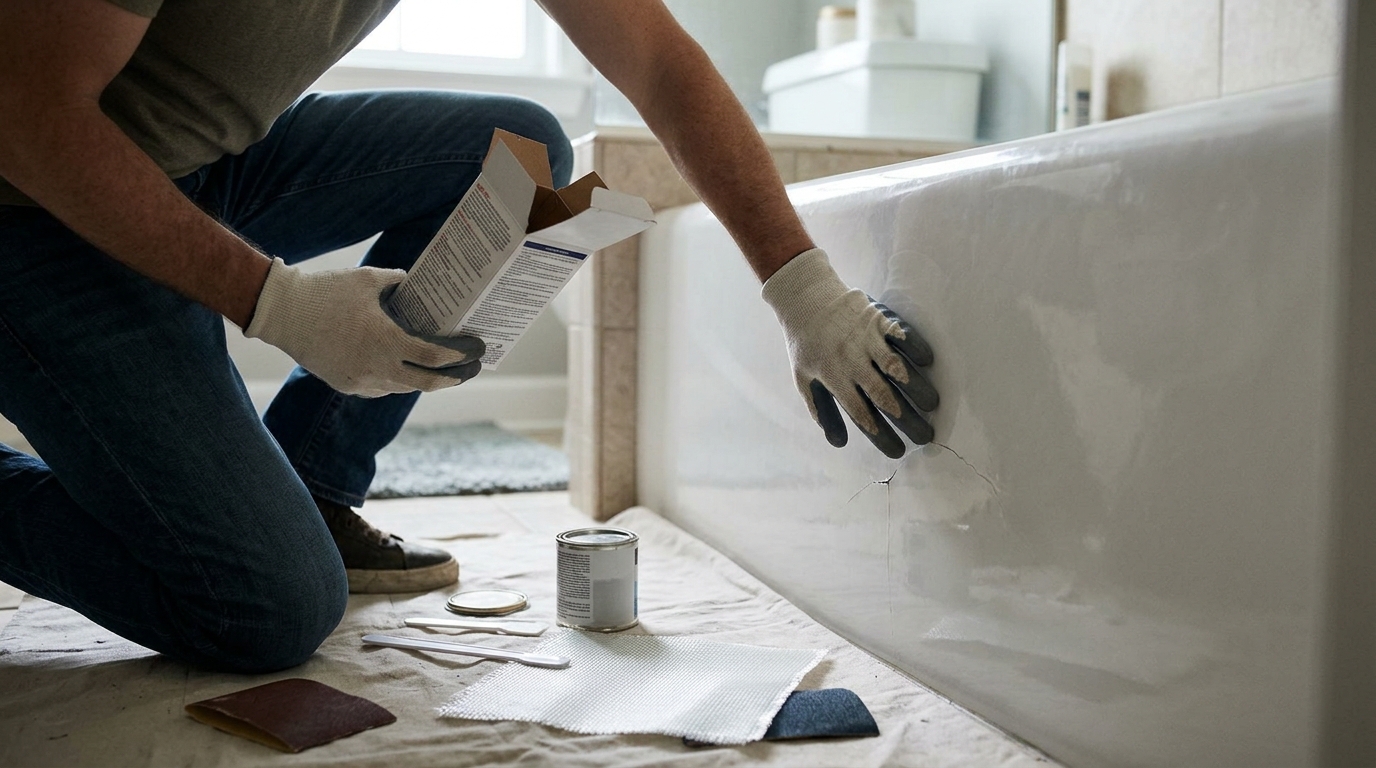
DIY fiberglass repair kits can seal small, surface-level cracks in a bathtub, but they rarely address the underlying structural weakness that caused the damage. For larger cracks or flexing floors, these kits often fail because they do not provide the necessary support underneath the fixture. Professional repair is typically required to stabilize the tub and prevent the crack from returning.
The Limitations of Surface-Only Repairs
Fiberglass tubs and shower floors crack for specific reasons, including movement, insufficient support, impact, or age. A standard DIY kit usually contains a resin and fiberglass cloth or mat. While this material is strong, it is designed to patch a hole or crack, not to reinforce a floor that is flexing under weight. If the tub floor moves when you step on it, a surface patch will likely crack again within months. This is because the stress is coming from below, not just the surface layer.
Excellence Reglazing evaluates the damaged area to determine if structural support is needed before completing any repair. This assessment is critical because a repair is only as good as the surface supporting it. If the floor continues to flex after the crack is repaired, that movement places new stress on the repaired area, leading to failure.
When a DIY Kit Might Be Enough
There are specific scenarios where a DIY kit is a viable option. If the crack is small, located in a non-weight-bearing area, and the surrounding fiberglass is rigid and stable, a surface repair might hold. For example, a small chip or hairline crack on the side wall of a tub, away from the floor, may be successfully patched with a kit. The key indicator is stability. If you can press on the area around the crack and feel no give or flex, the structure is likely sound.
However, most bathtub cracks occur on the floor. This is the area that bears the most weight. If the crack is on the floor, the likelihood of it being caused by flexing is high. In these cases, a DIY kit is a temporary fix at best. It may stop a leak for a few weeks, but it does not solve the root cause. Homeowners often find themselves spending money on multiple kits over time, which is more expensive than a single professional repair.
Why Structural Support Matters
Structural support is the addition of material underneath a fiberglass tub or shower floor to stabilize it. When a floor flexes, it creates stress points that lead to cracking. By adding support underneath, you reduce the flexing and strengthen the repair area. This is a step that DIY kits cannot perform because they only work on the visible surface. You cannot add support underneath a tub without removing it or accessing the subfloor, which is a major construction project.
Professional technicians can often add support through the drain or by accessing the area from below if the tub is in a raised bathroom. This allows them to reinforce the floor before rebuilding the fiberglass surface. This approach helps prevent the crack from coming back. It addresses the mechanical issue rather than just the cosmetic one.
Risks of Improper DIY Application
Applying fiberglass repair kits requires specific skills. The resin must be mixed correctly, the cloth must be saturated properly, and the area must be clean and dry. Errors in application can lead to a weak bond. If the bond fails, the crack will reopen. Furthermore, improper mixing can lead to a repair that is brittle or soft. This can create a new problem that is harder to fix than the original crack.
There is also a safety risk. Fiberglass dust and resin fumes can be irritating. Without proper ventilation and protective gear, you may experience respiratory issues. Additionally, if the repair fails and water leaks into the subfloor, it can cause mold and wood rot. This type of hidden damage is expensive to repair. It is often more costly than the original tub repair.
Professional Repair vs. DIY Kits
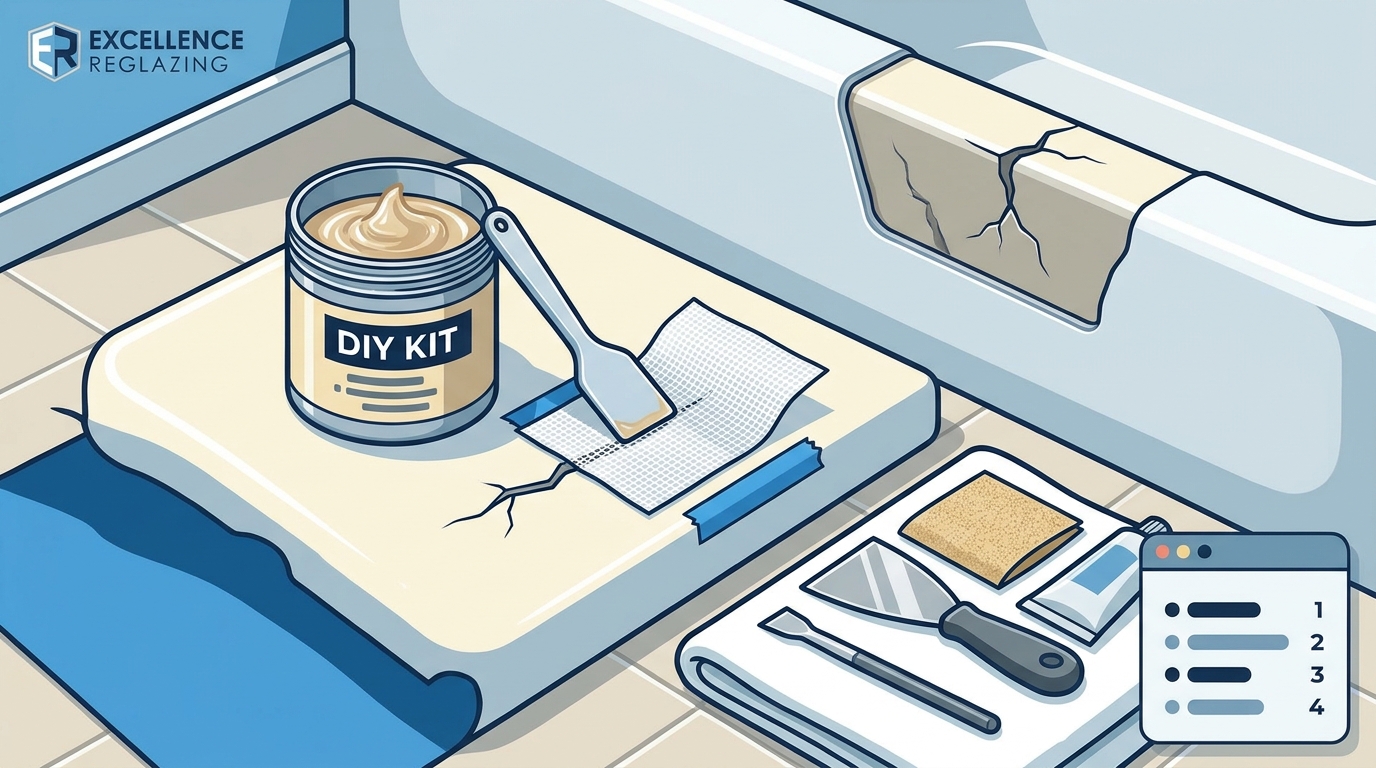
Professional repair involves a comprehensive process. It starts with an inspection to determine the extent of the damage. The damaged section is opened and prepared so the repair can properly bond to sound material. If needed, structural support is built underneath. The fiberglass is then rebuilt and reinforced to restore the shape and strength of the repair area. Finally, the repaired area is prepared and refinished to create a clean, finished appearance that blends with the surrounding surface.
Key Takeaways
- DIY kits can seal small, surface-level cracks in stable areas.
- They do not address underlying structural weakness or flexing.
- Floor cracks are often caused by movement, which kits cannot fix.
- Professional repair includes structural support when needed.
- Improper DIY application can lead to bond failure and leaks.
- Hidden water damage from failed repairs is costly to fix.
- Professional repairs are reinforced and refinished for durability.
Frequently Asked Questions
Can a DIY kit fix a crack on the bathtub floor?
No, not effectively. Floor cracks are usually caused by flexing. A surface patch will likely crack again because the floor continues to move. Professional repair with structural support is needed for floor cracks.
How long does a DIY fiberglass repair last?
It depends on the cause of the crack. If the tub is stable, it may last years. If the tub is flexing, it may fail in weeks or months. Most floor cracks fail quickly with DIY kits.
Do I need to remove the tub to add support?
Not always. Professionals can often add support from below or through the drain. This allows them to stabilize the floor without removing the entire fixture.
Is it safe to use a tub with a DIY repair?
It is safe if the repair is done correctly and the tub is stable. However, if the repair fails, water can leak into the subfloor. This can cause mold and rot. Monitor the repair closely.
Can I reglaze over a DIY repair?
Yes, but only if the repair is smooth and stable. If the repair is uneven or the tub is flexing, the reglaze will likely crack. Professional repair and refinishing is the best option for a smooth finish.
What is the difference between a patch and a structural repair?
A patch covers the crack on the surface. A structural repair reinforces the area underneath to stop movement. Structural repair is necessary for long-term durability.
Conclusion
DIY fiberglass repair kits are a limited tool for bathtub repair. They can work for small, stable cracks, but they are not a solution for structural issues. If your tub floor is flexing or the crack is on the floor, a DIY kit is likely to fail. For a durable, long-term fix, professional repair is the best option. Contact Excellence Reglazing to evaluate your tub and determine if structural support is needed.