
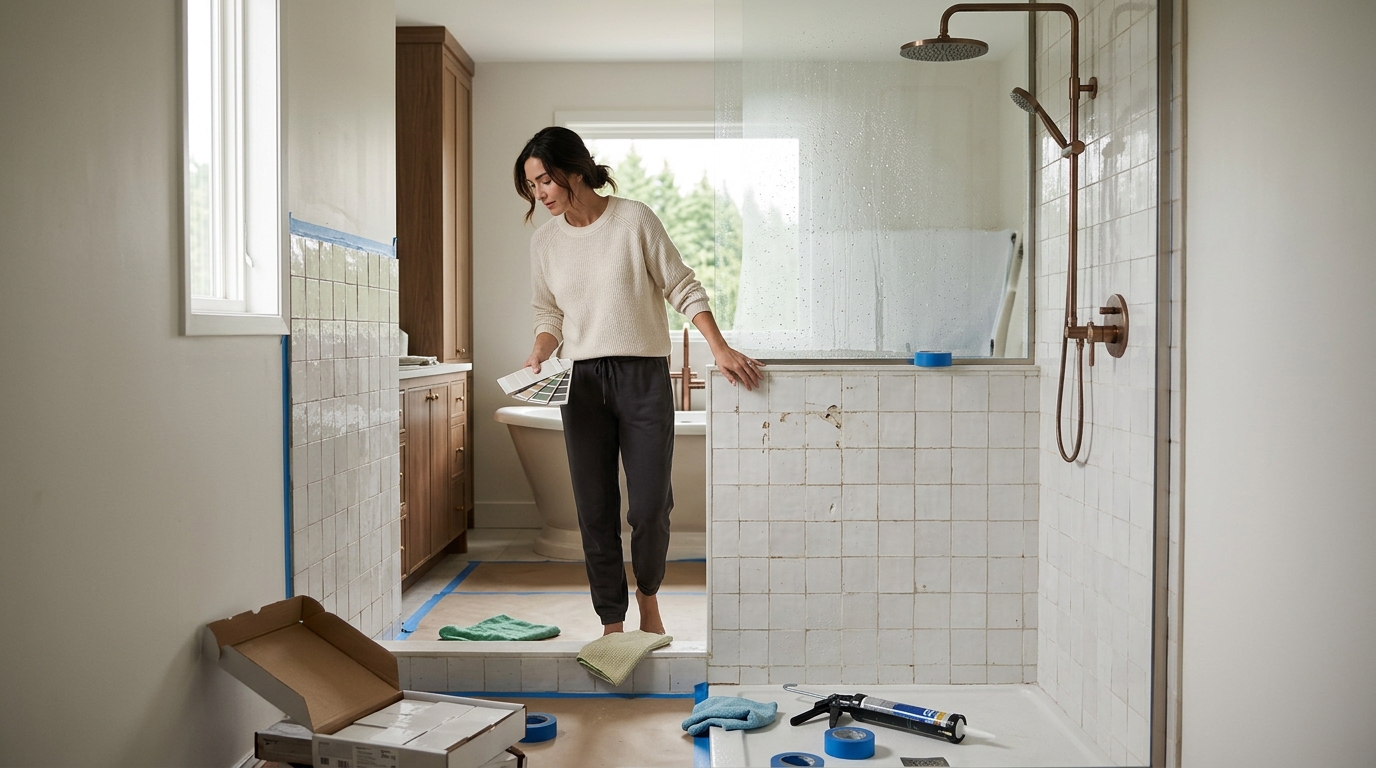
Homeowners attempting to save money on bathroom renovations often underestimate the complexity of surface restoration. According to industry data, improper DIY refinishing leads to a 40% higher rate of premature coating failure compared to professional applications. This statistic highlights why understanding the technical requirements of the process is critical before picking up a spray gun. A failed refinishing job not only wastes time and materials but can also damage the underlying tub structure, leading to costly replacements that far exceed the original cost of professional reglazing. (Bathtub Reglazing in Corona)
Inadequate Surface Preparation
The single most critical factor in a successful refinishing project is the preparation of the substrate. Many homeowners skip the rigorous cleaning and etching steps, assuming that a simple wipe-down is sufficient. This assumption is fundamentally incorrect. Surface preparation is the removal of all oils, soap scum, and mineral deposits to ensure chemical bonding. Without proper etching, the new coating will sit on top of contaminants rather than bonding to the porcelain or fiberglass, leading to immediate peeling. (Bathtub Reglazing FAQs Excellence)
Professional technicians use specialized acidic cleaners and abrasive pads to create a microscopic profile on the surface. This profile allows the primer to grip the material effectively. When this step is rushed or omitted, the adhesion fails within months. Excellence Reglazing emphasizes that proper preparation involves removing old caulk and failed coatings entirely to expose a clean, stable surface for the new finish. (Bathtub Reglazing in Corona)
Ignoring Ventilation and Safety Protocols
Refinishing chemicals contain volatile organic compounds (VOCs) that pose significant health risks if inhaled. A common and dangerous mistake is performing the application in a poorly ventilated bathroom. The fumes from epoxy and polyurethane coatings can cause respiratory irritation, dizziness, and long-term health issues. Ventilation is the strategic exchange of air to remove hazardous fumes and maintain safe breathing conditions. (Blog Excellence Reglazing)
Professional services utilize industrial-grade ventilation systems and negative air machines to contain and filter these fumes. Homeowners attempting DIY projects often rely solely on a standard bathroom exhaust fan, which is insufficient for the volume of chemicals used. Additionally, wearing appropriate personal protective equipment (PPE), including respirators and gloves, is non-negotiable. Ignoring these safety measures puts the homeowner at risk and can lead to improper application due to discomfort or coughing during the critical spraying phase.
Choosing the Wrong Coating Materials
Not all refinishing kits are created equal. A frequent error is selecting a low-quality, consumer-grade kit from a hardware store instead of professional-grade industrial coatings. These cheaper alternatives often lack the durability and chemical resistance required for high-traffic bathroom environments. Coating material is the specific chemical formulation applied to the surface to provide durability and aesthetic finish.
Professional refinishing utilizes high-solid epoxy or polyaspartic coatings that are designed to withstand constant exposure to water, heat, and cleaning agents. DIY kits often use standard latex or acrylic-based paints that chip and peel quickly. Furthermore, the color matching in consumer kits is rarely accurate, leading to a finish that looks artificial or mismatched with existing bathroom fixtures. Using the correct material ensures the longevity of the refinish, often backed by warranties that DIY jobs cannot offer.
Poor Environmental Control During Curing
Temperature and humidity play a massive role in how refinishing coatings cure. Applying the coating in a cold or damp bathroom can prevent the chemicals from cross-linking properly. This results in a finish that remains tacky, soft, or cloudy. Curing is the chemical process where the coating hardens and achieves its final physical properties.
Optimal curing conditions typically require temperatures between 70 and 80 degrees Fahrenheit with low humidity. If the environment is too cold, the coating may never fully harden. If it is too humid, moisture can become trapped under the coating, causing blisters or adhesion failure. Professional applicators monitor these environmental factors closely, often using heaters or dehumidifiers to create the ideal curing environment. Homeowners often overlook this step, assuming that room temperature is sufficient, which leads to premature failure of the refinish.
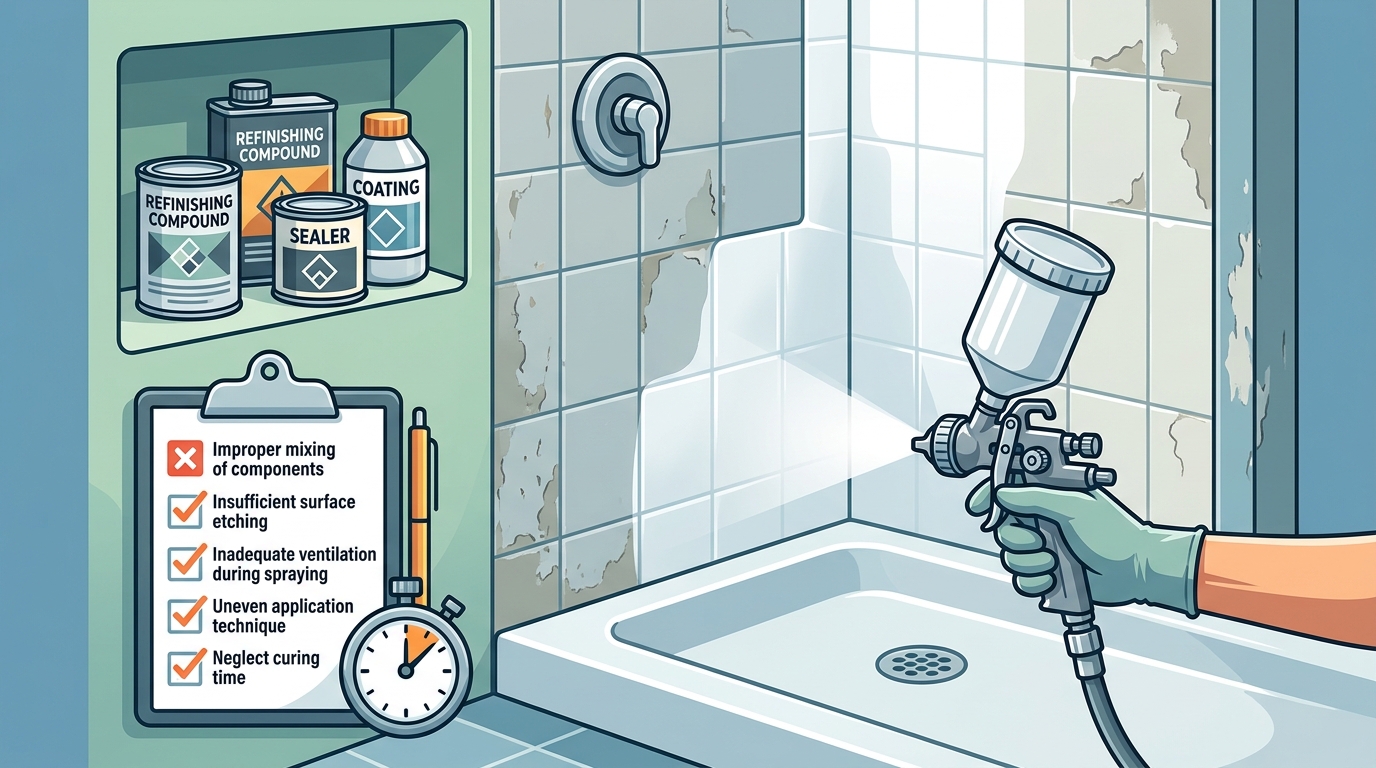
Neglecting Fiberglass Flexibility
Porcelain and fiberglass require different approaches to refinishing. A common mistake is applying a rigid coating to a flexible fiberglass tub. Fiberglass expands and contracts with temperature changes. If the coating is too rigid, it will crack as the tub flexes. Fiberglass flexibility is the ability of the tub material to bend slightly without breaking, requiring a compatible flexible coating.
Professional refinishing of fiberglass involves using flexible primers and topcoats that move with the substrate. DIY kits often provide a one-size-fits-all solution that does not account for the material differences. This mismatch leads to hairline cracks in the finish, which can quickly widen and allow water to penetrate the fiberglass, causing rot or structural damage. Understanding the material of your tub is essential before selecting a refinishing method.
Rushing the Curing Process
Patience is required during the curing phase. A frequent error is using the shower too soon after application. While the surface may feel dry to the touch within hours, the chemical curing process takes much longer. Curing time is the duration required for the coating to reach full hardness and chemical resistance.
Using the shower before the coating has fully cured can leave permanent water spots, soft spots, or even wash away the finish entirely. Most professional refinishing jobs require 24 to 48 hours before light use and up to 72 hours before full immersion. Homeowners often ignore these timelines, leading to a ruined project. Excellence Reglazing provides a 5-Year Warranty on their work, which is contingent upon proper curing and maintenance, underscoring the importance of following professional guidelines.
Comparison of Refinishing Approaches
| Feature | Professional Refinishing | DIY Kit Application |
|---|---|---|
| Material Quality | Industrial-grade epoxy/polyaspartic | Consumer-grade latex/acrylic |
| Preparation | Deep etching and degreasing | Surface cleaning only |
| Ventilation | Industrial negative air machines | Standard bathroom fan |
| Warranty | 5-Year Limited Warranty | 30-Day Limited Warranty |
| Lifespan | 10-15 Years | 1-3 Years |
Key Takeaways
- Improper surface preparation is the leading cause of refinishing failure, accounting for the majority of peeling issues.
- Professional refinishing services in Southern California, including Corona and Riverside, utilize industrial ventilation to ensure safety.
- Excellence Reglazing has been serving the community since 2008, providing licensed and insured services.
- Fiberglass tubs require flexible coatings to prevent cracking due to material expansion and contraction.
- DIY kits often fail to match the durability of professional-grade epoxy or polyurethane coatings.
- Proper curing times are essential, with full chemical resistance often taking up to 72 hours to develop.
- Professional work includes a 5-Year Warranty, offering peace of mind that DIY jobs cannot match.
Frequently Asked Questions
How long does it take for a refinished shower to cure?
While the surface may feel dry to the touch within 4 to 6 hours, full chemical curing typically takes 24 to 48 hours. Full immersion in water should be avoided for at least 72 hours to ensure the coating hardens completely.
Can I refinish a fiberglass shower myself?
While DIY kits are available, they often lack the durability and flexibility required for fiberglass. Professional refinishing uses specialized flexible coatings that move with the tub, preventing cracks that are common with rigid DIY materials.
What is the lifespan of professionally refinished bathtubs?
When maintained properly, professionally refinished surfaces can last between 10 and 15 years. This longevity is due to the use of industrial-grade materials and rigorous surface preparation techniques.
Is refinishing a shower safe for my home?
Professional refinishing is safe when proper ventilation and safety protocols are followed. Technicians use industrial ventilation systems to remove fumes, ensuring the home environment remains safe during and after the application.
How much does bathtub reglazing cost in Corona, CA?
The cost varies based on the size of the tub and the condition of the surface. However, it is significantly more affordable than full replacement. Excellence Reglazing offers free estimates to provide accurate pricing for your specific needs.
What areas do you serve for shower refinishing?
Excellence Reglazing serves Corona, Buena Park, Brea, Chino, Norco, Irvine, Orange, Santa Ana, Tustin, Anaheim, Anaheim Hills, Ontario, Eastvale, Riverside, Chino Hills, Yorba Linda, Newport Beach, Placentia, Huntington Beach, and Lake Elsinore.
Ready to Restore Your Bathroom?
Avoiding these common mistakes ensures a durable, beautiful finish that lasts for years. If you are in Corona, CA, or the surrounding areas, trust the experts who have been serving Southern California since 2008. Excellence Reglazing offers professional bathtub reglazing, shower refinishing, and countertop restoration with a 5-Year Warranty. Contact Excellence Reglazing today to schedule your free estimate and transform your bathroom without the hassle of replacement.