
Porcelain bathtubs are the most popular tub type in American homes, yet years of daily use take a visible toll. Chips, stains, rust, and outdated colors can make an otherwise solid tub look like it belongs in a landfill. The good news is that porcelain tub refinishing restores the surface without removing the tub, keeping the project faster, less disruptive, and far more affordable than a full replacement. Below, we break down the seven most common reasons homeowners in Corona, CA, and beyond choose refinishing over replacement, and why it makes financial sense every time.
1. Chips and Cracks in the Porcelain
Chip damage is one of the most common problems porcelain tubs face. Chips typically occur when something hard, heavy, or pointed strikes the surface and detaches a piece of the porcelain coating. Left unrepaired, chips expose the metal or fiberglass substrate underneath, inviting moisture intrusion.
Beyond cosmetics, any crack or chip can promote the growth of mold and mildew as water seeps into the gap. Professional tub reglazing fills and seals these imperfections, restoring a smooth, watertight finish in just a few hours.
2. Discoloration and Staining
Discoloration is a surface-level problem that worsens over time. Porcelain enamel is a melted glass covering fired in a furnace. Once the glaze wears thin, minerals in hard water, soap residue, and cleaning chemicals leave permanent stains that no amount of scrubbing can remove.
Refinishing applies a fresh, high-gloss coating that covers discoloration completely and makes the tub look brand new. If your bathroom in Corona or the Inland Empire has stubborn yellow or brown stains, check out the Excellence Reglazing FAQ for answers on how the process works.
3. Rust and Corrosion Around Drains
Rust is a sign that the porcelain has worn through and the metal underneath has started reacting to moisture. Steel and cast-iron tubs are especially vulnerable around the drain and overflow areas, where small leaks from faucets or spouts accelerate corrosion. Without intervention, rust spots expand and can eventually open holes in the tub body.
Professional refinishers treat the corroded area, apply a bonding filler, and coat the entire surface so the repair is invisible. Excellence Reglazing handles tub repairs of all sizes, including deep rust damage.
4. Outdated Tub Color
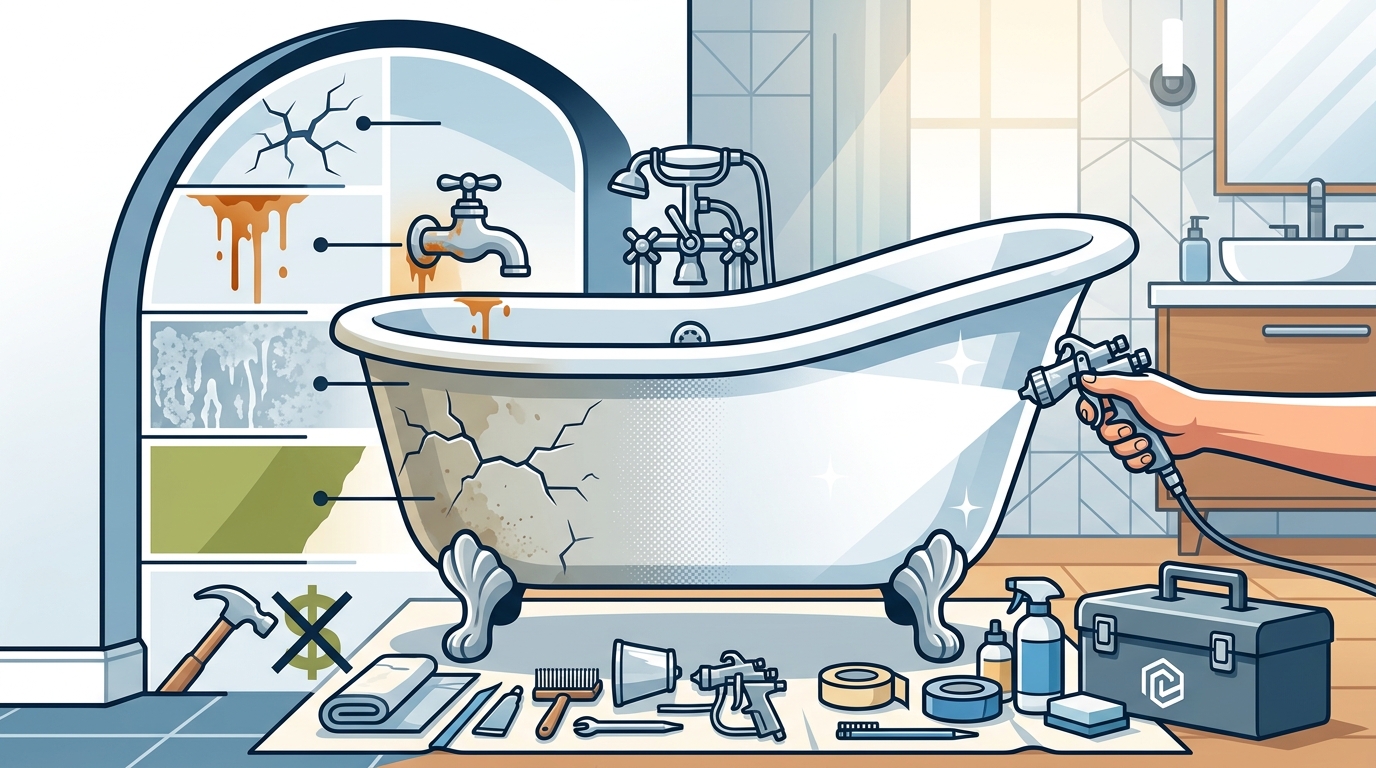
Avocado green, harvest gold, and powder blue were bathroom staples in the 1970s and 1980s. Today, those colors clash with modern decor. A color change is a popular reason homeowners pursue refinishing rather than a costly tear-out. Pigments can be added to the coating material to produce a clean white or virtually any designer shade.
Color Change vs. Full Replacement
| Factor | Refinishing (Color Change) | Full Tub Replacement |
|---|---|---|
| Average Cost | $250 - $600 | $1,500 - $5,000+ |
| Time to Complete | 3 - 5 hours | 2 - 5 days |
| Demolition Required | No | Yes |
| Color Options | Wide palette | Limited to manufacturer stock |
| Downtime | 24 hours | Several days |
Refinishing is the clear winner when the tub itself is structurally sound. Visit countertop and vanity refinishing if you want to update other surfaces to match your new tub color.
5. Hard-to-Clean, Porous Surface
A porous surface is one where the original glaze has eroded, leaving microscopic pits that trap soap, oils, and dirt. Older tubs are normally worn and porous, which is why they feel rough and never look truly clean no matter how hard you scrub. Refinishing seals those pits under a smooth, non-porous coating that is easy to wipe down for years.
6. Significant Cost Savings Over Replacement
The most compelling financial reason to refinish a porcelain tub is the savings. Homeowners can save over 70% compared to replacing their tub, according to Excellence Reglazing. A standard porcelain tub refinish typically costs between $240 and $450, while a full replacement with demolition, plumbing, and installation can run $3,000 to $5,000 or more.
What You Avoid With Refinishing
- Demolition debris and disposal fees
- Plumbing disconnects and reconnects
- Potential wall and floor tile damage
- Days of bathroom downtime
According to Bob Vila, professional bathtub resurfacing can last 10 to 15 years before the glaze begins to wear, making it a strong long-term investment.
7. Peeling or Failing Previous Coating
A previously refinished tub may start peeling if the original job used low-quality materials or skipped critical prep steps like acid etching. A previous coating changes the prep requirements, especially if it is peeling, bubbling, or separating at the edges. A qualified refinisher will strip the old coating, re-prep the surface, and apply a durable new finish.
If you suspect your tub was coated before, mention it upfront when you request a free estimate from Excellence Reglazing so the team can plan accordingly.
Key Takeaways
- Chips and cracks are the number-one reason for porcelain tub refinishing and should be repaired promptly to prevent mold growth.
- Discoloration, staining, and dullness signal that the original glaze has worn through.
- Rust around drains means moisture is reaching the metal substrate and will worsen without treatment.
- Outdated tub colors can be changed during refinishing for a fraction of replacement cost.
- Porous, hard-to-clean surfaces become smooth and easy to maintain after a professional reglaze.
- Refinishing saves homeowners over 70% versus a full tub replacement and is completed in hours, not days.
- Previously refinished tubs that are peeling can be stripped and recoated by a professional.
Frequently Asked Questions
What is porcelain tub refinishing?
Porcelain tub refinishing is a surface restoration process in which the tub is cleaned, prepped, repaired where needed, and then coated with a durable finish to restore a smooth, uniform appearance without removing the tub.
How long does a refinished porcelain tub last?
A professionally refinished porcelain tub typically lasts 10 to 15 years with proper care. Avoid abrasive cleaners and use non-slip mats to extend the life of the coating.
Can you change the color of a porcelain tub during refinishing?
Yes. Pigments can be mixed into the coating material to produce white, off-white, or custom designer colors, making it easy to update an outdated tub without replacement.
Is refinishing a porcelain tub worth it?
Absolutely. Refinishing saves over 70% compared to replacement, takes only a few hours, and produces results that most people cannot distinguish from a brand-new tub.
Does refinishing fix rust on a porcelain tub?
In most cases, yes. Rust spots are treated, the damaged area is filled and smoothed, and the entire tub is recoated. Deep structural rust may require additional evaluation.
How much does porcelain tub refinishing cost?
A standard porcelain tub refinish typically ranges from $240 to $600 depending on tub size, condition, and color choice. This is significantly less than the $1,500 to $5,000+ cost of a full replacement.
How quickly can I use my tub after refinishing?
Most professionally refinished tubs are ready for use within 24 hours of the coating application.
Ready to Restore Your Porcelain Tub?
If your porcelain bathtub is chipped, stained, rusted, or just plain outdated, Excellence Reglazing can make it look brand new in just a few hours. Serving Corona, CA, and surrounding communities, we save homeowners over 70% compared to tub replacement. Request your free quote today and see the difference professional reglazing can make.