
Fiberglass Tub Refinishing Process: How It Differs From Other Tub Types
Fiberglass bathtubs are among the most common fixtures in American homes thanks to their lightweight build and affordable price point. But when they start showing cracks, fading, or dullness, the refinishing process is not identical to what professionals do on porcelain or cast iron tubs. Understanding these differences helps you make smarter decisions, avoid costly mistakes, and get results that last 10 to 15 years. In this guide, the team at Excellence Reglazing breaks down exactly how fiberglass tub refinishing works and why it requires specialized techniques.
What Is a Fiberglass Tub?
A fiberglass bathtub is a fixture made by layering woven glass fibers with resin inside a mold, then finishing it with a gel coat. Fiberglass tubs are lightweight and budget-friendly, which is why they appear in millions of homes. However, they are more prone to scratching, cracking, and fading over time than porcelain or cast iron alternatives.
Because the surface is a gel coat rather than fired enamel, fiberglass demands a different preparation and coating approach during refinishing. This distinction is the foundation of everything that follows.
Key Differences: Fiberglass vs. Porcelain Refinishing
Porcelain tubs feature a hard enamel surface fused to iron or steel. Refinishers typically use acid etching to create a bond-ready profile on porcelain. Fiberglass tubs, however, are sanded instead of acid-etched because the gel coat responds better to mechanical abrasion. This single difference changes the entire prep workflow.
| Factor | Fiberglass Tub | Porcelain Tub |
|---|---|---|
| Surface Material | Gel coat over fiberglass resin | Porcelain enamel over iron/steel |
| Prep Method | Mechanical sanding | Acid etching |
| Crack Repair | Fiberglass filler and cloth | Epoxy chip filler |
| Topcoat Type | Acrylic urethane or epoxy | Epoxy urethane |
| Typical Process Time | 2 to 4 hours | 3 to 5 hours |
| Cure Before Use | 24 to 48 hours | 24 to 72 hours |
| Ventilation Needs | High (fiberglass dust + fumes) | Moderate to High |
Proper ventilation is especially important when working on a fiberglass surface because sanding releases fine glass particles. Lowe's refinishing guide emphasizes this safety consideration for fiberglass specifically.
The Fiberglass Refinishing Process Step by Step
1. Deep Cleaning and Degreasing
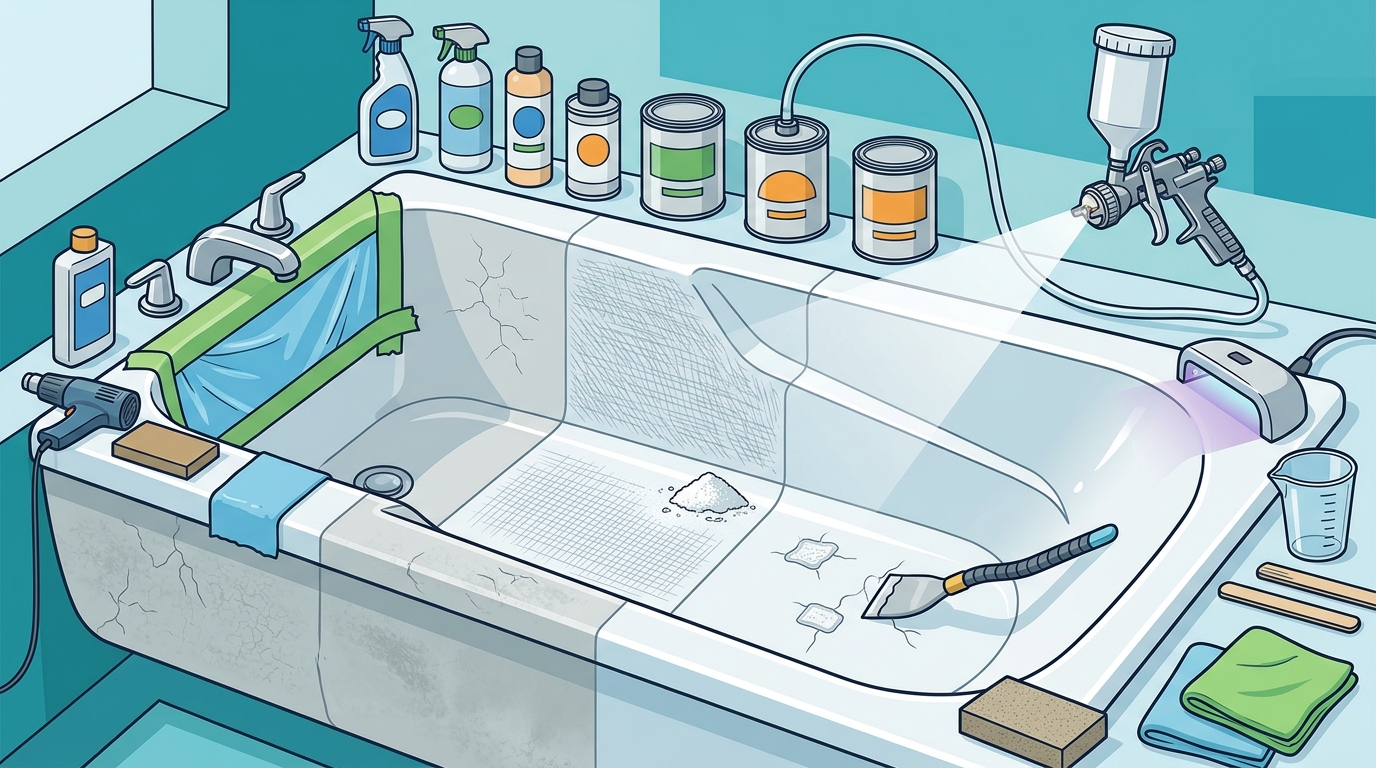
The tub is cleaned with industrial-strength degreasers to strip away soap scum, body oils, mineral deposits, and mildew. Any remaining contaminants will prevent the new coating from bonding properly, which is one of the biggest causes of peeling and bubbling in failed refinishing jobs.
2. Sanding and Surface Preparation
Unlike porcelain tubs that receive an acid etch, fiberglass surfaces are mechanically sanded to remove the old gel coat and create a rough profile for bonding. Sanding also reveals hidden damage like hairline cracks or soft spots that need repair before coating.
3. Crack and Chip Repair
Fiberglass tubs commonly develop stress cracks from flexing, especially along the tub bottom. Technicians fill these with two-part epoxy or fiberglass filler and, in severe cases, rebuild the area with fiberglass cloth and resin. A properly rebuilt bottom can actually be stronger than the original. If your tub has visible damage, check out our fiberglass tub repair page for more details.
4. Priming, Coating, and Curing
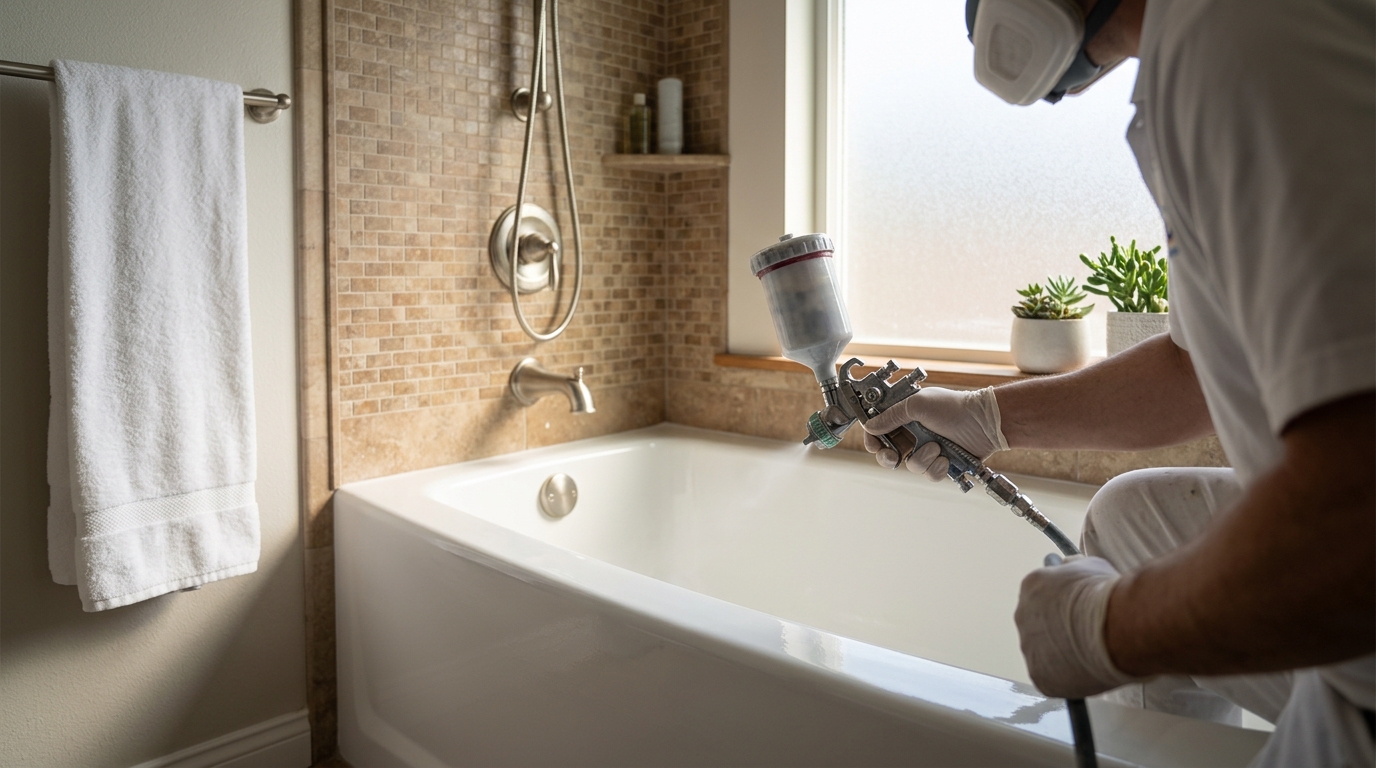
A high-adhesion epoxy or urethane primer is sprayed evenly to form the bonding foundation. Then multiple thin layers of acrylic polyurethane topcoat are applied using an HVLP precision sprayer. Each layer must dry before the next is added. The tub typically allows light use within 24 hours, with full curing continuing over several days.
Common Fiberglass Issues That Affect Refinishing
Fiberglass tubs develop problems that porcelain and cast iron tubs rarely face. The gel coat fades and discolors under harsh cleaners, and the material is porous enough to absorb moisture over time. Stress cracks form where the tub flexes under weight, particularly around the bottom and drain area.
It is important to address even small cracks before they grow larger and begin to leak. Water trapped beneath the fixture can lead to water damage or mold in the subfloor. The good news is that professional refinishing can repair these issues and restore the surface to a like-new condition. Visit our fiberglass shower and tub service page to see what we handle.
Why Professional Refinishing Matters for Fiberglass
DIY refinishing kits often skip critical steps like acid etching (on compatible surfaces) or proper priming. On fiberglass, these shortcuts cause premature coating failure. Professional-grade coatings cure harder and last significantly longer than consumer-level products.
A professional refinisher also uses proper exhaust ventilation systems to manage toxic fumes during the coating process. At Excellence Reglazing, our technicians follow a multi-step process specifically calibrated for fiberglass surfaces, ensuring the finish bonds correctly and looks flawless.
Cost: Refinishing vs. Replacing a Fiberglass Tub
Replacing a fiberglass tub involves demolition, plumbing work, new fixtures, and tile repair. The total cost can easily exceed $2,500 to $5,000 depending on your bathroom layout. Professional refinishing, on the other hand, typically saves homeowners over 70% compared to full replacement.
The result is a smooth, glossy, and durable surface that extends the tub's usable lifespan by 10 to 15 years when done correctly. For homeowners in Corona, CA and surrounding areas, contact Excellence Reglazing for a free estimate on your fiberglass tub project.
Key Takeaways
- Fiberglass tubs require sanding rather than acid etching during the preparation phase, which is the primary difference from porcelain tub refinishing.
- Stress cracks in fiberglass are repaired with specialized filler or fiberglass cloth and resin before any coating is applied.
- Professional-grade acrylic urethane topcoats last significantly longer than DIY kits.
- Proper ventilation is critical when refinishing fiberglass due to fine glass particles and chemical fumes.
- Refinishing saves over 70% versus full tub replacement and extends the tub's life by 10 to 15 years.
- Light use is typically safe within 24 hours, but full curing takes several days.
- Always hire a professional for fiberglass refinishing to avoid peeling, bubbling, and premature failure.
Frequently Asked Questions
Can fiberglass tubs actually be refinished?
Yes. Fiberglass tubs can be refinished by a professional using commercial-grade coatings designed for the material. The process restores color, gloss, and structural integrity, making even severely worn tubs look brand new.
How long does fiberglass tub refinishing take?
The hands-on refinishing process typically takes 2 to 4 hours. After that, the tub needs 24 to 48 hours of cure time before light use, with full hardening continuing over several additional days.
How is fiberglass refinishing different from porcelain refinishing?
The main difference is surface preparation. Fiberglass is sanded mechanically to create a bonding profile, while porcelain is acid-etched. Fiberglass also uses different filler materials for crack repair and may require specialized primers formulated for resin-based surfaces.
How long does a refinished fiberglass tub last?
When professionally refinished with quality materials, a fiberglass tub's new coating can last 10 to 15 years with proper care. Avoiding abrasive cleaners and harsh chemicals extends this lifespan further.
Is it better to refinish or replace a fiberglass tub?
Refinishing is almost always the better choice unless the tub has severe structural damage. It costs a fraction of replacement, avoids demolition, and can be completed in a single day. Excellence Reglazing saves customers over 70% compared to replacement.
What causes refinishing to fail on fiberglass tubs?
The most common causes of failure are inadequate surface cleaning, skipping the sanding step, using incompatible primers, and not allowing sufficient cure time. DIY kits frequently fail because they omit one or more of these critical steps.
Do I need to leave my house during fiberglass refinishing?
No. Professional refinishers use powerful exhaust systems to vent fumes outside. While there may be some odor for a few hours, staying in the house is safe. Just keep the bathroom well-ventilated and avoid using the tub until it has cured.
Can I change the color of my fiberglass tub during refinishing?
Absolutely. Professional refinishing allows you to choose from a wide range of solid colors. Many homeowners take the opportunity to update their tub color to match a new bathroom design. Browse our porcelain tubs page to see how color transformations work across materials.
Ready to Refinish Your Fiberglass Tub?
If your fiberglass tub is showing its age, you do not have to live with it or pay thousands for a replacement. Excellence Reglazing delivers professional fiberglass tub refinishing in Corona, CA and the surrounding Inland Empire. Request your free estimate today and see why our customers save over 70% compared to tub replacement.