
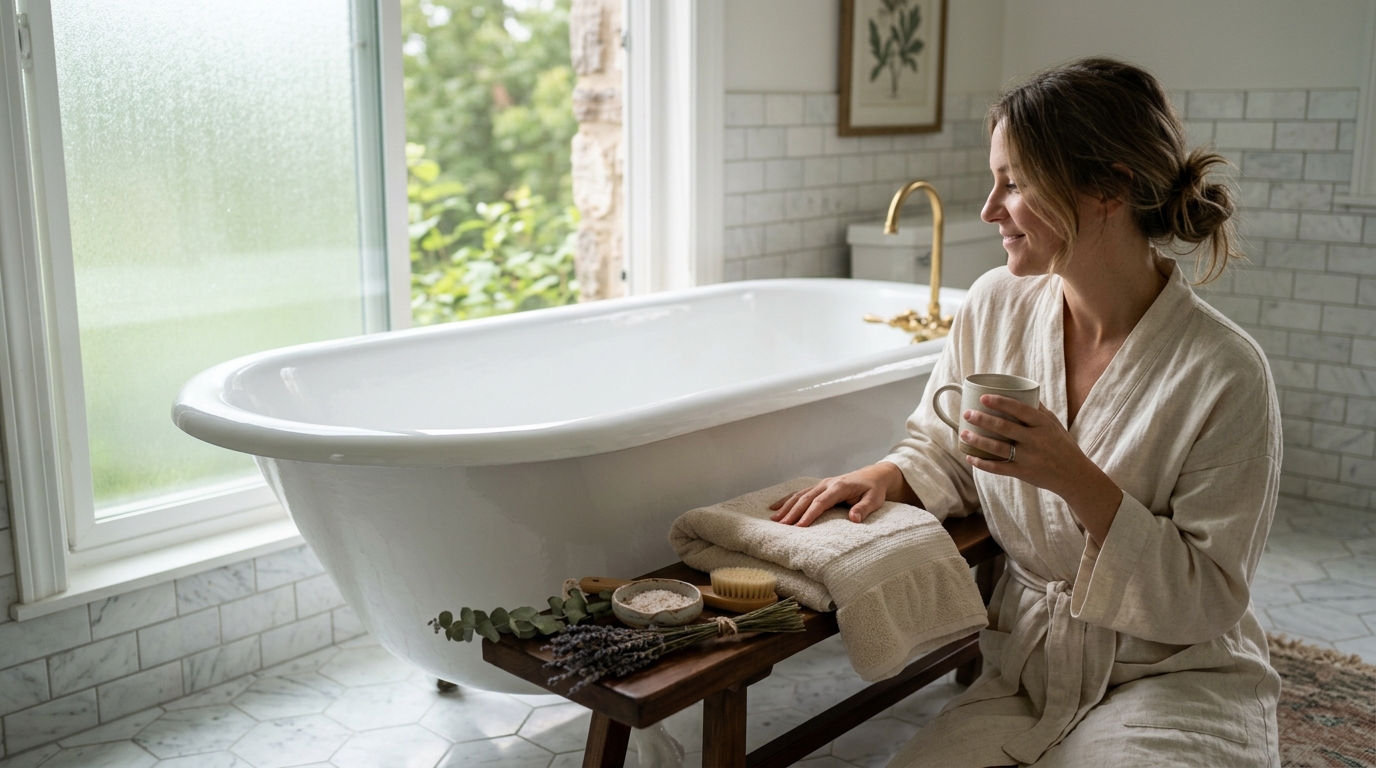
That stained, chipped porcelain tub doesn't have to go to a landfill. Professional reglazing can restore it to a glossy, like-new finish in a single day—saving you thousands compared to a full replacement. Below is a complete walkthrough of the process, real-world costs, and maintenance tips so you can make a confident decision.
Why Refinishing Beats Replacement for Most Porcelain Tubs
A full bathtub replacement involves demolition, plumbing modifications, tile work, and days of downtime. Refinishing sidesteps all of that. According to industry data, refinishing a tub typically costs between $300 and $600, whereas replacing a bathtub can range from $1,500 to $5,000 when you factor in labor, plumbing adjustments, and materials. That makes reglazing up to 75 – 80 % cheaper than ripping out the old fixture and installing a new one.
Beyond cost, refinishing is dramatically faster. A professional can complete the job in a few hours, and the tub is usually ready for use within 24 – 48 hours. Compare that to a replacement project that can stretch over one to two weeks once demolition, plumbing, and tiling are accounted for.
Environmental impact matters too. Refinishing reuses your existing tub, keeping heavy porcelain and cast-iron fixtures out of landfills while conserving the resources needed to manufacture a brand-new unit.
Step-by-Step: How Professional Porcelain Tub Reglazing Works
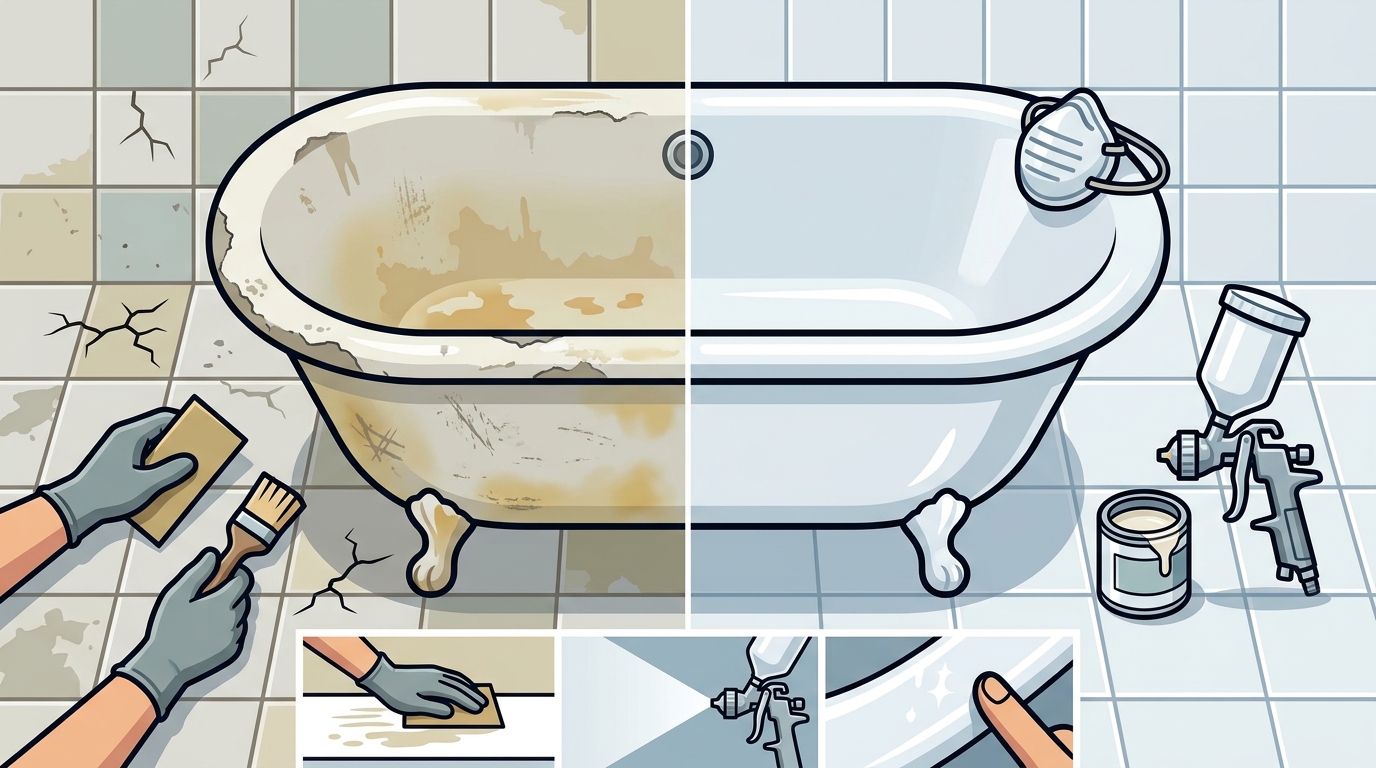
- Inspection & masking — The technician evaluates chips, cracks, rust spots, and staining. Surrounding tile, fixtures, and flooring are masked off to protect them from overspray.
- Deep cleaning & stripping — The existing finish is cleaned with industrial-grade solutions to remove soap scum, body oils, and mineral deposits. Old coatings are chemically stripped or sanded away.
- Surface repair — Chips and hairline cracks are filled with a two-part epoxy or polyester filler, then sanded flush. Rust on cast-iron substrates is treated before proceeding.
- Etching & priming — The surface is etched with an acid or bonding agent so the new coating adheres permanently. A specialty primer is then applied.
- Coating application — Multiple layers of a high-quality acrylic-urethane or polyurethane topcoat are sprayed on. Professional-grade coatings cure harder and last far longer than consumer DIY kits.
- Curing & final inspection — The tub cures for 24 – 48 hours. After curing, the technician removes masking, reinstalls drain hardware, and performs a final quality check.
What Does Porcelain Tub Reglazing Cost in 2026?
| Tub Type | Typical Cost Range |
|---|---|
| Standard porcelain tub | $350 – $600 |
| Antique porcelain clawfoot | $500 – $1,200 |
| Cast-iron tub | $350 – $650 |
| Fiberglass tub | $300 – $1,000 |
| Tub-and-shower combo | $600 – $1,000 |
Several variables push costs higher or lower: the condition of the surface, custom colour choices, geographic location, and whether surrounding tile is included in the project. Deep cracks, heavy rust, or extensive staining require extra prep that can add $100 – $250 to the total.
DIY Kits vs. Professional Reglazing: An Honest Comparison
Home-improvement stores sell DIY bathtub refinishing kits for roughly $30 – $100. While tempting on price, the results rarely match professional work. DIY coatings tend to be thinner, less chemical-resistant, and prone to peeling within a year or two. The chemicals involved also require proper ventilation and personal protective equipment.
Professional refinishing uses commercial-grade spray equipment and coatings that cure to a harder, more durable finish. The surface can last 10 – 15 years with proper care, whereas DIY results seldom exceed two to three years. If a DIY attempt goes wrong, you may end up paying a professional to strip the failed coating before reglazing—costing more in the long run.
When Refinishing Is the Right Call
- Your tub is structurally sound but looks worn, stained, or chipped.
- You love the size, style, or vintage character of your existing tub.
- Your plumbing is in good shape and doesn't need updating.
- You want a quick refresh—especially before selling your home.
- You own a heavy cast-iron or antique clawfoot that would be expensive and difficult to remove.
When Replacement Makes More Sense
- The tub has deep structural cracks, persistent leaks, or severe rust-through.
- You are planning a full bathroom remodel with new plumbing.
- You want to change the tub's size, shape, or position in the room.
- The tub is made of low-quality thin plastic that won't bond well with refinishing coatings.
How to Maintain a Refinished Porcelain Tub
- Use non-abrasive cleaners only. Avoid scouring powders, steel wool, and products containing bleach or ammonia. A soft cloth with mild dish soap or a cleaner specifically designed for refinished surfaces works best.
- Rinse after every use. Standing water with soap residue accelerates coating wear.
- Skip suction-cup mats. The suction can lift the new finish over time. Use a fabric bath mat instead.
- Address chips immediately. Small touch-up kits from your refinishing company can prevent moisture from getting under the coating.
- Keep drains clear. Slow drains cause water to sit in the tub longer than necessary, which can stain or soften the finish.
Key Takeaways
- Porcelain tub reglazing costs $350 – $600 on average—up to 80 % less than full replacement.
- The process is completed in one day, with a 24 – 48 hour cure time before use.
- Professional coatings last 10 – 15 years; DIY kits rarely exceed two to three years.
- Refinishing is best for structurally sound tubs with cosmetic damage; replacement is reserved for severe structural problems or full remodels.
- Proper maintenance—gentle cleaners, no suction-cup accessories, prompt chip repair—maximises the life of your new finish.
Frequently Asked Questions
How long does bathtub reglazing last?
With proper care and non-abrasive cleaning, a professionally reglazed porcelain tub typically lasts 10 – 15 years. Some high-quality reglazing jobs can extend to 15 – 20 years.
Can I change the colour of my porcelain tub when reglazing?
Yes. Professional refinishers offer a wide range of colours and finishes. You can go from dated almond or pink to a modern bright white, or even choose a custom shade to match a new design scheme.
How long do I have to wait to use my tub after reglazing?
Most professionals recommend waiting 24 – 48 hours for the coating to fully cure before running water in the tub.
Is the reglazing process safe?
Professional technicians use ventilation fans and respiratory protection to manage fumes from the coating chemicals. Homeowners are asked to stay out of the bathroom during application and for several hours afterward until fumes dissipate.
Will refinishing fix a cracked bathtub?
Hairline surface cracks and small chips can be filled and covered during refinishing. However, deep structural cracks or holes that go through the tub wall usually mean the tub should be replaced.