

What's the Best Way to Repair a Cracked Fiberglass Tub?
A crack in your fiberglass bathtub can range from a harmless cosmetic blemish to a leak waiting to flood the room below. The best repair method depends entirely on the type, size, and cause of the crack. This guide walks you through how to assess the damage, tackle a DIY fix for minor cracks, understand when professional reglazing is the smarter move, and budget for every option.
Step 1 — Determine What Kind of Crack You're Dealing With
Not every crack demands the same response. Before you buy supplies, figure out what you're facing.
Cosmetic (Spider / Hairline) Cracks
These are thin, shallow web-like lines in the gel-coat layer. They usually appear near high-wear spots and don't flex when weight is applied. They are surface-level issues worth fixing but not structurally dangerous.
Structural Cracks
These are longer than a few inches, feel like a ridge or gap when you run a finger across them, and often flex visibly under weight. You may even hear creaking when stepping into the tub. These cracks have penetrated through the gel coat into the underlying fiberglass laminate.
Quick Assessment Checklist
- Does the tub floor flex when you stand on it?
- Are there brown water stains on the ceiling below?
- Is there soft drywall or a musty odor near the tub?
- Is the crack wider than half an inch or longer than a few inches?
If you answered yes to any of these, the crack is likely structural and a surface patch alone won't hold.
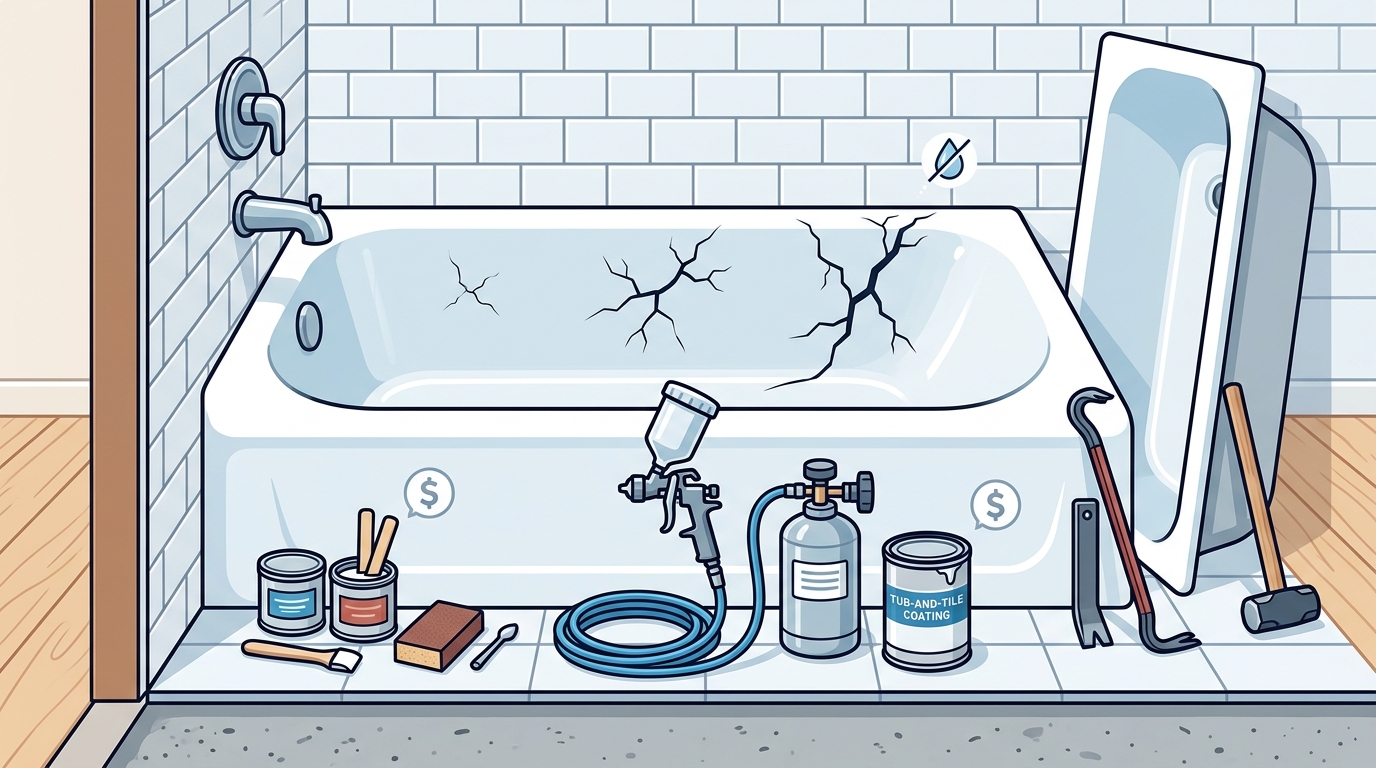
Step 2 — Understand Why Fiberglass Tubs Crack
Knowing the root cause prevents repeat failures after your repair.
Lack of Underlying Support
This is the most common culprit. When tubs are installed without a mortar bed or foam base, the floor flexes under body weight and eventually cracks. Without addressing this structural problem, any repair is temporary.
Impact Damage
A dropped shampoo bottle or shaving-cream can is enough to fracture a fiberglass shell. The crack may be small at first but can spread if the tub continues flexing.
Harsh Chemical Cleaners
Strong chemicals and abrasive tools break down the protective gel coat over time, making the fiberglass more susceptible to cracking.
Age and Thermal Cycling
Fiberglass tubs installed in the 1980s and 1990s often sat on low-density foam blocks that degrade after 20–30 years. Hard water and temperature swings accelerate this process.
Step 3 — DIY Repair for Small, Stable Cracks
If the crack is under half an inch wide, only a few inches long, and the tub floor is solid with no flex, a DIY repair kit can work well. Here's how to do it right.
Materials You'll Need
- Fiberglass bathtub repair kit (or two-part epoxy resin with fiberglass cloth)
- 80–220 grit sandpaper
- Denatured alcohol or alcohol wipes
- Putty knife
- Mixing cups and sticks
- Nitrile gloves, safety glasses, and a respirator mask
3a — Clean the Damaged Area
Remove all dirt, soap scum, and oils from the crack and surrounding surface. Use a household cleaner first, then wipe down with denatured alcohol. Let the area dry completely. The tub must stay bone-dry from this point through the full cure period.
3b — Sand Around the Crack
Use 220-grit sandpaper to lightly roughen the area around the crack, extending about one inch beyond it in every direction. This gives the filler and resin a surface to grip. Wipe away all sanding dust with a lint-free cloth.
3c — Mix and Apply Filler
Follow the kit manufacturer's mixing ratios exactly. Epoxy mixed incorrectly creates soft spots that won't hold up to water or daily use. Apply the activated paste into the crack with a putty knife, slightly overfilling the area. You'll sand it flush later. Allow the paste to cure for at least one hour—or as long as the kit directs.
3d — Sand in Stages
Once cured, wet-sand the filled area in progressive grits—start around 320, move to 400, then 600. The goal is a surface that blends seamlessly with the surrounding tub.
3e — Apply Sealer or Gel Coat
Brush or spray the gel-coat finish included in your kit over the repair. This waterproofs the patch and provides UV and chemical resistance. Allow 24–48 hours of cure time before using the tub.
Total active work time: roughly 2–3 hours. Total downtime: 24–48 hours before the tub can get wet again.
Step 4 — When to Call a Professional (and Why Reglazing Wins)
DIY kits work for small cosmetic cracks, but they have clear limits. The color match is rarely perfect, the patch can be visible, and the repair doesn't address structural flex underneath. For anything beyond a minor surface crack, professional repair or reglazing is the better investment.
What Professional Structural Repair Looks Like
A skilled technician will grind down the surface to expose the fiberglass layer beneath, drill small holes around the crack to inject expanding marine void filler underneath for structural support, then layer fiberglass cloth saturated with resin over the crack. After curing and sanding, a full gel-coat or reglazing finish is applied so the repair is invisible.
Why Reglazing Is Often the Best Overall Solution
Professional reglazing combines crack repair with a complete surface renewal. The technician repairs any cracks or chips first, then sands, primes, and applies a durable new coating to the entire tub. The result looks brand-new, and the process typically takes just a few hours with a 24-hour cure time. For homeowners who want a seamless finish and long-lasting durability, reglazing is the clear winner.
At Excellence Reglazing, we specialize in exactly this process—repairing cracked fiberglass tubs and restoring them with a factory-quality reglazing finish that extends tub life by years, all at a fraction of the cost of replacement.
Cost Comparison: DIY vs. Professional Repair vs. Reglazing vs. Replacement
| Option | Typical Cost | Best For | Longevity |
|---|---|---|---|
| DIY Repair Kit | $30–$60 | Small cosmetic cracks | 1–3 years |
| Professional Crack Repair | $200–$500 | Moderate cracks, structural patches | 5–10 years |
| Professional Reglazing | $300–$1,000 | Worn tubs with cracks, stains, or dullness | 7–15 years |
| Full Tub Replacement | $2,500–$5,000+ | Severe structural failure, full remodel | 20+ years |
Reglazing hits the sweet spot—it costs a fraction of replacement, delivers a like-new finish, and addresses both cosmetic and minor structural damage in a single appointment.
Safety Warnings for DIY Fiberglass Repair
Fiberglass dust, resin fumes, and hardener chemicals pose real health risks. Never skip protective gear:
- Respirator mask — fiberglass dust and epoxy vapors can damage lungs.
- Chemical-resistant nitrile gloves — resins and solvents cause skin irritation and sensitization.
- Safety glasses — resin splashes can cause serious eye irritation.
- Ventilation — open windows and use a fan to move fumes out of the bathroom.
- Long sleeves — fiberglass particles cause intense itching on bare skin.
How to Prevent Future Cracks
- Ensure proper support — if your tub sits on degraded foam, have a professional add a mortar bed or spray-foam support underneath.
- Avoid standing on edges — fiberglass tubs aren't as sturdy as cast iron; standing or sitting on the rim causes flex and stress cracks.
- Use gentle cleaners — stick to mild, non-abrasive products designed for fiberglass. Avoid bleach, ammonia, and steel wool.
- Don't drop heavy objects — keep items like heavy bottles and tools away from the tub interior.
- Maintain the gel coat — periodic reglazing refreshes the protective surface layer before cracks have a chance to form.
Key Takeaways
- Always assess whether a crack is cosmetic or structural before choosing a repair method.
- DIY fiberglass repair kits ($30–$60) work for hairline cracks under half an inch with no flex.
- Structural cracks require professional repair that addresses the void underneath the tub.
- Professional reglazing ($300–$1,000) is the best value option—it repairs cracks and renews the entire surface.
- Full replacement ($2,500–$5,000+) is only necessary when the tub has severe structural failure.
- Never ignore a crack—small damage spreads quickly and can lead to water damage, mold, and costly subfloor repairs.
Frequently Asked Questions
Can you repair a cracked fiberglass tub yourself?
Yes, small cosmetic cracks can be fixed with a DIY fiberglass repair kit that includes epoxy filler, sandpaper, and gel coat. The process takes 2–3 hours of active work plus 24–48 hours of cure time. However, structural cracks with flex underneath require professional repair.
How much does it cost to fix a cracked fiberglass bathtub?
DIY kits cost $30–$60. Professional crack repair runs $200–$500. Full reglazing, which includes crack repair plus a new surface finish, typically costs $300–$1,000 depending on tub size and condition.
Is it better to repair or replace a cracked fiberglass tub?
In most cases, repair or reglazing is far more cost-effective. Replacement costs $2,500–$5,000 or more when you factor in demolition, plumbing, and tile work. Reglazing restores the tub to like-new condition at a fraction of that price and extends its life by 7–15 years.
How long does a fiberglass tub repair last?
A quality professional repair or reglazing can last 7–15 years with proper care. DIY kit repairs are less durable, typically lasting 1–3 years before the patch becomes visible or separates.
What causes fiberglass tubs to crack?
The most common causes are lack of support underneath the tub, impact damage from dropped objects, harsh chemical cleaners that degrade the gel coat, and age-related deterioration of the foam support base.
Should I reglaze a fiberglass tub that has cracks?
Yes—reglazing is actually ideal for cracked tubs because the process includes crack repair as part of the preparation. The technician fills and reinforces cracks before applying the new surface coating, giving you both structural integrity and a seamless finish.
Ready to Fix Your Cracked Fiberglass Tub the Right Way?
If your tub has cracks that are beyond a simple DIY patch—or you want a flawless, long-lasting result without the hassle—Excellence Reglazing can help. We repair cracks, restore surfaces, and deliver a factory-quality reglazing finish that makes your tub look and feel brand new. Contact us today for a free estimate.