
Your bathroom tile surround is looking dated, stained, or just plain tired. Before you start ripping tile off the walls, there's a question worth answering with real numbers: Is it more cost-effective to reglaze your existing tile surround or install brand-new tile?
This comparison breaks down pricing, timelines, durability, and hidden costs so you can make the smartest decision for your home and budget.
What Is Tile Reglazing?
Tile reglazing—also called refinishing or resurfacing—is a process where a technician applies a durable new coating over your existing tile surround. The original tile stays in place; the coating bonds to the surface and delivers a clean, glossy or matte finish that looks fresh.
The process typically includes thorough cleaning, repair of minor chips or cracks, surface etching for adhesion, priming, and application of a high-performance epoxy or urethane topcoat. At Excellence Reglazing, we use professional-grade coatings that cure to a smooth, non-porous surface resistant to moisture, mold, and everyday wear.
What Does Tile Reglazing Cost?
Professional tile reglazing is dramatically less expensive than full tile replacement. Here are the numbers based on current industry data:
| Project Scope | Typical Cost Range |
|---|---|
| Per square foot (professional) | $4–$12 |
| Tub and surrounding shower tile | $800–$1,200 |
| Average bathroom surround | $300–$1,200 |
| Primary bathroom or kitchen | $400–$3,000 |
| DIY refinishing kit | $50–$200 |
According to HomeAdvisor (Angi), the average cost to reglaze tile is roughly $1,080, with most homeowners spending between $730 and $1,700. Professional labor typically runs $40 to $100 per hour, and labor accounts for 70%–80% of the total project cost.
One of the biggest advantages is speed. Most professional reglazing jobs on a tub-and-tile surround are completed in a single day, and the surface is ready to use within 24–48 hours.
What Does New Tile Installation Cost?
New tile installation involves demolition of the old tile, disposal, possible subfloor or wall repair, waterproofing, and then the installation of new materials. Here is what current pricing looks like:
| Cost Component | Typical Range Per Sq Ft |
|---|---|
| Tile materials (ceramic/porcelain) | $2–$15 |
| Professional labor | $5–$20 |
| Old tile removal & disposal | $2–$7 |
| Subfloor/wall prep & waterproofing | $5–$8 |
| Total installed (materials + labor) | $10–$50 |
For a standard bathroom, retiling costs an average of $12.50 per square foot, with total project expenses averaging around $2,000 for a basic job. A full shower tile installation averages about $2,700. More complex projects with premium materials can easily exceed $5,000–$10,000.
Timeline is another critical factor. Full tile replacement projects typically take several days to weeks depending on scope, during which the bathroom is out of commission.
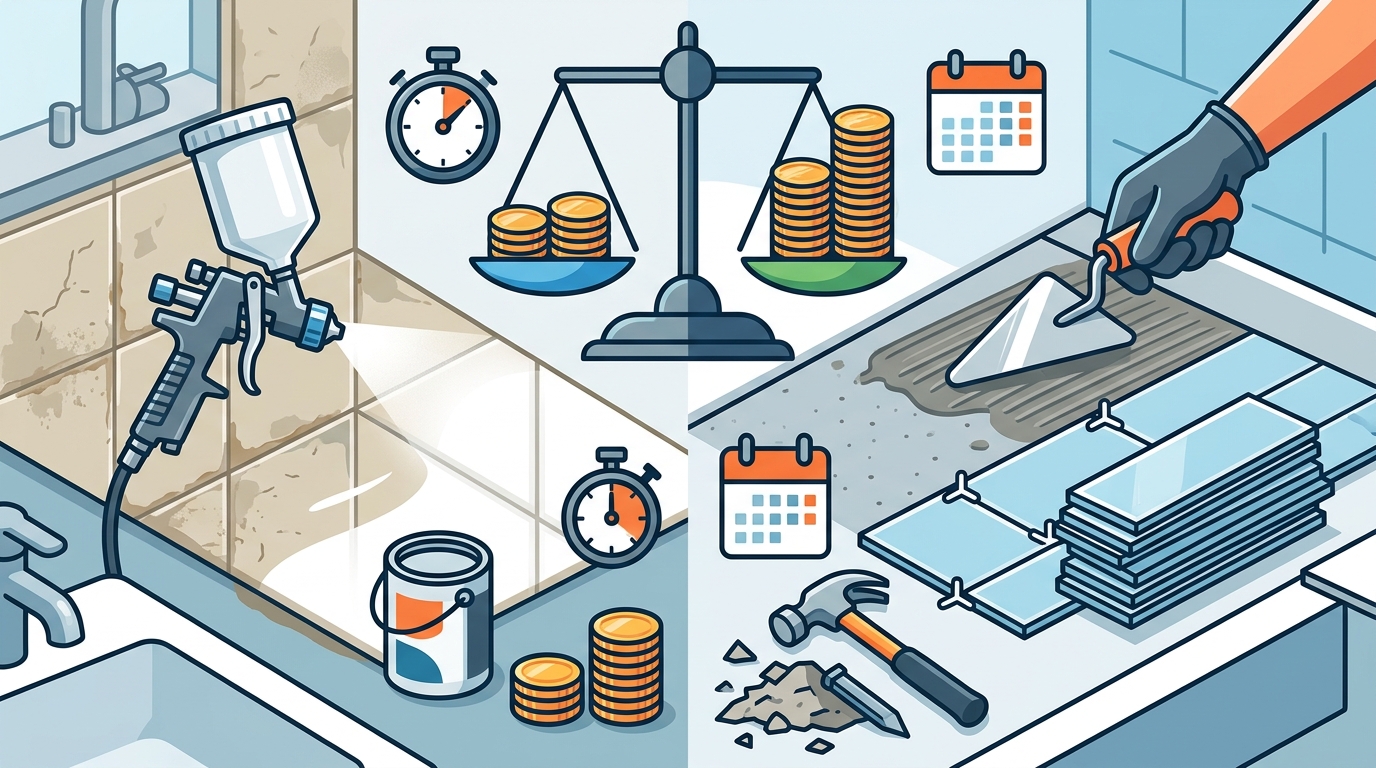
Side-by-Side: Reglazing vs. New Tile
| Factor | Tile Reglazing | New Tile Installation |
|---|---|---|
| Average total cost | $800–$1,200 (tub + surround) | $2,000–$5,000+ |
| Cost per sq ft | $4–$12 | $10–$50 |
| Project duration | 1 day | 3 days–3 weeks |
| Bathroom downtime | 24–48 hours | Several days to weeks |
| Demolition required | No | Yes |
| Waste generated | Minimal | Significant (old tile, drywall, adhesive) |
| Lifespan | 10–15 years | 20–50+ years |
| Color/finish options | Wide range of colors and sheens | Unlimited tile styles |
| Structural repair | Surface-level only | Full structural remediation possible |
When Reglazing Is the Right Call
Reglazing your tile surround makes strong financial and practical sense in these situations:
- Your tile is structurally sound — no loose, cracked, or missing tiles.
- You want a cosmetic refresh — the layout works, but the color is dated (think 1980s pink or avocado green).
- You're on a budget — reglazing costs 50%–80% less than full replacement.
- You need it done fast — a one-day turnaround is common with professional reglazing.
- You're preparing to sell — a quick cosmetic upgrade can improve buyer perception at a fraction of remodel costs.
- You want to minimize waste — reglazing extends the life of existing materials and avoids landfill-bound demolition debris.
When New Tile Makes More Sense
Replacement is the better investment in these scenarios:
- Significant water damage behind the tile requires structural remediation.
- Tiles are severely cracked, loose, or missing in large sections.
- You want to change the tile layout, add niches, or reconfigure the bathroom.
- You're doing a full bathroom remodel that includes plumbing, fixtures, and layout changes.
- You want maximum longevity — new tile can last 20–50+ years compared to 10–15 years for a reglazed surface.
Key Takeaways
- Reglazing saves 50%–80% compared to new tile installation for a standard tub-and-surround project.
- A typical reglazing job costs $800–$1,200 for a tub and surround, versus $2,000–$5,000+ for new tile.
- Reglazing is completed in one day with the bathroom usable again within 24–48 hours.
- New tile installation takes days to weeks and involves demolition, disposal, and potential structural repair.
- Reglazed surfaces last 10–15 years with proper care—enough time to recoup your investment many times over.
- Choose reglazing when your tile is structurally sound and you want a fast, affordable cosmetic upgrade.
- Choose new tile when there is structural damage, layout changes are needed, or you want decades of longevity.
Why Homeowners Choose Excellence Reglazing
At Excellence Reglazing, we specialize in professional tile surround refinishing that delivers a like-new appearance at a fraction of the cost of replacement. Our process includes thorough surface preparation, premium bonding agents, and durable topcoats that resist moisture, staining, and daily wear. Most projects are completed in a single visit, and we stand behind our work with a warranty.
Whether your bathroom tile surround needs a color update or a complete cosmetic revival, we're here to help you save thousands while getting results you'll love. Request your free estimate today.
Frequently Asked Questions
How much does it cost to reglaze a tile surround?
Professional tile surround reglazing typically costs $800 to $1,200 when combined with the bathtub, or $300 to $1,200 for the tile surround alone. This works out to roughly $4 to $12 per square foot including labor and materials.
How long does reglazed tile last?
With proper care and maintenance, reglazed tile surfaces last 10 to 15 years on average. Using non-abrasive cleaners and avoiding suction-cup accessories will help maximize the lifespan of the finish.
Is reglazing as durable as new tile?
Reglazed surfaces are durable and moisture-resistant, but they are a surface coating rather than a structural replacement. New tile can last 20–50+ years, while reglazing lasts 10–15 years. For most homeowners seeking a cost-effective refresh, reglazing provides excellent value.
Can I change the color of my tile surround with reglazing?
Yes. Reglazing allows you to choose from a wide range of colors and finishes, including classic white, modern grays, and custom tones. This is one of the most popular reasons homeowners choose reglazing over keeping their original tile color.
How long until I can use my shower after reglazing?
Most reglazed surfaces can be used within 24 to 48 hours after the coating is applied. Your reglazing technician will provide specific cure-time guidance based on the products used.
Does reglazing work on all types of tile?
Reglazing works best on ceramic and porcelain tiles, which are the most common types found in bathroom surrounds. Glass tile can sometimes be reglazed at a higher cost, while natural stone is generally not recommended because coatings may not bond well to its surface.
What if my tiles are cracked or loose?
Minor chips and hairline cracks can often be repaired as part of the reglazing prep process. However, if tiles are severely damaged, loose, or missing, those individual tiles should be replaced before reglazing. If large areas are compromised, full tile replacement may be the better option.