
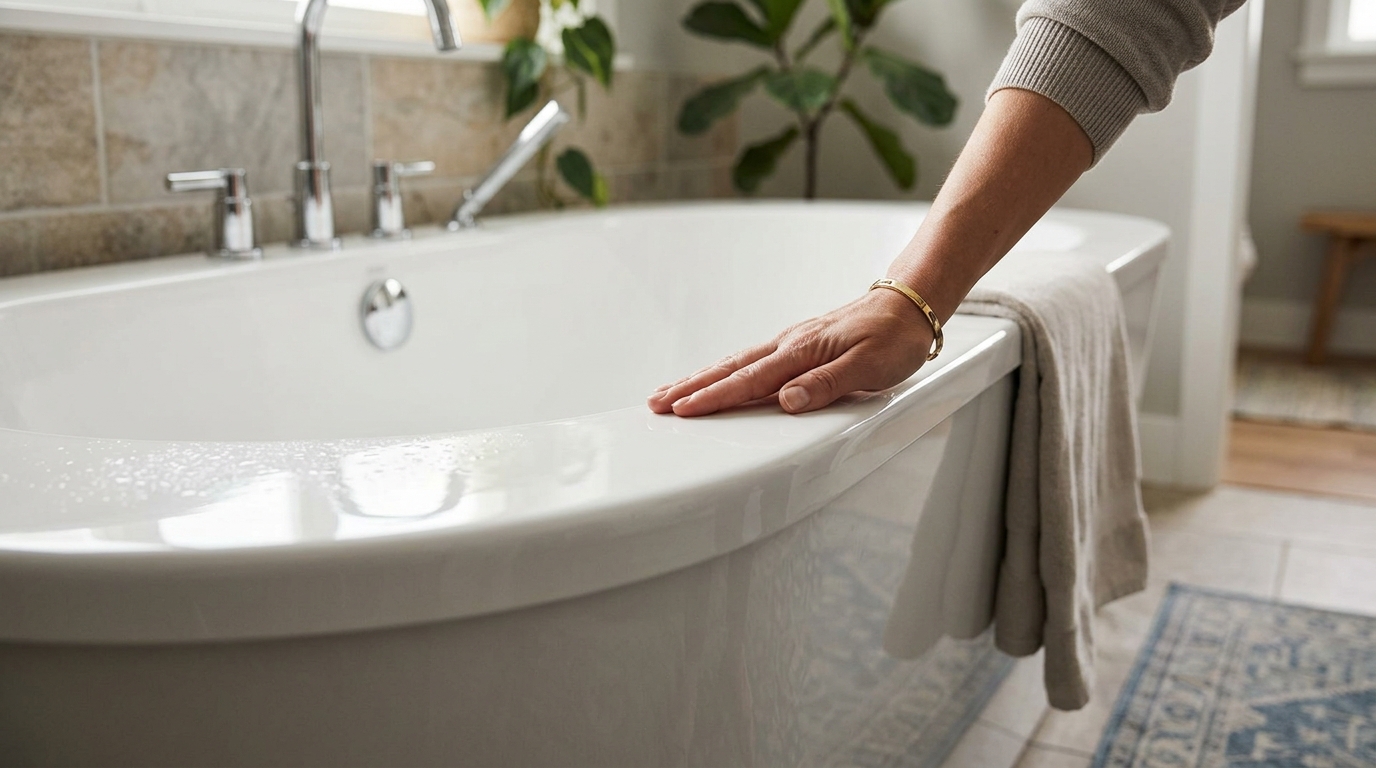
For most Corona homeowners, a professionally refinished bathtub can remain attractive and serviceable for approximately 10 to 15 years before it may need a touch-up or another complete refinishing. The exact timeline depends on the condition of the original tub, the quality of surface preparation, the coating system selected, daily use, cleaning habits, and how quickly small chips or leaks are addressed.
That makes refinishing a practical alternative to demolition and replacement. Excellence Reglazing helps homeowners restore tubs, showers, sinks, and countertops to a new-looking condition while saving approximately 70% compared with replacement. For homeowners researching porcelain surfaces, the company also provides Porcelain Tub Refinishing Services.
The short answer: plan on 10 to 15 years
A high-quality professional bathtub refinishing job commonly lasts 10 to 15 years with appropriate care. The finish is not simply household paint applied over an old tub. Professional refinishing involves cleaning, repairing, preparing, priming, and applying a durable surface coating designed for repeated exposure to water, soap, body oils, and normal bathroom use.
The lower end of the range is more likely when a tub receives heavy daily use, abrasive cleaning, frequent contact with sharp or heavy objects, or prolonged exposure to standing water. A well-prepared surface that is cleaned with compatible products and kept free of unresolved damage can remain attractive toward the upper end of the range.
Refinishing does not necessarily mean that the underlying bathtub becomes structurally new. Instead, it restores the visible and usable surface while extending the service life of an existing fixture. This is often valuable when the tub is solid but has cosmetic problems such as discoloration, worn glaze, stains, minor surface scratches, or an outdated color.
Six factors that control the service life of a refinished tub
1. Thorough surface preparation
Preparation is one of the strongest predictors of durability. A technician should remove soap residue, body oils, mineral buildup, old caulk, loose coating, and other contaminants before applying new materials. The surface may also require repair, cleaning, sanding, or etching so the primer can bond reliably.
New coating applied over grease, silicone residue, loose glaze, or trapped moisture can fail prematurely. Water may migrate beneath a weak area, creating bubbling, peeling, or delamination. Removing old caulk and addressing the edges before refinishing is especially important because unsealed seams can allow water behind the finish.
2. The coating and primer system
Professional results depend on the compatibility and quality of the primer and finish. Acrylic polyurethane systems are commonly selected for their appearance, flexibility, and resistance to routine household wear. The specific product, application method, cure time, and number of coats should be discussed with the contractor rather than assumed from the word “reglazing.”
Ask what materials will be used, whether repairs are included, and how the coating is expected to perform on your tub’s substrate. Fiberglass, porcelain, ceramic, cultured marble, and other surfaces can require different preparation techniques.
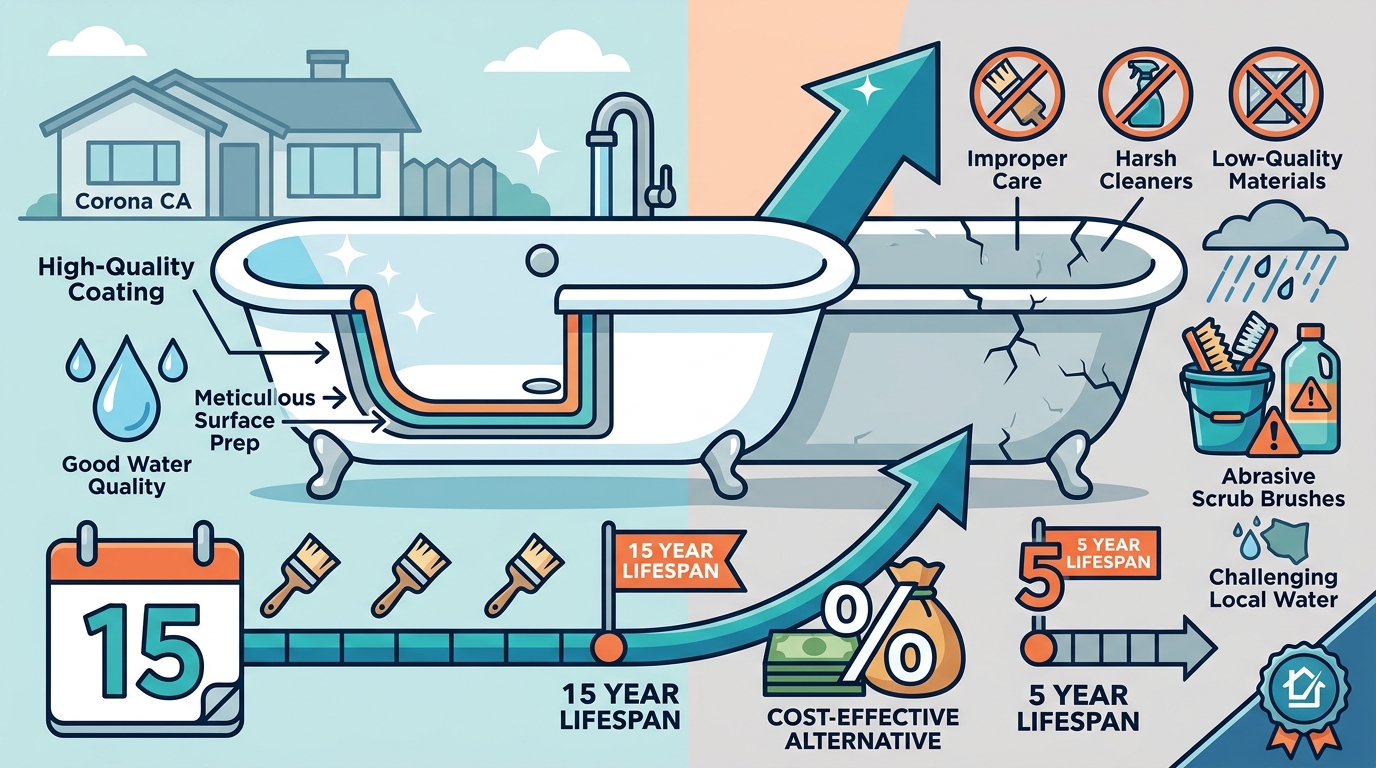
3. Frequency and type of use
A guest bathroom used occasionally may place less stress on a refinished surface than a primary bathroom used several times a day. Children’s bath toys, pet bathing, dropped bottles, metal containers, and heavy objects can create impact damage. A refinished tub should be treated as a durable finished surface, not as an indestructible one.
4. Cleaning products and tools
Abrasive powders, scouring pads, steel wool, rough brushes, and aggressive scrubbing can scratch or dull the finish. Harsh chemicals may also discolor or weaken the coating. Use a mild, non-abrasive cleaner approved for refinished surfaces, along with a soft cloth or non-scratch sponge.
5. Water exposure and drainage
Standing water around a drain, overflow, faucet, or tub edge can expose weak seams to moisture. A slow drain or leaking fixture should be repaired promptly. Refinishing may improve the appearance of a tub, but it does not replace plumbing repairs or correct a structural leak.
6. Early repair of chips and cracks
A small chip is easier to repair than a large area where water has penetrated beneath the finish. Inspect the tub periodically, particularly around the drain, overflow, corners, ledges, and areas where bottles or accessories rest. Prompt attention can sometimes prevent a localized defect from becoming a full resurfacing problem.
How Corona’s conditions can affect bathtub longevity
Corona’s Southern California environment makes water and cleaning habits more relevant than dramatic indoor humidity swings. Hard water contains dissolved minerals, including calcium and magnesium. When water evaporates, those minerals can remain as deposits that appear cloudy, chalky, or rough. The U.S. Environmental Protection Agency describes hard water in terms of dissolved calcium and magnesium and notes that it can produce scale-like deposits. ([nepis.epa.gov](https://nepis.epa.gov/Exe/ZyPURL.cgi?Dockey=9100GIOY.TXT&utm_source=openai))
Mineral deposits do not automatically mean that a refinished tub has failed, but they can dull the gloss and make the surface more difficult to clean. Rinsing the tub after use, drying standing water, and periodically using a compatible mineral-deposit cleaner can reduce buildup. If you use vinegar or another descaling product, confirm that it is safe for the specific coating and do not combine cleaning chemicals.
Corona homeowners should also pay attention to ventilation after bathing. Good airflow helps the bathroom dry more quickly and reduces the time that water remains on seams and ledges. During the refinishing appointment itself, however, ordinary bathroom ventilation should not be treated as a substitute for professional safety controls. NIOSH warns that bathtub refinishing can involve hazardous chemical exposure and states that bathroom fans or open windows alone may not provide adequate ventilation for certain stripping operations. ([cdc.gov](https://www.cdc.gov/niosh/bulletin/2013/bathtub-refinishing.html?utm_source=openai))
A simple care plan to maximize the 10-to-15-year window
After every bath or shower
- Rinse away soap, shampoo, and body oils.
- Remove standing water from the ledges and corners.
- Keep shampoo bottles, razors, and metal accessories from sitting in one place for long periods.
Once each week
- Clean with a mild, non-abrasive product.
- Use a soft microfiber cloth or non-scratch sponge.
- Rinse thoroughly so cleaner residue does not remain on the finish.
- Check whether the drain, overflow, or faucet is allowing water to collect.
Once each month
- Look for small chips, hairline cracks, dull patches, or lifting edges.
- Remove mineral deposits using a coating-compatible product.
- Wash or replace bath mats and accessories that trap moisture.
- Confirm that caulk remains sealed at the tub-to-wall joint.
Avoid: abrasive cleaners, abrasive pads, steel wool, harsh scraping, prolonged standing water, and adhesive bath mats unless the refinishing provider specifically approves them. Some standard suction or adhesive accessories can damage a refinished surface when installed or removed.
Do not use bleach, ammonia, acids, solvents, or other strong chemicals without checking the product label and the contractor’s care instructions. The safest routine is the one supplied for the actual coating installed on your tub.
Signs your Corona bathtub may need a touch-up
A touch-up is worth discussing when the damage is localized and the rest of the surface remains well bonded. Common warning signs include:
- A small chip caused by a dropped bottle or object.
- A narrow scratch that is not spreading.
- A small area of coating lifted near a fixture or seam.
- Minor discoloration that remains after proper cleaning.
- Caulk failure that permits water to reach the edge of the finish.
Contact a professional before sanding, scraping, or applying a store-bought repair coating. A do-it-yourself patch may have a different color, gloss level, texture, or chemical compatibility than the existing finish. More extensive peeling, repeated bubbling, widespread cracking, or substrate damage may call for a complete refinishing assessment instead of a small repair.
Why the professional process matters
Professional refinishing is primarily a preparation and application process. A typical job may include protecting surrounding areas, removing or working around fixtures, cleaning and degreasing, repairing defects, removing old caulk where appropriate, preparing the substrate, applying primer, applying the finish, and allowing the surface to cure according to the product requirements.
The bathroom should be prepared for controlled ventilation and safe handling of refinishing materials. NIOSH has documented serious and fatal exposures involving methylene chloride-based stripping products in small bathrooms and recommends safer alternatives where possible, along with appropriate ventilation, training, and protective equipment when hazardous chemicals are used. ([cdc.gov](https://www.cdc.gov/niosh/bulletin/2013/bathtub-refinishing.html?utm_source=openai)) Homeowners should ask contractors what products and ventilation controls they use and should keep residents, children, and pets away from the work area until the provider confirms that it is safe to re-enter.
Excellence Reglazing reports that it has offered a 5-year warranty since 2008 and provides a written five-year warranty for qualifying refinishing work. ([excellencereglazing.com](https://www.excellencereglazing.com/?utm_source=openai)) A warranty is separate from the expected 10-to-15-year service life: it generally addresses covered workmanship or material problems during the stated term, while normal wear, abuse, improper cleaning, impact damage, or neglected leaks may be excluded. Review the written warranty and care instructions before work begins.
Refinishing versus replacing the bathtub
Replacement can be appropriate when a tub has major structural damage, severe movement, persistent leaks, or a layout problem that cannot be solved by surface restoration. However, replacement often involves demolition, disposal, plumbing access, wall or flooring repairs, and a longer period without use of the bathroom.
| Consideration | Professional refinishing | Full replacement |
|---|---|---|
| Expected surface life | Approximately 10 to 15 years with proper care | Often longer, depending on the new tub and installation quality |
| Upfront cost | Approximately 70% less than replacing in many cases | Higher because it may include the fixture, demolition, plumbing, labor, and finish repairs |
| Project disruption | Usually limited to the service appointment and curing period | May require several days of demolition and reconstruction |
| Best fit | Solid tub with cosmetic wear, stains, chips, or an outdated color | Structurally failed or poorly configured tub |
| Waste | Keeps the existing fixture in service | Creates demolition and disposal waste |
For a structurally sound tub, refinishing can deliver a new-looking appearance without the cost and disruption of a major bathroom renovation. The right choice depends on an in-person evaluation of the tub’s material, damage, surrounding surfaces, and plumbing.
Key takeaways for Corona homeowners
- Plan for a professionally refinished bathtub to last approximately 10 to 15 years with proper care.
- Surface preparation, including cleaning, repair, removal of incompatible residue, and reliable primer adhesion, is central to durability.
- Corona-area mineral deposits can dull the finish, so rinsing, drying, and coating-safe descaling are helpful.
- Use mild, non-abrasive cleaners and soft tools; avoid abrasive pads, harsh chemicals, and unapproved adhesive mats.
- Repair chips, cracks, failed caulk, and plumbing leaks early to reduce the risk of spreading damage.
- Ask about the coating system, ventilation practices, cure time, written warranty, and maintenance requirements before hiring a contractor.
- Excellence Reglazing offers tub, shower, sink, and countertop refinishing in the Corona area and reports savings of approximately 70% compared with replacement.
Frequently asked questions
How long does professional bathtub refinishing usually last in Corona, CA?
Most professionally refinished bathtubs last approximately 10 to 15 years when the surface is properly prepared and maintained with compatible, non-abrasive products. Heavy use, impact damage, hard-water deposits, standing water, and improper cleaning can shorten that period.
Will hard water in Corona damage a refinished bathtub?
Hard water can leave calcium and magnesium deposits that make the surface look dull or rough. Deposits are usually a maintenance issue rather than an immediate coating failure. Rinse and dry the tub regularly and use a descaler that the refinishing provider confirms is safe for the coating.
How soon can I use the bathtub after refinishing?
The required cure time depends on the products, application conditions, and instructions from the contractor. Many jobs require approximately 24 to 48 hours before normal use, but the provider’s written instructions should control. Using the tub too soon can interfere with curing and reduce durability.
Can I clean a refinished tub with bleach or ammonia?
Do not assume that bleach, ammonia, acids, or solvents are safe. Strong or incompatible chemicals may discolor, dull, or weaken a refinished surface. Use a mild, non-abrasive cleaner approved for the installed coating and follow the contractor’s care instructions.
What causes a refinished tub to peel?
Peeling can result from inadequate preparation, contamination under the coating, moisture entering at an unsealed edge, incompatible chemicals, impact damage, or prolonged standing water. A professional inspection can help identify whether a localized repair or complete refinishing is appropriate.
Is refinishing suitable for fiberglass and porcelain tubs?
Both fiberglass and porcelain tubs can often be refinished, but the preparation and repair approach may differ. Fiberglass may require substrate repair and careful bonding preparation, while porcelain or ceramic surfaces may require specialized cleaning and etching. The tub’s current condition determines the recommended process.
How much can I save by refinishing instead of replacing?
Excellence Reglazing states that homeowners can save approximately 70% compared with replacement in many situations. Actual savings depend on the tub’s condition, the selected finish, plumbing work, demolition, and any surrounding repairs.
What should I ask a bathtub refinishing contractor?
Ask what preparation steps are included, which coating system will be used, how the bathroom will be ventilated, how long the tub must cure, which cleaners and accessories are permitted, whether repairs are covered, and what the written warranty excludes.
Request a bathtub refinishing estimate in Corona
If your tub is stained, chipped, worn, difficult to clean, or simply outdated, a professional evaluation can help you determine whether refinishing is the right solution. Excellence Reglazing provides tub and bathroom surface refinishing in Corona, CA, with a focus on durable, new-looking results and long-term value.
Visit the Excellence Reglazing Contact page to request an estimate. You can also review the company’s Fiberglass Tub Repair services, learn about Countertop Refinishing for kitchen and bathroom surfaces, or browse the company’s FAQ page for additional process and warranty information.