

An old porcelain tub does not automatically need to be removed. If the tub is structurally sound but has yellowing, dull areas, chips, stains, rust marks, or an outdated color, professional reglazing can restore its smooth, glossy appearance without taking the fixture out of your bathroom.
For homeowners in Corona, California, porcelain tub refinishing is a practical bathroom-upgrade option because it avoids many of the demolition, plumbing, tile, and disposal costs associated with replacement. Excellence Reglazing uses a professional surface-restoration process designed to give an existing tub, shower, sink, or countertop a clean, updated finish. See Excellence Reglazing’s tub refinishing services.
The Quick Answer: Recoat the Existing Tub
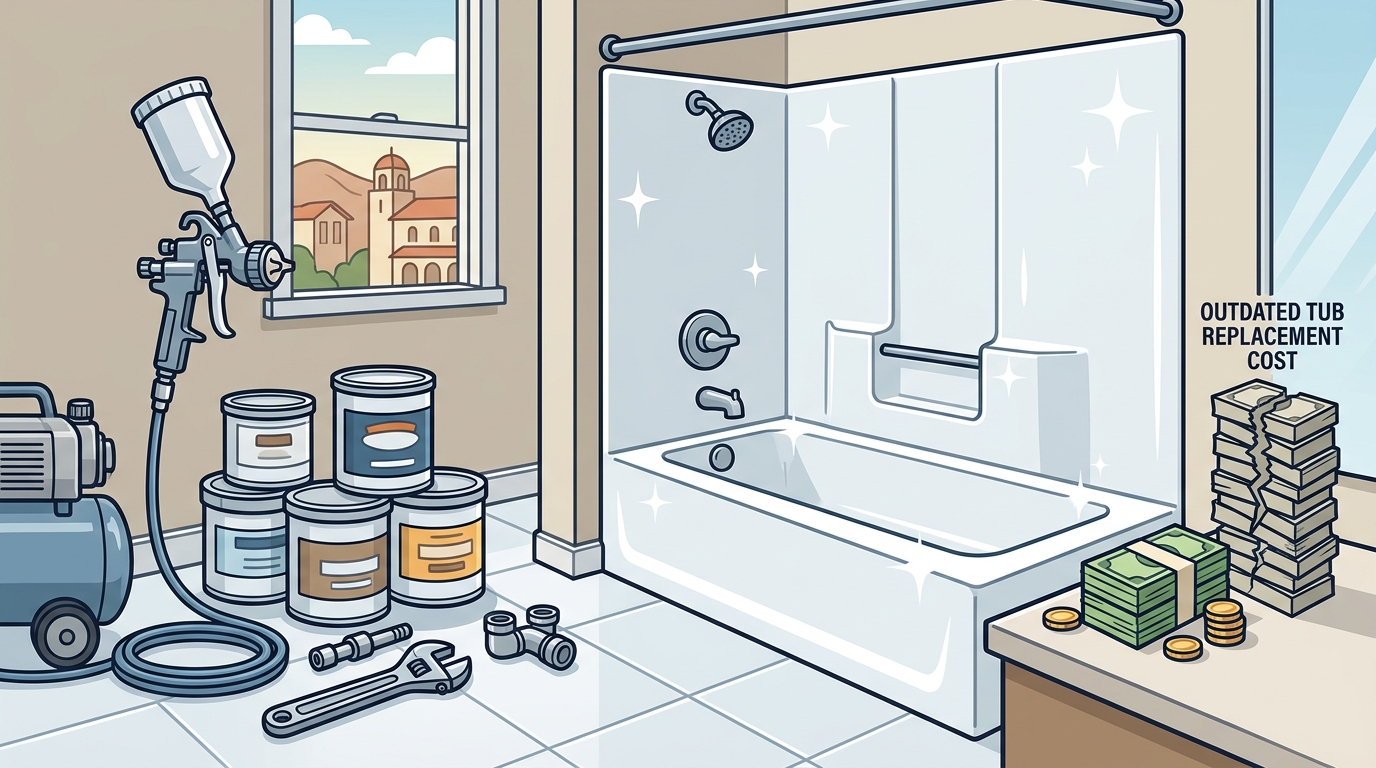
The most efficient way to give a sound porcelain tub a new look is usually professional refinishing, also called reglazing, resurfacing, or recoating. The technician keeps the existing tub in place, repairs minor surface damage, thoroughly prepares the porcelain, applies a bonding primer, and sprays a new tub-rated finish.
Unlike ordinary household paint, professional tub refinishing relies on specialized preparation and coating materials. Industry coating systems for bathtub restoration commonly include cleaning, etching or other surface preparation, a bonding primer, and a durable acrylic or polyurethane-style topcoat intended for wet-area use. ([hawklabs.com](https://www.hawklabs.com/bathtub?utm_source=openai))
For many projects, the result is a bright, uniform surface that looks substantially newer while preserving the existing tub’s shape and footprint. Excellence Reglazing states that its Corona-area service can save customers more than 70% compared with replacing the fixture, depending on the scope of work and the condition of the bathroom.
When Porcelain Tub Refinishing Makes Sense
Reglazing is a strong candidate when the tub is cosmetically worn but still stable and usable. Typical conditions that may be addressed include:
- Faded, yellowed, or discolored porcelain
- Surface stains that do not respond to normal cleaning
- Small chips, scratches, and areas of worn finish
- Minor rust spots around drains, fixtures, or chips
- An outdated color that clashes with a bathroom remodel
- A dull surface that has lost its original gloss
- A tub that is difficult or expensive to remove from the home
Refinishing is not a substitute for correcting a serious structural problem. A tub with major cracking, extensive corrosion through the base, severe movement, persistent leaks, or significant damage to its supporting structure may require repair or replacement. A professional inspection can help determine whether the existing fixture is a sound foundation for a new finish.
Why porcelain is often a good refinishing surface
Many older tubs are porcelain-coated steel or cast iron. The hard, glass-like surface can become chipped or worn, but a properly prepared porcelain surface can provide a suitable base for a new coating. The quality of the result depends heavily on preparation, product compatibility, application technique, curing, and aftercare rather than on the word “porcelain” alone.
How Professional Porcelain Tub Reglazing Works
A successful refinishing job is primarily a preparation project. The visible spray application is only one part of the work. A typical professional process includes the following stages.
1. Inspecting the tub and planning the repair
The technician first evaluates the tub’s material, existing finish, chips, rust, caulk joints, drain area, and any prior coatings. This helps identify repairs that must be completed before the new finish is applied. The surrounding walls, floor, vanity, fixtures, and other bathroom surfaces are also considered when planning protection and ventilation.
2. Protecting the bathroom
Professional masking and containment help protect floors, walls, cabinetry, fixtures, and nearby belongings from dust and overspray. The tub area is prepared so the coating can be applied evenly without contaminating adjacent surfaces. Fume-extraction equipment and appropriate personal protective equipment are important considerations when solvent-based or spray-applied products are used; ventilation is a recognized safety concern in bathtub refinishing work. ([nepis.epa.gov](https://nepis.epa.gov/Exe/ZyPURL.cgi?Dockey=P1016KAF.txt&utm_source=openai))
3. Removing failed caulk and cleaning the surface
Old silicone, soap residue, body oils, mineral deposits, and failing coatings can interfere with adhesion. These contaminants are removed before the porcelain is treated. The drain, overflow, seams, and corners receive particular attention because residue often collects in those areas.
4. Repairing chips, rust, and minor imperfections
Small chips, scratches, and localized imperfections can often be filled, leveled, and blended so they do not telegraph through the new finish. Rust around a chip must be addressed rather than simply covered. The appropriate repair method depends on whether the damage is limited to the coating or extends into the metal beneath it.
5. Etching or conditioning the porcelain
Porcelain is smooth by design, so the surface must be properly conditioned for the primer to grip. Professional systems may use a compatible etching or surface-preparation treatment followed by thorough rinsing, drying, and dust removal. This creates the surface profile required for reliable adhesion. Manufacturer and industry process guides consistently identify cleaning, etching or conditioning, and bonding primer as central steps in porcelain refinishing. ([hawklabs.com](https://www.hawklabs.com/bathtub?utm_source=openai))
6. Applying bonding primer and finish coats
After preparation, the technician applies a tub-compatible bonding primer and the selected finish system. Excellence Reglazing’s service information describes the use of a waterproof primer or molecular bonding agent followed by Acrylic Poly-urethane finish coats. The goal is an even, glossy surface that resists ordinary bathroom wear, scuffs, stains, and cleaning exposure when maintained correctly.
7. Curing, cleanup, and final inspection
The new coating needs time to dry and cure before regular use. Cure time varies with the coating system, temperature, humidity, ventilation, and the number of coats applied. Professional refinishing references report that usable cure windows can range from same-day use to 24–48 hours, so homeowners should follow the technician’s specific instructions rather than relying on a generic timetable. ([chicagobathtubrefinishing.com](https://chicagobathtubrefinishing.com/process.html?utm_source=openai))
Once the work is complete, masking is removed, the work area is cleaned, and the homeowner can review the result. Excellence Reglazing states that payment is required upon complete satisfaction and offers a five-year warranty on its reglazing work.
Important Considerations for Corona, CA Homeowners
Local conditions do not change the fundamentals of reglazing, but they can affect planning and aftercare. Corona homes include a mix of older properties, remodeled bathrooms, rental housing, and newer construction. Before scheduling service, consider the following:
Bathroom age and previous repairs
An older tub may have multiple layers of caulk, previous touch-up paint, rust treatment, or an earlier refinishing job. Tell the technician about known repairs or coatings so the surface can be evaluated correctly.
Ventilation and access
Make sure the technician can access the bathroom and that household members, children, and pets can remain away from the work area during application and curing. Ask how fumes will be managed and how long the bathroom should remain unused.
Water and mineral deposits
Hard-water residue and soap buildup can collect on tub walls, around drains, and at the overflow. These deposits must be removed during preparation. After refinishing, routine cleaning with a non-abrasive product helps prevent buildup from becoming difficult to remove.
Color coordination
A new finish can be matched to the existing bathroom or used to modernize it. White, bone, almond, and other neutral tones are common choices, while custom color availability depends on the refinisher and coating system. Choosing a color before the appointment helps the project move efficiently.
Porcelain Tub Refinishing Versus Replacement
The right choice depends on the tub’s condition, the desired design changes, and the overall renovation plan. Refinishing is most attractive when the existing tub has a usable layout and the main problem is surface appearance.
| Consideration | Professional refinishing | Tub replacement |
|---|---|---|
| Typical objective | Restore and recoat the existing fixture | Remove the old fixture and install a new one |
| Cost profile | Often about 70% less than replacement, depending on the project | Includes the tub, demolition, disposal, labor, and possible plumbing or tile work |
| Project disruption | Usually limited to the bathroom work area | May involve demolition, dust, noise, plumbing changes, and damaged surrounding finishes |
| Timeline | Often completed in a few hours, followed by a required curing period | Can take substantially longer when tile, plumbing, framing, or flooring must be adjusted |
| Design flexibility | Offers a range of finish colors while preserving the existing shape | Allows a different tub style, size, configuration, or accessibility design |
| Best fit | A structurally sound tub with a worn or outdated surface | A leaking, severely damaged, poorly configured, or structurally compromised tub |
Replacement may be worthwhile if you are changing the bathroom layout, converting to a walk-in shower, correcting major structural damage, or installing a tub with different dimensions. If the tub itself is solid and the finish is the main issue, reglazing can deliver a new appearance with considerably less construction.
What If the Tub Is Fiberglass Instead?
Not every light-colored tub is porcelain. Fiberglass and acrylic fixtures are lighter, more flexible, and require different preparation and repair techniques. They can also be refinished, but cracks, holes, flexing, and damaged gel coat should be repaired before a new finish is applied.
Excellence Reglazing provides fiberglass repair and refinishing services for tubs and enclosures. If you are unsure whether your fixture is porcelain, fiberglass, acrylic, or porcelain-coated metal, a technician can help identify the material before recommending the correct process. Learn more about fiberglass tub refinishing and fiberglass tub repair.
How to Keep a Reglazed Tub Looking New
Aftercare has a direct effect on the appearance and service life of the new finish. Follow the refinisher’s written instructions, especially during the initial curing period. In general:
- Wait the full recommended time before bathing or exposing the surface to water.
- Use non-abrasive liquid or gel bathroom cleaners.
- Avoid scouring powders, abrasive pads, steel wool, and harsh scraping tools.
- Do not use suction-cup bathmats unless the refinisher specifically approves them.
- Use a soft cloth or non-abrasive sponge for routine cleaning.
- Repair leaking faucets and showerheads so standing water does not repeatedly attack seams.
- Keep shampoo bottles, metal containers, and sharp objects from being dragged across the surface.
- Replace deteriorated caulk when instructed, using a compatible product and careful technique.
A professional warranty is also worth reviewing before work begins. Ask what the five-year warranty covers, whether damage from misuse or abrasive cleaners is excluded, and what maintenance requirements apply.
Key Takeaways
- A sound but stained, chipped, faded, or outdated porcelain tub can often be restored without replacement.
- Professional reglazing involves protection, cleaning, repairs, surface conditioning, bonding primer, finish coats, curing, and inspection.
- Surface preparation is essential because a new coating cannot compensate for grease, soap residue, failed caulk, rust, or poor adhesion.
- Excellence Reglazing reports savings of more than 70% compared with replacing a tub, although the final price depends on the fixture and project scope.
- Many projects are completed in a few hours, but the tub must remain unused during the recommended cure period.
- Both porcelain and fiberglass fixtures can be restored, but the materials require different preparation and repair methods.
- Gentle, non-abrasive cleaning and prompt maintenance help protect the new finish.
Frequently Asked Questions
Can an old porcelain tub really look new without being replaced?
Yes. If the tub is structurally sound, professional cleaning, chip repair, surface conditioning, priming, and recoating can create a smooth, glossy finish that gives the fixture a refreshed, like-new appearance.
How much can I save by refinishing a porcelain tub?
Excellence Reglazing states that homeowners can save more than 70% compared with replacing a tub. Actual savings depend on the tub’s condition, repair requirements, access, finish selection, and whether replacement would require plumbing, tile, flooring, demolition, and disposal work.
How long does porcelain tub reglazing take?
The active refinishing work is commonly completed in a few hours, but the tub must remain unused while the coating cures. The required wait may vary by product and site conditions, so follow the technician’s instructions.
Is reglazing permanent?
Reglazing is intended as a durable long-term restoration, not a temporary cleaning treatment. Longevity depends on preparation, coating quality, application, use, ventilation, and cleaning habits. Excellence Reglazing provides a five-year warranty on its reglazing work.
Can the color of my tub be changed?
Yes. A refinishing project can often update the tub to a different available color. Ask about the color selection before scheduling so the finish coordinates with your tile, vanity, flooring, and fixtures.
Is professional tub refinishing safe?
Professional refinishing requires controlled application, ventilation or fume extraction, masking, and appropriate protective equipment. Household members and pets should stay away from the work area during application and until the technician confirms that the space is ready for use.
Can fiberglass tubs and shower enclosures be refinished?
Yes. Fiberglass tubs and enclosures can often be repaired and refinished, although the preparation differs from porcelain. Excellence Reglazing offers fiberglass repair and refinishing services.
When should I replace the tub instead of refinishing it?
Replacement may be better when the tub has major structural damage, persistent leaks, severe corrosion, substantial movement, an unsuitable layout, or when you want to change the bathroom configuration entirely.
Give Your Corona Bathroom a Fresh Start
If your porcelain tub is ugly but still structurally usable, replacement may not be necessary. Professional reglazing can restore the surface, update the color, reduce project disruption, and help you improve the bathroom while keeping the existing fixture in place.
Excellence Reglazing serves homeowners in Corona, CA, with tub, shower, sink, countertop, porcelain, and fiberglass refinishing solutions. To discuss your tub’s condition and request an estimate, visit the Excellence Reglazing contact page.