
How Long Does a Professional Bathtub Refinishing Job Usually Last Before Needing a Touch-Up in Corona CA?
Homeowners in Corona CA frequently ask how long a professional bathtub refinishing job usually lasts before needing a touch-up. Industry data shows that properly applied acrylic urethane coatings typically maintain their structural integrity for eight to ten years with standard residential use. This extended lifespan directly reduces long-term renovation expenses while preserving bathroom aesthetics. Professional application techniques ensure proper surface preparation, moisture control, and curing conditions that standard DIY kits cannot replicate. Understanding these durability benchmarks helps property owners plan maintenance schedules and budget for future upgrades without unexpected disruptions. (Contact Excellence Reglazing)
Durability Benchmarks
Coating Chemistry and Wear Patterns
Reglazing involves applying a multi-layer polymer system that bonds directly to existing substrates. The primary coating is a two-part acrylic urethane resin that cures through chemical crosslinking rather than simple evaporation. This chemical reaction creates a non-porous barrier that resists daily abrasion and moisture exposure. Homeowners should expect consistent performance when following basic care guidelines. Regular cleaning with pH-neutral solutions prevents premature degradation.
Warranty Coverage and Service Guarantees
Professional contractors back their work with structured warranty programs that protect against premature peeling or cracking. Excellence Reglazing offers a five-year warranty on all residential applications since 2008. This guarantee covers material defects and application errors when proper maintenance protocols are followed. Property owners receive documented service records that simplify future warranty claims. Extended coverage periods directly reflect manufacturer confidence in coating longevity. (dictionary Stanford Network)
Surface Preparation
Substrate Assessment and Repair
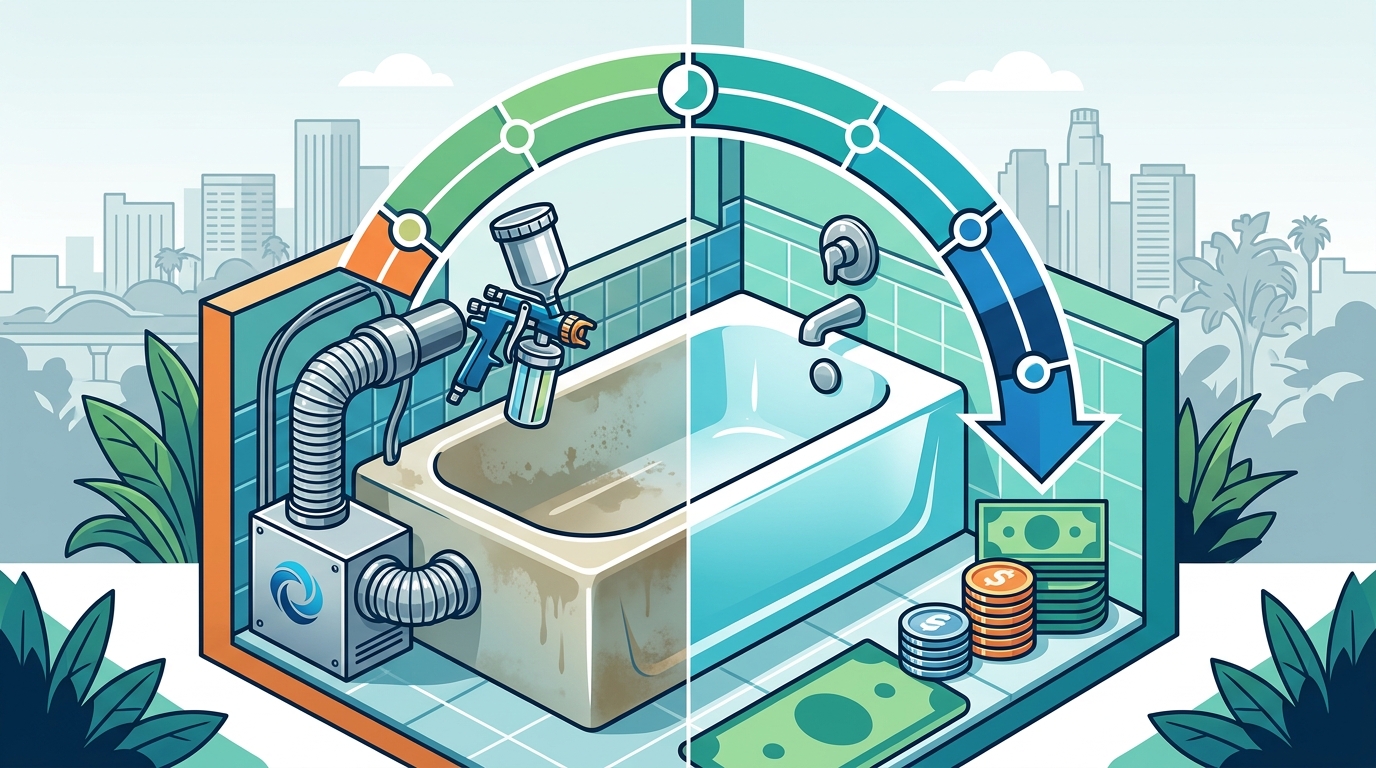
A successful refinishing project begins with thorough substrate evaluation. Technicians inspect existing porcelain, fiberglass, or acrylic surfaces for structural cracks, loose fixtures, or underlying moisture damage. Any compromised areas require epoxy filler application before coating deployment. Proper mechanical abrasion ensures optimal adhesion between the old surface and new finish. Skipping these steps directly reduces the expected lifespan of the final application.
Chemical Etching and Degreasing
Surface readiness determines how well the new finish bonds to the original material. Specialized degreasers remove soap scum, body oils, and mineral deposits that interfere with adhesion. Chemical etching creates microscopic pores that allow the primer to penetrate deeply. This preparation phase typically requires two to three hours depending on existing damage. Thorough cleaning eliminates contaminants that cause premature coating failure.
Environmental Factors
Climate Control and Curing Conditions
Corona CA experiences distinct seasonal temperature fluctuations that impact curing timelines. Professional contractors maintain controlled ventilation and temperature ranges during application to guarantee proper polymerization. Humidity levels must remain within specific thresholds to prevent coating blushing or premature tackiness. Extended curing periods allow the material to reach maximum hardness before regular water exposure. Rushing this phase often results in premature wear or localized peeling.
Water Quality and Mineral Content
Regional water hardness directly influences how quickly mineral deposits accumulate on refinished surfaces. Hard water contains elevated calcium and magnesium levels that gradually build up on glossy finishes. Regular descaling treatments prevent abrasive mineral buildup from scratching the topcoat. Property owners should install water softeners to extend coating lifespan significantly. Consistent water treatment reduces the frequency of professional cleaning services.
Maintenance Protocols
Routine Care and Touch-Up Strategies
Daily usage patterns directly influence how long a refinished surface remains visually appealing. Abrasive scrubbing pads and harsh chemical cleaners gradually degrade the topcoat gloss. Property owners should implement soft microfiber cloths and non-abrasive bathroom cleaners. Minor scuff marks can be addressed with specialized polishing compounds without full reapplication. Establishing a consistent cleaning routine extends the functional lifespan significantly.
Inspection Schedules and Early Warning Signs
Regular visual inspections help property owners identify coating degradation before it becomes severe. Visible scratching, localized peeling, or persistent staining indicate coating degradation. Minor surface marks can often be polished without full reapplication. Scheduling a professional inspection prevents minor issues from becoming major repairs. Annual assessments allow contractors to apply protective sealants that restore original gloss levels.
Material Comparison
Substrate-Specific Performance Metrics
Different bathtub materials respond uniquely to reglazing processes. Porcelain surfaces provide a rigid foundation that accepts multiple coating layers without flexing. Fiberglass enclosures require specialized flexible primers to accommodate minor structural movement. Acrylic substrates benefit from aggressive mechanical etching to ensure permanent bonding. Each material demands specific preparation techniques to maximize durability.
| Substrate Type | Preparation Requirement | Expected Lifespan | Recommended Service |
|---|---|---|---|
| Porcelain Enamel | Chemical etching and degreasing | 8 to 10 years | Porcelain Tub Reglazing |
| Fiberglass Composite | Flexible primer application | 5 to 7 years | Fiberglass Tub Repair |
| Acrylic Resin | Aggressive mechanical abrasion | 6 to 8 years | Fiberglass Shower Tub |
| Kitchen Countertops | Seam sealing and edge profiling | 10 to 15 years | Countertops Kitchen Vanities |
Key Takeaways
- Professional acrylic urethane coatings typically last eight to ten years with standard residential use.
- Proper substrate preparation directly determines long-term adhesion and structural integrity.
- Corona CA climate variations require controlled curing environments for optimal polymerization.
- Non-abrasive cleaning routines prevent premature gloss degradation and surface scratching.
- Excellence Reglazing has provided fully licensed services since 2008 with a five-year warranty.
- Porcelain surfaces accept multiple coating layers while fiberglass requires flexible primers.
- Regular maintenance schedules reduce the frequency of professional touch-up appointments.
Frequently Asked Questions
How soon after application can I use my bathtub?
Most professional installations require a twenty-four to forty-eight hour curing period before water exposure. This timeframe allows the chemical crosslinking process to reach maximum hardness. Light usage should be avoided until the surface fully stabilizes.
Can I refinish a bathtub that already has a previous coating?
Surface preparation involves completely stripping existing layers before applying fresh material. Multiple coating cycles gradually reduce substrate thickness over time. A professional assessment determines whether additional refinishing remains structurally viable.
What specific cleaning products should I avoid after reglazing?
Abrasive scouring powders and acidic bathroom cleaners rapidly degrade the topcoat finish. Property owners should exclusively use pH-neutral formulations designed for coated surfaces. Regular maintenance prevents unnecessary wear and preserves the original gloss.
Does Corona CA weather impact the curing timeline?
Seasonal temperature shifts and humidity levels directly affect polymerization rates. Professional contractors monitor environmental conditions to guarantee proper curing. Controlled ventilation ensures consistent results regardless of external weather patterns.
How do I identify when a touch-up is actually necessary?
Visible scratching, localized peeling, or persistent staining indicate coating degradation. Minor surface marks can often be polished without full reapplication. Scheduling a professional inspection prevents minor issues from becoming major repairs.
Is professional reglazing more cost-effective than full replacement?
Industry data shows that professional reglazing typically costs 70 percent less than complete bathtub replacement. The process eliminates demolition waste, plumbing disruption, and extended renovation timelines. Homeowners achieve immediate aesthetic improvements without structural remodeling expenses.
Schedule Service
Transforming your bathroom requires precision application and experienced technicians who understand local building standards. Excellence Reglazing delivers customized reglazing solutions tailored to your specific substrate and usage patterns. Contact our team today to schedule a comprehensive assessment and receive a detailed project estimate. Visit our main service portal to explore available color options and warranty details. Call 714-313-4159 to book your consultation and restore your bathroom to pristine condition.