
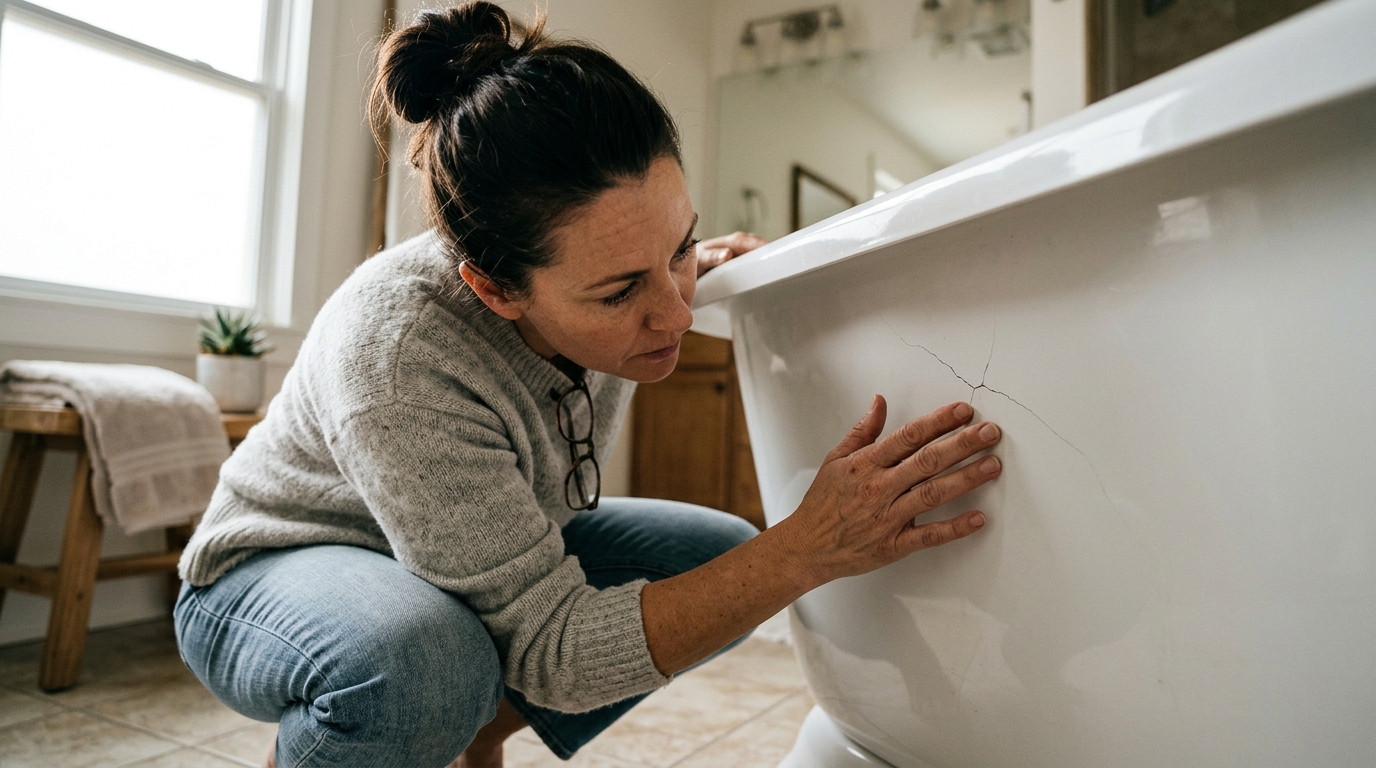
A cracked fiberglass tub does not mean you need to rip out the entire unit and spend thousands on a replacement. In many cases, the right repair method can restore both the strength and appearance of your bathtub for a fraction of the cost. Whether you are dealing with a small hairline spider crack or a deeper structural fracture, understanding which approach to use is the key to a lasting fix. In this guide, the team at Excellence Reglazing breaks down every step, from assessment to final finish, so you can make the smartest decision for your bathroom and your budget.
Assess the Type of Crack First
Not every crack is created equal. A cosmetic spider crack is a thin, shallow line in the gelcoat layer that does not compromise the tub's structure. A structural crack, on the other hand, is a fracture that penetrates the fiberglass laminate and may cause the tub floor to flex under weight.
Before you grab a repair kit, check for warning signs: Does the tub floor flex when you step in? Are there brown water stains on the ceiling below? Is there soft drywall or musty odor nearby? If you answer yes to any of these, the crack is likely structural and professional repair or fiberglass tub repair from Excellence Reglazing is the safer route.
Tools and Materials You Will Need
A fiberglass tub repair kit is a pre-packaged set that includes color-matched filler paste, fiberglass resin adhesive, sandpaper, and a clear topcoat. Most kits cost between $15 and $40 at hardware stores. Beyond the kit, gather these additional items:
- Fine-grit sandpaper (220, 320, 400, and 600 grit)
- Putty knife
- Clean lint-free cloths
- Household cleaner or rubbing alcohol
- Ventilator mask and gloves
- Fiberglass cloth (for larger cracks)
Epoxy-type fillers emit harmful fumes, so always use a respirator and ensure proper ventilation. If you are uncomfortable working with these chemicals, consider contacting a professional bathtub reglazing specialist instead.
Step-by-Step DIY Repair Process
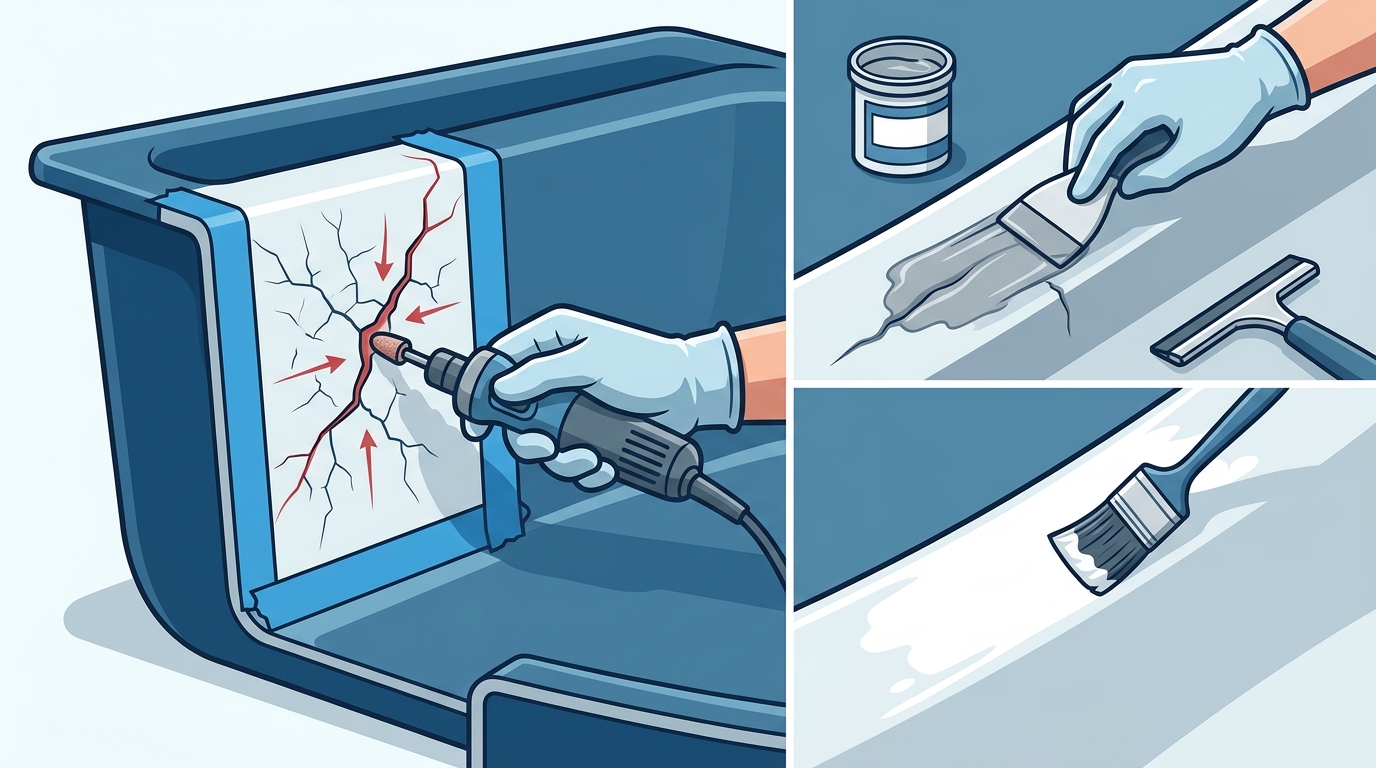
Step 1: Clean and Prep the Surface
Remove all dirt and soap residue from the cracked area using a household cleaner. Wipe the surface with rubbing alcohol to eliminate oils. Let the area dry completely before moving forward.
Step 2: Sand, Fill, and Seal
Lightly sand the area around the crack with 220-grit sandpaper to create a rough surface for the adhesive to bond to. Apply the fiberglass resin adhesive over the crack, extending at least one inch beyond each side. For deeper cracks, press fiberglass cloth into the wet resin for added strength. Once cured, overfill slightly with the color-matched filler paste and let it harden for at least one hour.
Step 3: Sand Smooth and Finish
Sand in stages using progressively finer grits: start with 220, then move to 320, 400, and 600. Use a damp cloth to lubricate while sanding. Once smooth, apply the rubbing compound from the kit to blend the repair into the surrounding surface. Finish with the clear topcoat spray.
DIY Repair vs. Professional Refinishing
A DIY kit can handle small, stable cracks, but it has limits. The color match is rarely perfect, and without addressing the root cause, cracks often return. Here is how the two options compare:
| Factor | DIY Repair Kit | Professional Refinishing |
|---|---|---|
| Cost | $15 - $40 | $300 - $600 |
| Time | 2 - 4 hours | 3 - 5 hours (done for you) |
| Durability | 1 - 3 years typical | 5 - 10+ years |
| Color Match | Approximate | Factory-quality finish |
| Structural Repair | Limited | Full structural + cosmetic |
| Best For | Hairline cracks under 1/2 inch | Any crack size; whole-tub renewal |
For homeowners who want a result that looks and feels brand new, professional reglazing delivers a far superior outcome. Discover the tub refinishing benefits that make this option worthwhile.
Common Causes of Fiberglass Tub Cracks
Understanding why cracks form helps you prevent them from coming back. The most frequent causes include:
- Lack of underlying support: If the tub was installed without a mortar bed or foam base, it flexes under weight and eventually cracks.
- Impact damage: Dropping heavy objects like shampoo bottles or aerosol cans can chip or crack the surface.
- Harsh chemical cleaners: Bleach, ammonia, and abrasive scrub pads break down the protective gelcoat layer over time.
- Age and wear: After 15 to 20 years of daily use, fiberglass naturally becomes more brittle.
If your tub has cracked more than once, the problem is almost certainly structural. A quick patch will not solve it. Learn more about long-term solutions on our fiberglass shower and tub services page.
Why Reglazing Is the Best Long-Term Solution
Reglazing (also called refinishing) is a process where the existing tub surface is repaired, primed, and coated with a durable new finish. It restores both the structural integrity and the appearance of the tub in a single appointment.
At Excellence Reglazing, our technicians in Corona, CA repair any underlying cracks, fill voids, and apply a factory-grade coating that saves customers over 70% compared to full tub replacement. The result is a permanent solution that looks brand new. If you are ready to stop patching and start solving, contact Excellence Reglazing for a free estimate.
Key Takeaways
- Always assess whether a crack is cosmetic or structural before choosing a repair method.
- Small hairline cracks under half an inch can often be fixed with a fiberglass repair kit at home.
- Proper surface prep (cleaning, sanding, drying) is the most critical step for a lasting bond.
- DIY patches rarely color-match perfectly and typically last only 1 to 3 years.
- Professional reglazing costs $300 to $600 but delivers 5 to 10+ years of durability.
- Recurring cracks usually signal a lack of support underneath the tub, requiring professional attention.
- Excellence Reglazing offers full fiberglass tub repair and refinishing in the Corona, CA area, saving over 70% versus replacement.
Frequently Asked Questions
Can I repair a cracked fiberglass tub myself?
Yes, small stable cracks can be repaired with a fiberglass repair kit from a hardware store. The process involves cleaning, sanding, applying resin adhesive, filling with color-matched paste, and sanding smooth. However, larger or structural cracks should be handled by a professional.
How much does it cost to fix a cracked fiberglass tub?
A DIY fiberglass repair kit costs $15 to $40. Professional refinishing or reglazing typically runs $300 to $600, which is still far less than the $1,500 to $5,000 cost of a full tub replacement including labor.
How long does a fiberglass tub repair last?
A DIY patch on a small crack can last 1 to 3 years. A professional reglazing job on a structurally sound tub can add 5 to 10 years or more of useful life.
What causes a fiberglass tub to crack?
The most common causes are lack of support underneath the tub, impact from dropped objects, harsh chemical cleaners that degrade the gelcoat, and general aging of the fiberglass material over 15 to 20 years.
Is it better to repair or replace a cracked fiberglass tub?
For a single small crack on an otherwise solid tub, repair or reglazing is the smart choice. If the tub has multiple cracks, significant flexing, or is over 30 years old with recurring issues, replacement may be more cost-effective long term.
What is reglazing?
Reglazing is a refinishing process where the existing tub surface is cleaned, repaired, primed, and coated with a new durable finish. It restores the tub to like-new condition without the cost or disruption of a full replacement.
Does Excellence Reglazing fix cracked fiberglass tubs?
Yes. Excellence Reglazing provides full fiberglass tub repair and refinishing services in Corona, CA and surrounding areas. Their process addresses both structural damage and cosmetic wear, saving customers over 70% compared to replacement.