
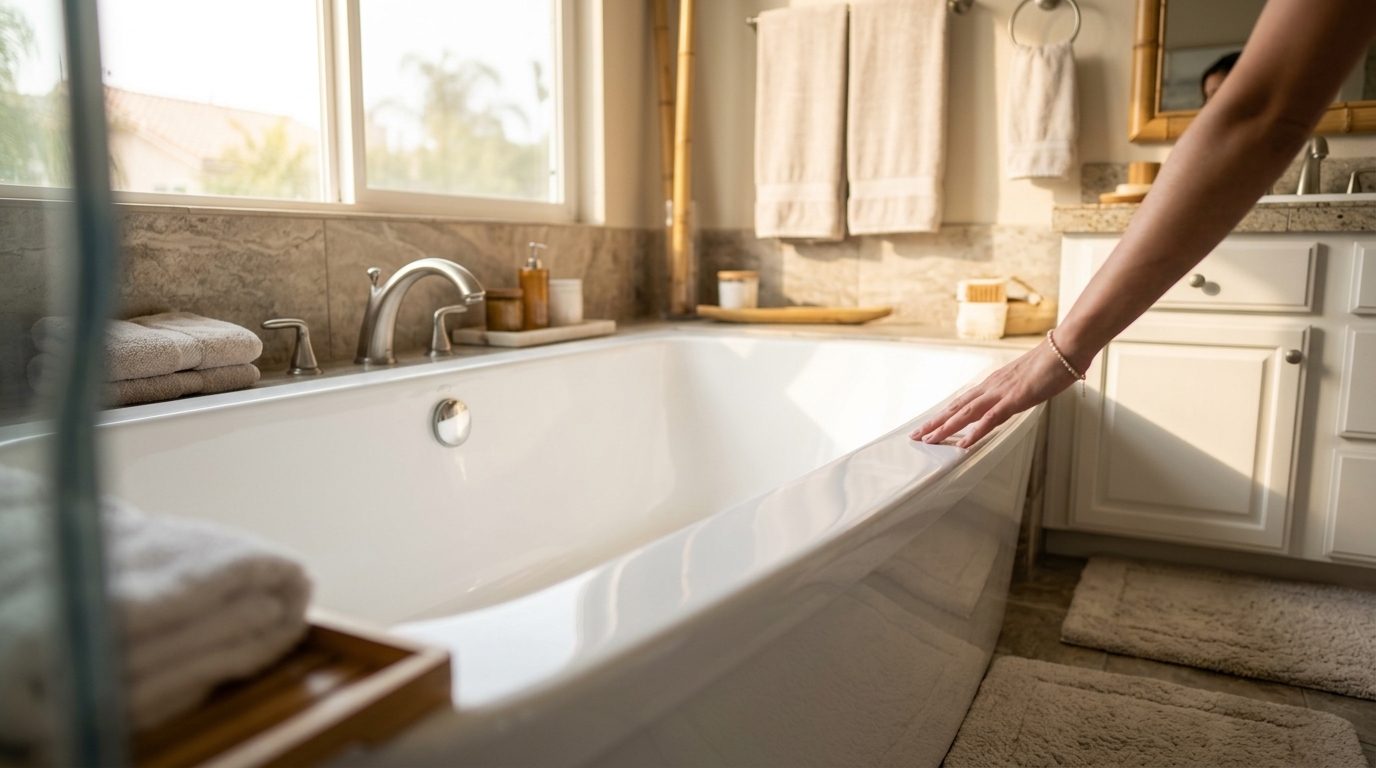
Fiberglass bathtubs are among the most popular fixtures in American homes thanks to their lightweight design and affordability. But when they start showing cracks, fading, or dull spots, refinishing is the smartest way to restore them without the cost and hassle of a full replacement. The fiberglass tub refinishing process differs from porcelain or cast iron refinishing in several important ways, from surface preparation to the coatings used. In this guide, Excellence Reglazing in Corona, CA breaks down exactly how the process works and why fiberglass requires a specialized approach. Understanding these differences can save you over 70% compared to replacing your tub.
What Is Fiberglass Tub Refinishing?
Fiberglass tub refinishing is a surface restoration process that repairs cosmetic damage and applies a new protective coating to an existing fiberglass bathtub. It is also commonly called bathtub reglazing, tub resurfacing, or tub re-coating. Rather than ripping out the old tub and installing a new one, refinishing restores the surface in place.
The result is a smooth, glossy, and durable finish that can extend the tub's usable lifespan by 10 to 15 years when performed correctly. This makes it an ideal solution for homeowners looking to transform their bathroom with tub reglazing on a budget.
Fiberglass vs. Porcelain: Key Process Differences
Not all tubs are created equal, and the refinishing approach must match the material. The biggest difference between fiberglass and porcelain refinishing lies in the surface preparation stage. Porcelain tubs require acid etching to create adhesion on their hard, glass-like surface. Fiberglass tubs, on the other hand, are sanded mechanically instead of acid-etched because the material is softer and more porous.
| Process Step | Porcelain / Cast Iron Tubs | Fiberglass Tubs |
|---|---|---|
| Surface Prep | Acid etching | Mechanical sanding |
| Crack Repair | Epoxy filler | Fiberglass resin and cloth |
| Primer Type | Epoxy bonding primer | High-adhesion urethane or epoxy primer |
| Topcoat | Acrylic urethane glaze | Acrylic polyurethane or gel coat |
| Cure Time | 24-48 hours | 24-72 hours |
| Ventilation Needs | Standard | Enhanced (fiberglass particles) |
If you are unsure whether your tub is fiberglass or porcelain, visit our FAQ page or contact Excellence Reglazing for a free assessment.
Step-by-Step Fiberglass Refinishing Process
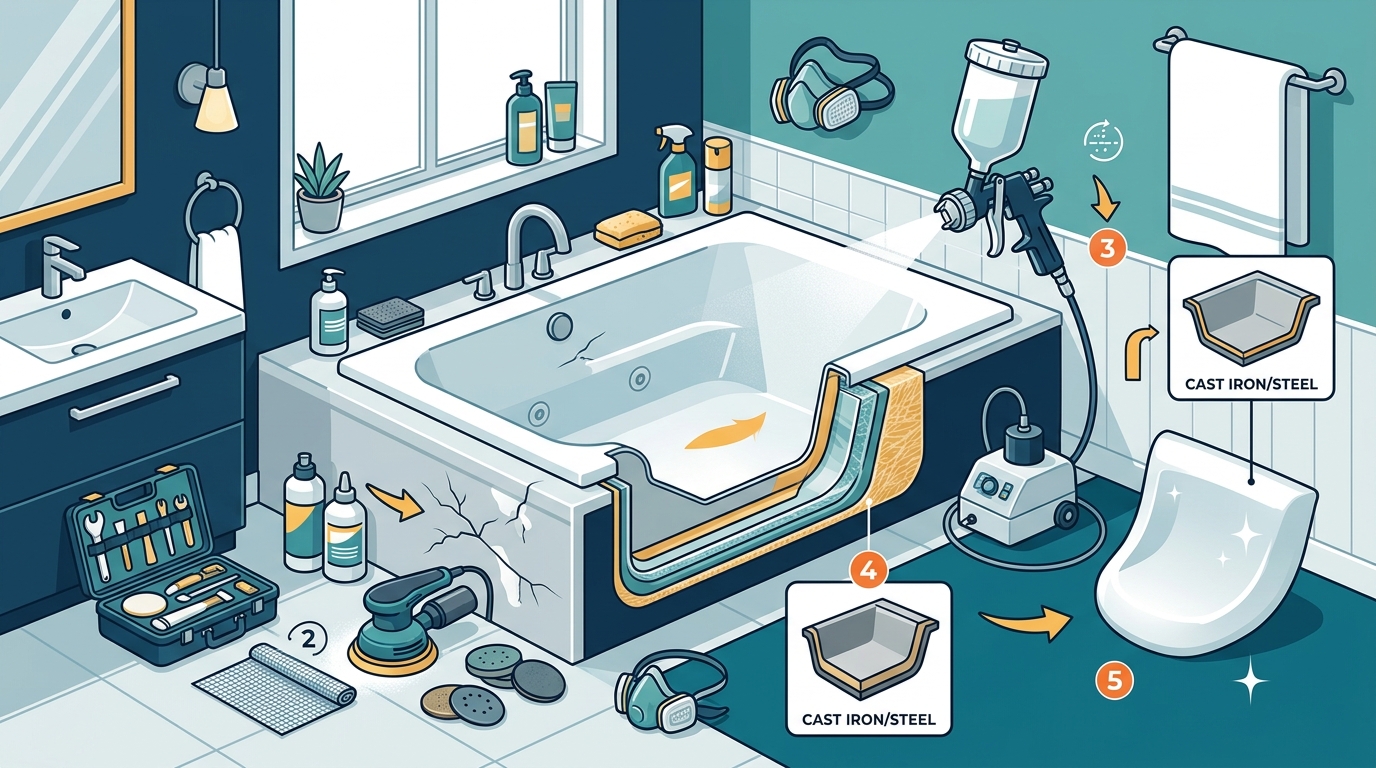
1. Deep Cleaning and Degreasing
The process starts with a thorough deep cleaning using industrial-strength degreasers. Soap scum, body oils, mineral deposits, and mildew must all be removed. Skipping this step is one of the biggest causes of peeling and bubbling in the final finish.
2. Sanding and Surface Preparation
The entire fiberglass surface is mechanically sanded using fine-grit sandpaper to remove the old finish and create a rough profile for bonding. This step also reveals hidden damage like hairline cracks or soft spots. Proper abrasion is critical for long-term adhesion and separates professional work from cheap DIY kits. Lowe's notes that ventilation is especially important when working on fiberglass surfaces due to particle and fume concerns.
3. Crack and Chip Repair
Fiberglass tubs commonly develop stress cracks from flexing over time. A professional technician fills these with two-part epoxy or fiberglass resin and cloth. Rebuilding a cracked tub bottom with fiberglass cloth and resin often makes it stronger than the original. This is a key reason to choose a specialist like Excellence Reglazing for your fiberglass tub repair.
After repairs cure, the surface is sanded smooth again and cleaned with acetone or a tack cloth to remove all dust.
Primer, Topcoat, and Curing
A high-adhesion epoxy or urethane bonding primer is sprayed evenly across the surface. This primer is the foundation for the final glaze and ensures long-term bonding. Next, multiple layers of specialized acrylic polyurethane topcoat are applied using an HVLP precision sprayer. Each layer must be thin and even to avoid bubbles. The tub then needs 24 to 72 hours of cure time before use.
Common Fiberglass Issues That Refinishing Solves
Fiberglass tubs face unique wear patterns. Over time, flexing of the material causes the bottom to crack, and the gel coat surface fades from chemical cleaners and UV exposure. Common problems include:
- Stress cracks and structural cracks from repeated use
- Fading and yellowing of the original gel coat
- Stubborn mineral deposits and staining
- Soft or spongy areas in the tub floor
- Chips from dropped objects
Professional refinishing addresses all of these issues. Learn more about fiberglass shower and tub services offered by Excellence Reglazing.
Why Hire a Professional for Fiberglass Tubs
DIY refinishing kits are widely available, but they often skip critical steps like acid etching or proper priming, leading to premature failure. Professional refinishers use commercial-grade coatings specifically designed for fiberglass, not general paint products. They also use powerful exhaust systems to manage toxic fumes safely during the process.
A professional job typically takes 2 to 4 hours on-site and delivers results that last 10 to 15 years with proper care. Excellence Reglazing provides expert tub refinishing services backed by experience and quality materials. For a broader look at the benefits, read our post on tub refinishing benefits you cannot ignore.
Cost and Time: Refinishing vs. Replacement
Replacing a fiberglass bathtub typically costs $1,500 to $5,000 or more when you factor in demolition, plumbing, new fixtures, and labor. Professional refinishing generally runs $300 to $600, saving homeowners over 70%. The job is completed in a single day with minimal disruption to your household.
Replacement also means your bathroom is out of commission for days or even weeks. Refinishing lets you use the tub again within 24 to 72 hours. If you are weighing your options, contact Excellence Reglazing for a free estimate.
Key Takeaways
- Fiberglass tubs require mechanical sanding rather than acid etching for surface preparation, unlike porcelain tubs.
- Crack repairs on fiberglass use specialized resin and cloth, often making the tub stronger than before.
- Professional-grade primers and acrylic polyurethane topcoats are essential for a durable, long-lasting finish.
- DIY kits frequently skip critical preparation steps, leading to peeling and early failure.
- Professional fiberglass refinishing costs 70% or more less than full tub replacement.
- The entire process takes just a few hours, with the tub ready for use within 24 to 72 hours.
- Proper ventilation is especially important during fiberglass refinishing due to particle and fume hazards.
Frequently Asked Questions
What is fiberglass tub refinishing?
Fiberglass tub refinishing is a surface restoration process that repairs damage and applies new protective coatings to an existing fiberglass bathtub, eliminating the need for replacement.
How is refinishing a fiberglass tub different from a porcelain tub?
The main difference is in surface preparation. Porcelain tubs are acid-etched to create adhesion, while fiberglass tubs are mechanically sanded because the material is softer and more porous.
How long does fiberglass tub refinishing take?
The on-site work typically takes 2 to 4 hours. The tub needs an additional 24 to 72 hours of cure time before it can be used.
How long does a refinished fiberglass tub last?
When performed by a professional using commercial-grade materials, a refinished fiberglass tub can last 10 to 15 years with proper care and maintenance.
Can stress cracks in fiberglass tubs be repaired during refinishing?
Yes. Professional refinishers repair stress cracks and even rebuild damaged tub bottoms using fiberglass cloth and resin before applying the new finish.
Is DIY fiberglass tub refinishing a good idea?
DIY kits are available but often produce inferior results. They frequently skip essential steps like proper priming and acid etching, which leads to peeling and bubbling within months.
How much does professional fiberglass tub refinishing cost?
Professional refinishing typically costs $300 to $600, compared to $1,500 to $5,000 or more for a full tub replacement. This represents savings of over 70%.
Does Excellence Reglazing refinish fiberglass tubs?
Yes. Excellence Reglazing in Corona, CA specializes in fiberglass tub refinishing, shower reglazing, and countertop resurfacing. Visit our fiberglass tub services page to learn more.
Ready to Restore Your Fiberglass Tub?
Stop living with a cracked, faded, or stained fiberglass tub. Excellence Reglazing delivers professional-grade refinishing results that look brand new and last for years. Contact Excellence Reglazing today for a free estimate and save over 70% compared to tub replacement.