

A crack in your fiberglass bathtub doesn't automatically mean you need a costly replacement. In most cases, a cracked fiberglass tub can be professionally repaired and reglazed to look and perform like new—saving you thousands of dollars and days of demolition headaches. This ultimate guide from Excellence Reglazing walks you through every aspect of the process, from diagnosing the damage to understanding your options and protecting your investment long-term.
Why Fiberglass Bathtubs Crack
Fiberglass is one of the most popular bathtub materials in modern homes because it is lightweight, affordable, and available in many styles. However, it has a softer finish than cast iron or porcelain, which makes it more susceptible to surface damage over time.
Common causes of fiberglass tub cracks include:
- Inadequate support underneath: Many fiberglass tubs sit on foam blocks or mortar beds. When that support degrades—often after 20 to 30 years—the tub floor flexes under body weight, causing stress cracks. According to repair professionals, 60–70 percent of cracks in older homes stem from support failure rather than surface wear alone.
- Impact damage: A heavy shampoo bottle, tool, or fixture dropped onto the tub surface can create an instant crack or chip.
- Improper installation: A tub that was never properly shimmed or supported during initial installation will flex from day one.
- Age and daily use: Years of thermal cycling (hot water expanding the fiberglass, cold air contracting it) gradually weaken the material.
Identifying the Type of Crack
Not all cracks are equal. Accurately diagnosing the type of damage determines whether repair-and-reglaze is feasible or whether you need a more extensive solution.
Hairline or Surface Cracks
These thin, shallow cracks affect only the gelcoat (the outermost colored layer). They are cosmetic, do not leak, and are the easiest to repair. They are ideal candidates for a combined repair-and-reglaze service.
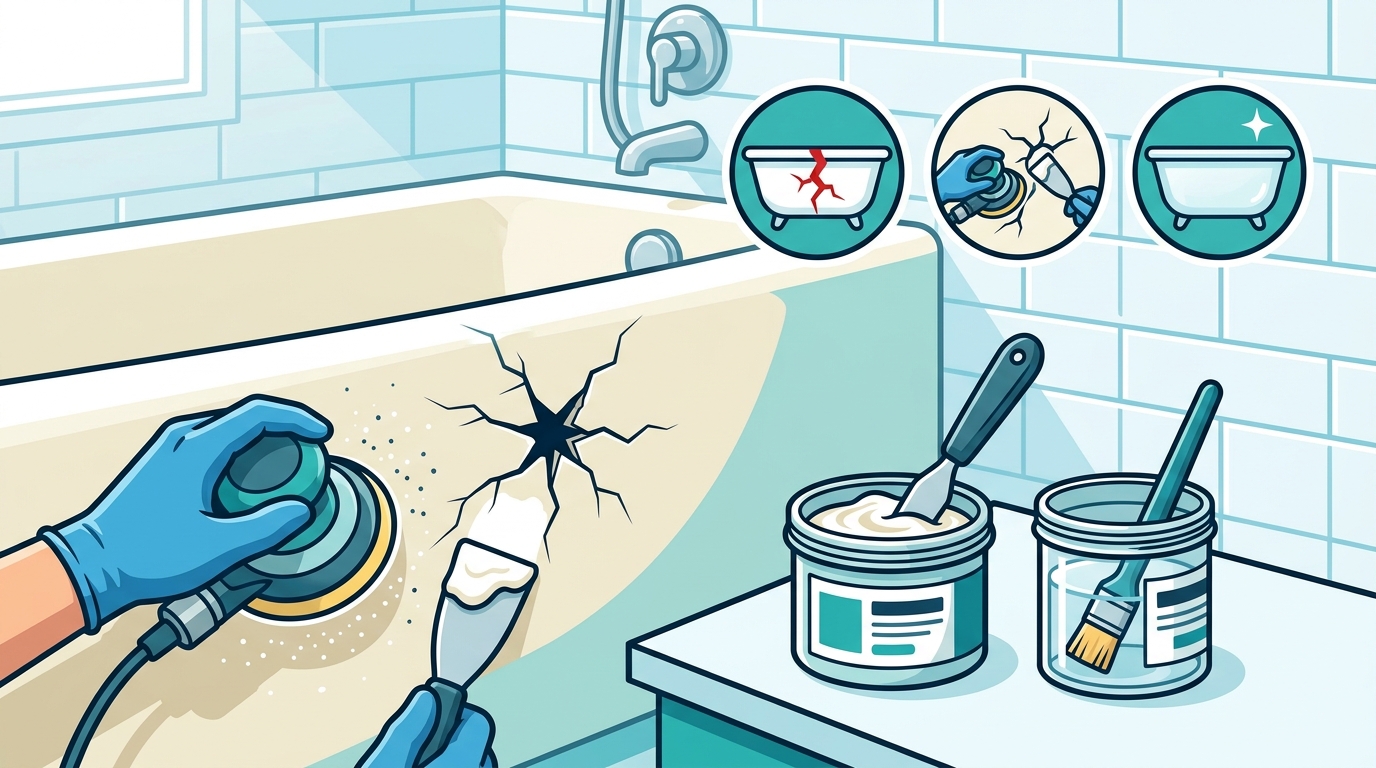
Stress Cracks and Spider-Web Patterns
Spider-web cracks radiating outward from a central point typically indicate underlying support problems. The surface can be repaired, but the root cause—usually a compromised support bed—must be addressed first to prevent recurrence.
Structural or Through-Cracks
If you can see light through the crack from underneath or water is actively leaking through, the damage has penetrated the full fiberglass shell. These require professional structural reinforcement before any cosmetic reglazing can take place. In some cases, the tub may need to be replaced entirely.
Quick Self-Assessment Checklist
- Press the tub floor firmly with your foot. Does it flex or feel spongy?
- Look underneath the tub (via an access panel or crawl space) for damp insulation, discolored framing, or mold.
- Run water and check below for active leaks.
- Count the number and length of visible cracks.
If the floor flexes significantly, you see water damage below, or cracks exceed 18 inches or intersect in multiple directions, call a professional for a structural assessment before attempting any repair.
The Professional Fiberglass Crack Repair Process
When you hire a professional reglazing company like Excellence Reglazing, the crack repair process follows a proven sequence designed to restore both the structural integrity and appearance of your tub.
Step 1: Damage Assessment and Preparation
The technician inspects the crack to determine depth, length, and whether the underlying structure is compromised. The entire bathroom area around the tub is masked and protected—floors, fixtures, and cabinets are covered to prevent overspray or dust contamination.
Step 2: Surface Cleaning and Stripping
All old caulk is removed (professionals never caulk over old caulk), and the tub surface is thoroughly cleaned and degreased. Any loose gelcoat or flaking material around the crack is ground away to expose solid fiberglass beneath.
Step 3: Structural Reinforcement (If Needed)
For cracks caused by insufficient support, the technician may cut out weakened sections of the tub floor and reinforce the area with wood supports, expanding foam, concrete, or additional fiberglass cloth and resin. A tub bottom rebuilt with fiberglass cloth and resin is typically stronger than the original factory construction.
Step 4: Crack Filling and Fairing
The crack is filled with a two-part epoxy or polyester filler formulated for fiberglass. For cracks wider than a quarter-inch, fiberglass mesh is embedded in the filler for additional strength. The surface is then sanded smooth and feathered into the surrounding area so no ridge or edge is detectable.
Step 5: Transition to Reglazing
Once the structural repair has fully cured—usually 24 hours—the tub is ready for the reglazing phase.
How Reglazing Completes the Restoration
Reglazing (also called resurfacing or refinishing) is the final phase that gives the repaired tub a seamless, factory-fresh appearance. Without reglazing, even a perfectly repaired crack would remain visible.
The Reglazing Steps
- Acid etching or sanding: The entire tub surface is lightly abraded so the new coating bonds securely. An acid solution or mechanical sanding roughens the surface at a microscopic level.
- Primer application: A bonding agent is applied to ensure maximum adhesion between the old surface and the new topcoat.
- Acrylic urethane spray coating: Multiple thin coats of professional-grade acrylic urethane are sprayed over the entire tub. This creates a uniform color and gloss that hides the repair completely.
- Sanding and polishing: After curing, the surface is lightly wet-sanded and polished to a smooth, high-gloss finish.
- Re-caulking and reassembly: Fresh caulk is applied around the tub perimeter, and drain covers and overflow valves are reinstalled.
The entire repair-and-reglaze appointment typically takes three to five hours of on-site work. However, you should not use the tub for 24 to 48 hours after the service to allow the new coating to fully cure and reach its rated hardness and waterproofing capability.
Cost Breakdown: Repair, Reglaze, or Replace?
Understanding the financial picture helps you make a confident decision. Here is how the three main options compare:
| Option | Typical Cost Range | Timeframe | Expected Lifespan |
|---|---|---|---|
| Crack repair only (professional) | $200–$500 | Half day | Varies by severity |
| Full reglazing/refinishing | $300–$600 | 1 day + 24–48 hr cure | 10–15 years |
| Crack repair + reglazing (combined) | $400–$900 | 1 day + 24–48 hr cure | 10–15 years |
| Full tub replacement | $1,200–$5,000+ | Several days to a week | 15–30 years |
Professional reglazing can save up to 75 percent compared to a full replacement, and you avoid the mess, demolition, plumbing modifications, and tile work that come with tearing out an old tub.
When Replacement Makes More Sense
Repair and reglazing is the right call in most situations, but there are scenarios where replacement is the wiser investment:
- Multiple intersecting cracks or cracks longer than 18 inches that indicate widespread structural failure.
- Recurring cracks that reappear within months of a previous repair—this signals ongoing support or subfloor problems.
- Tubs older than 30–40 years with thin, brittle fiberglass that flexes under normal use.
- Active water damage to the subfloor, joists, or surrounding walls that requires demolition to remediate.
- Full bathroom remodel where you plan to change the layout, plumbing, or fixtures anyway.
A professional assessment from a company like Excellence Reglazing can tell you definitively whether your tub is a good candidate for repair and reglazing or whether replacement is the better path.
Maintaining Your Reglazed Bathtub
A quality reglaze can last 10 to 15 years with proper care. Follow these guidelines to protect your investment:
- Use non-abrasive cleaners only. Avoid scouring powders, steel wool, or harsh chemicals like bleach and acetone that can damage the new coating.
- Clean weekly with mild soap and a soft cloth. This prevents soap scum and mineral deposit buildup.
- Avoid suction-cup bath mats. These can pull at the new surface. Use mats with non-adhesive rubber backing instead.
- Don't drop heavy objects. The reglazed surface is durable but not impact-proof.
- Re-caulk as needed. Inspect caulk lines every six months and replace them at the first sign of cracking or peeling to prevent water intrusion behind the tub.
- Keep the bathroom ventilated. Running an exhaust fan during and after showers reduces moisture buildup that can degrade the coating over time.
Key Takeaways
- Yes, a cracked fiberglass bathtub can almost always be repaired and reglazed—as long as the tub is structurally sound or can be reinforced.
- Professional repair addresses both the visible crack and its root cause, while reglazing provides a seamless, like-new finish.
- Combined repair and reglazing typically costs $400–$900, compared to $1,200–$5,000+ for full replacement.
- A reglazed tub can last 10–15 years with proper maintenance.
- Ignoring cracks leads to water damage, mold, and far more expensive repairs down the road.
- Always get a professional assessment to determine whether repair or replacement is the right move for your specific situation.
Frequently Asked Questions
Can you reglaze a bathtub that already has cracks?
Yes. The cracks must be repaired first using fiberglass-specific filler, epoxy, or structural reinforcement. Once the repair has cured and been sanded smooth, the entire tub is reglazed with an acrylic urethane coating. The finished result hides the repair completely and restores a uniform, glossy surface.
How long does a fiberglass bathtub repair and reglaze last?
With proper care, a professionally reglazed fiberglass bathtub can last 10 to 15 years. Using non-abrasive cleaners, keeping the bathroom ventilated, and promptly re-caulking when needed will maximize the lifespan of the finish.
Is it cheaper to repair and reglaze or replace a cracked fiberglass tub?
Repair and reglazing is significantly cheaper. A combined service typically runs $400 to $900, while full tub replacement costs $1,200 to $5,000 or more once you factor in demolition, plumbing, and tile work. Professional reglazing can save up to 75 percent over replacement.
How long after reglazing can I use my bathtub?
Most professionals recommend waiting 24 to 48 hours after reglazing before using the tub. This allows the acrylic urethane coating to fully cure and achieve its maximum hardness and waterproofing.
What causes fiberglass bathtubs to crack?
The most common causes are degraded support underneath the tub (foam or mortar bed failure), impact from dropped objects, improper original installation, and age-related wear from thermal cycling. In older homes, support failure is the leading cause of cracking.
Can I repair a fiberglass tub crack myself?
Small, stable surface cracks under 12 inches can sometimes be addressed with a DIY fiberglass repair kit costing $30 to $60. However, DIY results often produce visible patches, and the repair may not address structural issues underneath. For a lasting, professional-looking result, hiring an experienced reglazing company is recommended.
Will a reglazed repair be visible?
When done by a professional, the repaired area is undetectable under normal inspection. The reglazing topcoat covers the entire tub in a uniform finish, so there is no patchwork appearance.
Ready to Restore Your Cracked Fiberglass Tub?
Excellence Reglazing specializes in fiberglass bathtub crack repair and professional reglazing. Our technicians assess your tub's structural integrity, perform any necessary reinforcement, and deliver a flawless reglazed finish—all in a single visit. Contact us today for a free estimate and find out how much you can save compared to a full replacement.