
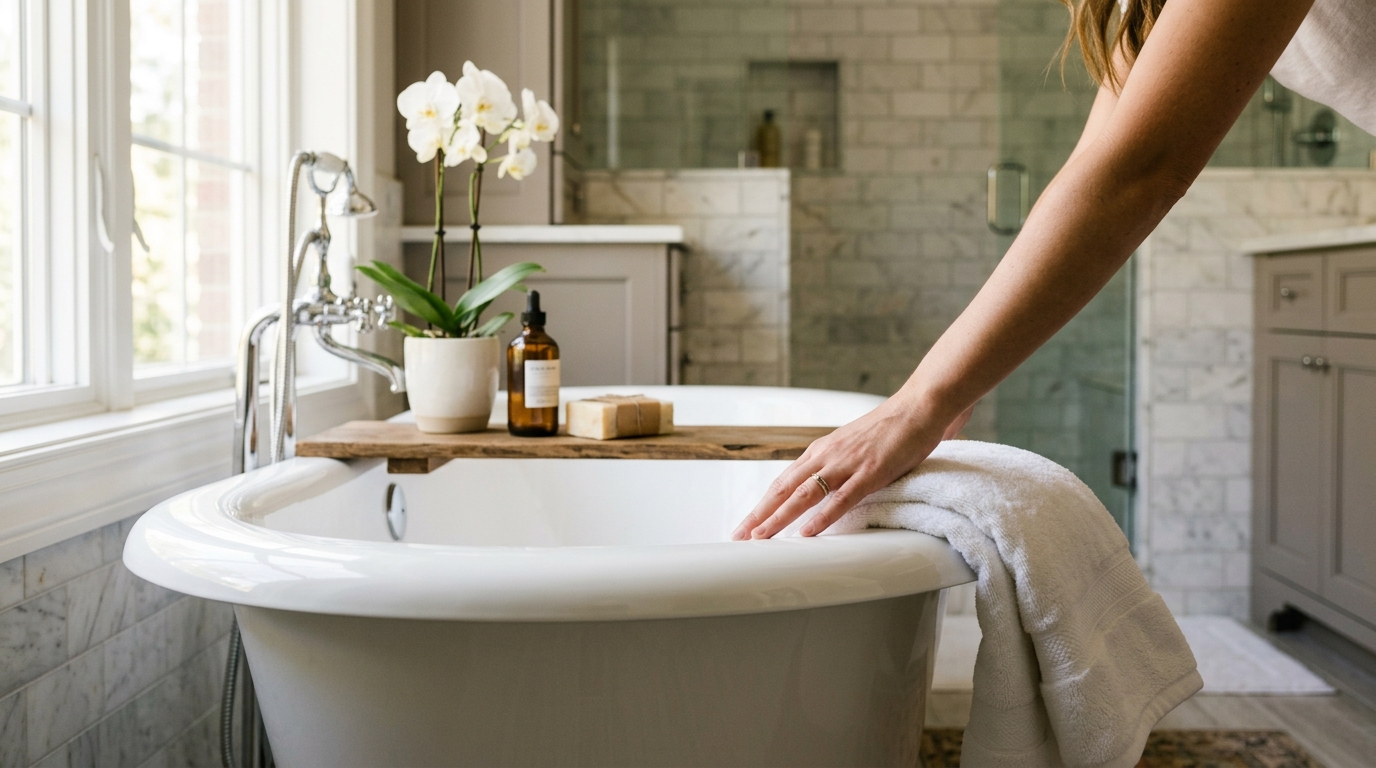
You invested in professional reglazing to restore your bathtub, tile, or sink — and now you want that glossy finish to last. The good news is that with the right daily habits and a few things to avoid, a professionally reglazed surface can stay beautiful for well over a decade. This guide from Excellence Reglazing walks you through the exact maintenance routines that prevent peeling, chipping, and premature wear.
Why Reglazed Surfaces Peel in the First Place
Before diving into maintenance, it helps to understand what causes peeling so you know what your routine is designed to prevent. Peeling on a reglazed surface typically stems from one of four causes:
- Improper surface preparation during the original job — if the old coating was not fully stripped and sanded, the new finish cannot bond properly.
- Chips that allow water infiltration — even a small chip can let water seep beneath the coating, loosening it from underneath and causing the finish to lift over larger areas.
- Harsh chemical cleaners — bleach, ammonia, acid-based products, and scouring powders break down the protective coating over time.
- Temperature shock and standing water — sudden swings from cold to hot water and prolonged pooling of water on the surface weaken the glaze bond.
Step 1: Respect the Curing Period
Every maintenance routine begins before you even use the surface. After reglazing, the coating needs adequate time to harden fully. Most professional refinishers recommend waiting at least 24 to 48 hours before any water touches the surface. During this window:
- Keep the bathroom well ventilated so the coating hardens evenly.
- Do not place mats, bottles, soap dishes, or any objects on the reglazed area.
- Avoid touching the surface with your hands, as oils from skin can interfere with curing.
For the first 30 days, use only a mild dish soap and a soft sponge — skip all specialized bathroom cleaners during this initial phase. This early patience sets the stage for a finish that resists peeling for years.
Step 2: Choose the Right Cleaning Products
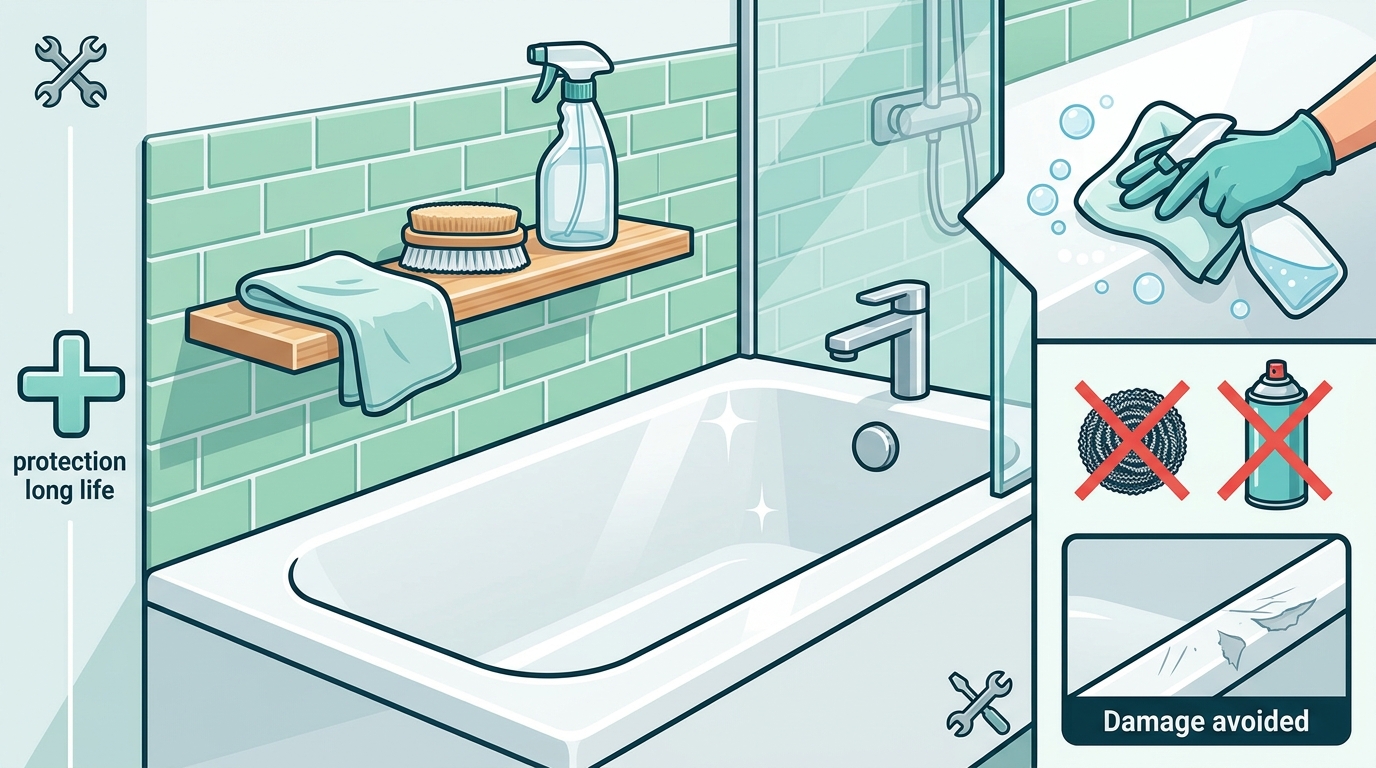
The single most common homeowner mistake after reglazing is reaching for the wrong cleaner. Products containing bleach, acid, ammonia, or abrasive particles will degrade the reglazed coating. Here is what to use and what to avoid:
Safe Cleaners
- Mild liquid dish soap diluted in warm water
- Non-aerosol bathroom cleaners in trigger-pump spray bottles
- Cleaners specifically labeled safe for refinished surfaces
Cleaners to Avoid
- Scouring powders (Comet, Ajax, Bar Keepers Friend powder)
- Bleach or bleach-based bathroom sprays
- Vinegar or acid-based descalers
- Aerosol bathroom cleaners — these often contain propellants and aggressive solvents that damage the glaze
After the first month, transition to a non-aerosol cleaner designed to remove soap scum. Apply with a soft sponge or microfiber cloth — never steel wool, scouring pads, or stiff-bristle brushes.
Step 3: Use Soft Cleaning Tools Only
Even a safe cleaner can cause damage if you pair it with abrasive tools. Steel wool, rough sponges, and scratch pads create micro-scratches that dull the glossy finish and eventually expose the surface underneath to moisture. Stick to:
- Soft sponges
- Microfiber cloths
- Non-abrasive pads
These lift dirt and soap residue without compromising the surface's smoothness.
Step 4: Wipe Down After Every Use
The simplest habit that dramatically extends reglazing life is wiping the tub down with a soft cloth after each use. This takes about 30 seconds and prevents mineral deposits and soap scum from building up. Over time, hard water deposits are one of the most common causes of premature finish degradation.
If you live in an area with hard water, consider installing a water softener or an inline shower filter to reduce mineral buildup on reglazed surfaces.
Step 5: Keep the Surface Dry When Not in Use
Standing water is a silent enemy of reglazed finishes. Prolonged contact with pooled water can weaken the glaze and, if there is any tiny imperfection, allow moisture to work its way underneath. After bathing or showering:
- Drain the tub completely — do not leave water sitting.
- Dry with a clean towel or microfiber cloth to eliminate water spots and reduce mildew risk.
- Ensure proper bathroom ventilation by running the exhaust fan or opening a window for at least 15 minutes after use.
Step 6: Avoid Suction-Cup Mats and Adhesive Products
This is one of the most overlooked rules. Suction-cup bath mats pull at the reglazed coating over time and are one of the most common causes of peeling on refinished tubs. If you need a non-slip solution, choose mats specifically designed for refinished tubs — these lack suction cups and can be removed and cleaned after each use.
Similarly, never apply tape or self-adhesive caulking strips directly to a reglazed surface. Tape adhesives can bond too strongly to the finish, and removing them may strip or peel the coating.
Step 7: Re-Caulk Promptly and Correctly
After your reglazed surface has fully cured, re-caulk around the drain, overflow plate, and the perimeter where the tub meets the wall. If the tub does not have a proper caulk seal, water can seep beneath the finish and cause peeling from the edges inward. Use a standard silicone caulk — avoid self-adhesive caulk strips, which can lift the surface coating when they peel.
Inspect caulk lines every few months and re-apply whenever you see gaps, cracking, or mildew forming in the caulk bead.
Step 8: Repair Chips and Scratches Immediately
A small chip might seem cosmetic, but on a reglazed surface it is a vulnerability. Water seeping into even a minor chip can undermine the entire surrounding finish, leading to progressive peeling. Minor chips can often be repaired with a touch-up kit, while larger cracks may require professional attention. The key is speed — address damage immediately to prevent further surface deterioration.
Step 9: Apply Protective Polish Periodically
To add an extra layer of protection, apply a non-abrasive urethane or carnauba-based polish to the reglazed surface every few months. This polish prevents scratches, reduces staining, and keeps the glossy sheen looking fresh. Reapplying a protective polish once or twice a year can make the difference between a refinish that lasts 5 years and one that lasts 15 or more.
Step 10: Schedule Periodic Professional Inspections
Even with diligent home care, it is smart to arrange a professional inspection every couple of years. A trained refinisher can spot early signs of adhesion loss, hairline cracks, or worn areas before they develop into peeling. Periodic professional maintenance ensures that your surface remains in optimal condition for the long haul.
How Long Should a Reglazed Surface Last?
With proper maintenance, professional bathtub reglazing typically lasts 10 to 15 years on porcelain and cast iron surfaces, and 7 to 10 years on fiberglass and acrylic. Guest bathrooms with lighter daily use can push past 15 years. The lifespan depends on surface prep quality, coating type, and — most importantly — the maintenance habits you follow after the job is complete.
Quick-Reference Weekly Maintenance Checklist
- Wipe the surface dry after every use with a soft cloth.
- Clean once per week with a mild, non-abrasive cleaner and a soft sponge.
- Rinse thoroughly after cleaning — never let cleaner sit on the surface.
- Inspect for chips, cracks, or caulk deterioration.
- Keep the bathroom ventilated to control humidity.
Key Takeaways
- Allow 24–48 hours of curing time before using the reglazed surface, and use only mild soap for the first 30 days.
- Never use bleach, acid-based cleaners, scouring powders, steel wool, or aerosol sprays on a reglazed finish.
- Wipe the surface dry after each use to prevent mineral buildup and moisture damage.
- Avoid suction-cup mats, adhesive tape, and self-adhesive caulk strips — all can pull the coating loose.
- Repair chips immediately to prevent water from seeping underneath and causing larger areas to peel.
- Apply a protective polish every few months and re-caulk edges as needed.
- With consistent care, professional reglazing lasts 10–15 years or longer.
Frequently Asked Questions
What cleaners are safe for a reglazed bathtub?
Use mild liquid dish soap or non-aerosol bathroom cleaners in trigger-pump bottles. Apply with a soft sponge or microfiber cloth. Avoid bleach, ammonia, vinegar, acid-based products, scouring powders, and aerosol sprays — all of these can degrade the reglazed finish over time.
Can I use a bath mat on a reglazed tub?
You can, but only mats without suction cups. Suction-cup mats pull at the reglazed coating and are one of the most common causes of peeling on refinished tubs. Look for non-skid mats specifically designed for refinished surfaces that can be removed and cleaned after each use.
How long should I wait to use a bathtub after reglazing?
Wait at least 24 to 48 hours before allowing any water contact with the surface. During this time, keep the bathroom ventilated and avoid placing anything on the reglazed area. For the first 30 days, clean only with mild dish soap and a soft sponge.
How long does bathtub reglazing last?
Professional reglazing typically lasts 10 to 15 years on porcelain and cast iron tubs, and 7 to 10 years on fiberglass and acrylic. The exact lifespan depends on the quality of the original job, the tub material, and how well you maintain the surface afterward.
What should I do if I notice a chip on the reglazed surface?
Address it immediately. Minor chips can usually be repaired with a touch-up kit, but if the damage is larger, contact a professional refinisher. Leaving a chip unrepaired allows water to seep beneath the coating and cause progressive peeling.
Does hard water affect a reglazed finish?
Yes. Hard water leaves mineral deposits that can dull and eventually degrade the reglazed surface. Wipe the tub dry after each use and consider installing a water softener or shower filter if your area has hard water.